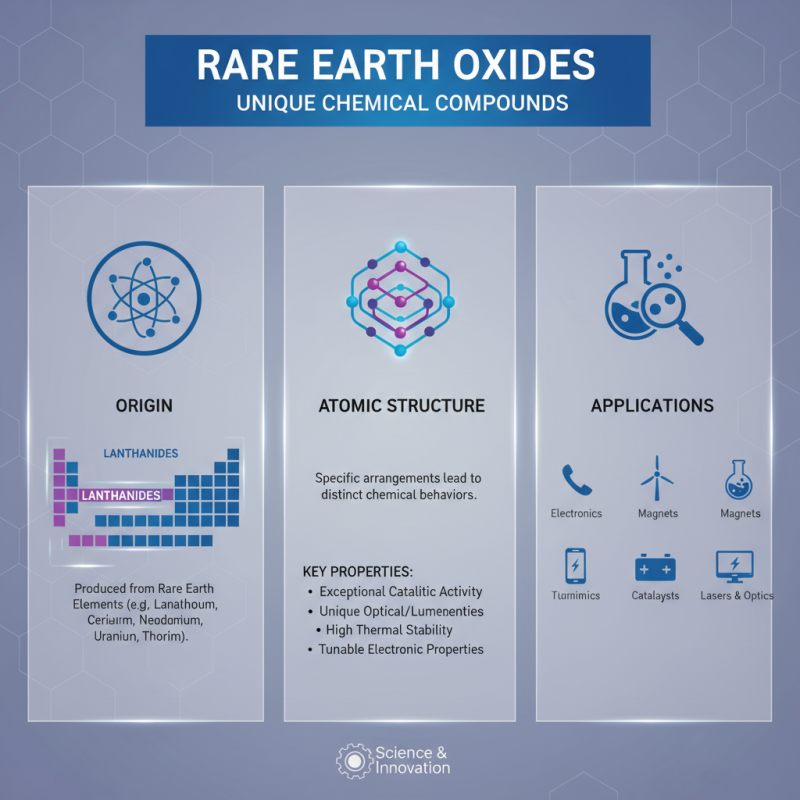
How to Understand Rare Earth Oxides and Their Applications?
Rare Earth Oxides are crucial materials in various high-tech applications. These compounds, including oxides of lanthanides, are vital in the production of electronics, magnets, and catalysts. According to a report by the U.S. Geological Survey, global production of rare earth elements reached approximately 170,000 metric tons in 2020. The increasing demand for green technologies boosts this number further.
In the automotive industry, rare earth oxides play a significant role in electric vehicle batteries and wind turbine magnets. Research indicates that the global rare earth market could exceed $10 billion by 2025. However, the supply chain remains complex and reliant on limited geographic sources, which raises concerns regarding sustainability and geopolitical stability.
Understanding rare earth oxides involves not only recognizing their significance but also the challenges related to their extraction and processing. The industry faces criticism for environmental impacts and labor issues. Reflecting on these aspects invites us to consider responsible sourcing and innovations that may lessen reliance on these precious materials.

Understanding the Definition and Classification of Rare Earth Oxides
Rare earth oxides, though they sound complex, are essential materials in various industries. These compounds are formed from the rare earth elements, which occupy the f-block of the periodic table. They include elements like cerium, neodymium, and samarium. Each compound has unique properties, influencing their applications in technology and manufacturing. Understanding these oxides requires a grasp of their classification.
The classification of rare earth oxides generally falls into two categories: light and heavy rare earth oxides. Light oxides include cerium and lanthanum. They are typically more abundant and are used in catalysts and polishing agents. Heavy rare earth oxides, encompassing elements like dysprosium and erbium, are rarer. They play crucial roles in advanced technologies, such as in magnets for electric vehicles and electronic devices.
It's worth noting that the mining and extraction of these oxides can pose environmental challenges. The processes may lead to significant ecological impacts. This reality urges further reflection on sustainable practices in the industry. We must balance technological advancement with environmental responsibility. Understanding rare earth oxides goes beyond their definition; it involves recognizing the implications of their use in our world.
Industrial Applications of Rare Earth Oxides in Technology and Electronics
Rare earth oxides (REOs) play a crucial role in various industrial applications. In technology and electronics, they are vital for enhancing performance and efficiency. For instance, they are used in magnets that power electric vehicles and wind turbines. These applications are growing, as demand for clean energy rises. REOs improve the strength of these magnets, making them more effective.
In the world of electronics, rare earth oxides are found in displays and batteries. They help produce vibrant colors in screens, making pictures clearer and more appealing. In batteries, they increase energy density and lifespan. This drives innovation in consumer electronics, where lighter and longer-lasting devices are desired. However, sourcing these materials can be challenging due to geopolitical factors and environmental concerns.
Despite their benefits, reliance on rare earth oxides poses some risks. Market fluctuations can affect prices significantly. Additionally, mining practices can result in environmental degradation. It is essential to find sustainable methods for extracting these valuable resources. Addressing these issues requires collaboration among industries, governments, and researchers.
Environmental Impacts and Sustainability Considerations of Rare Earth Mining
Rare earth mining presents significant environmental challenges. The extraction process often results in land degradation and habitat loss. Furthermore, the water consumption for these operations can exceed 2 million gallons per ton of extracted ore, leading to local water scarcity. The toxic byproducts released during mining can contaminate nearby water sources, affecting local communities and ecosystems.
A report from the International Energy Agency highlights that rare earth elements are crucial for renewable energy technologies. However, the mining practices often lack sustainability. It is estimated that over 20% of rare earth production occurs in regions with poor environmental regulations. The question of sustainability looms large, raising concerns about the long-term viability of these resources.
The carbon footprint of rare earth mining is alarming. The mining and processing of rare earth oxides can emit around 1.5 tons of CO2 for every ton of oxide produced. This challenges the notion of transitioning to greener technologies. Balancing the demand for rare earth oxides with sustainable practices is vital. Only then can we hope to mitigate the damaging impacts on our environment.
Future Trends and Research Directions in Rare Earth Oxide Technologies
The future of rare earth oxide technologies is promising yet challenging. A report from
MarketsandMarkets estimates that the global rare earth elements market will reach $10.1 billion by 2025, driven by demand in electronics, renewable energy, and electric vehicles. As industries shift towards these advanced technologies, the need for innovative applications of rare earth oxides will only grow.
Research is increasingly focused on enhancing the efficiency of rare earth oxides in various sectors. For instance, optimizing the use of neodymium in magnets can significantly improve electric motor performance. However, extraction processes remain environmentally taxing, leading to debates about sustainability. Researchers must balance efficiency and ecological impact. The transition to greener methods is essential before significant steps can be taken.
Emerging trends also highlight the potential of recycling rare earth elements from electronic waste. This area could drastically reduce the need for mined materials. A study by the International Energy Agency suggests that recycling could mitigate supply risks. Continued investment in recycling technologies is a logical direction for future research. Dilemmas remain, including the scalability of these methods and cost-effectiveness. The evolution of rare earth oxides appears set to redefine multiple industries while prompting crucial discussions on sustainability and resource management.