2026 Best Rare Earth Alloy Innovations for Advanced Technologies?
In the realm of advanced technologies, Rare Earth Alloys play a pivotal role. Expert Dr. Emily Carter, a leading figure in materials science, emphasizes the importance of innovation. She states, “Rare Earth Alloys will shape the future of high-performance applications.” This sentiment reflects the ongoing exploration of these materials in various industries.
As the demand for advanced technologies rises, the significance of Rare Earth Alloys cannot be overstated. These innovative materials exhibit unique properties. They are crucial for applications in electronics, renewable energy, and aerospace. Yet, current research reveals gaps. There is a persistent need for more sustainable sourcing methods for these alloys.
The journey of enhancing Rare Earth Alloys is fraught with challenges. Environmental concerns and supply chain issues make progress complex. New innovations may arise, yet they often require careful consideration. The industry must grapple with balancing performance and sustainability, ensuring that developments do not come at a cost to our planet.

Overview of Rare Earth Alloys and Their Importance in Technology
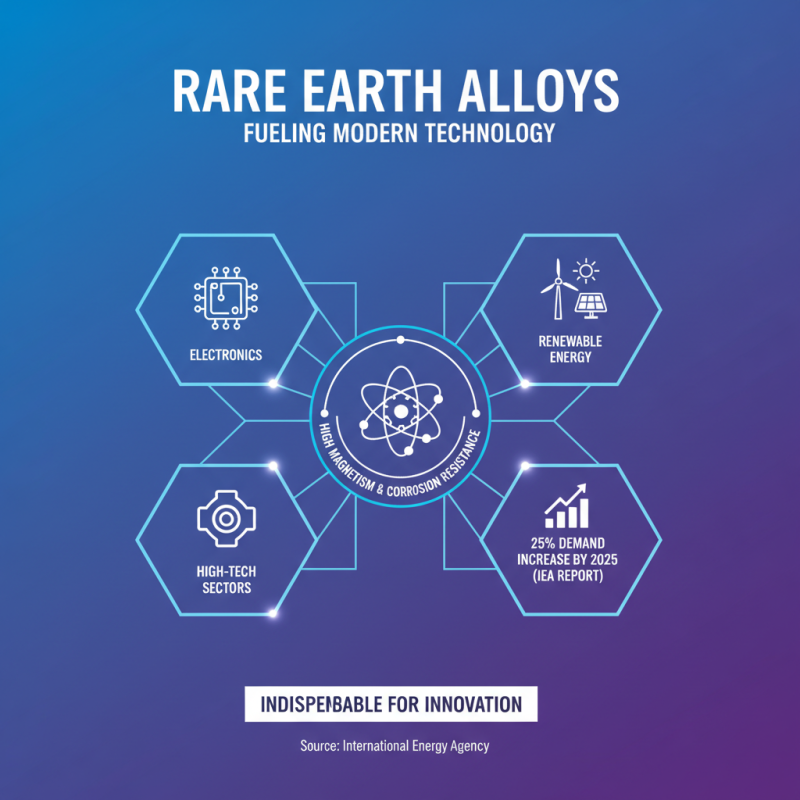
Rare earth alloys are crucial in modern technology. They enhance performance in various applications, from electronics to renewable energy. According to a report by the International Energy Agency, the demand for these materials will increase by 25% by 2025. Their unique properties, such as high magnetism and corrosion resistance, make them indispensable in many high-tech sectors.
In the automotive industry, rare earth alloys are key for electric vehicle motors. These materials help to improve efficiency and reduce weight. However, sourcing these alloys is a challenge. Mining processes can harm the environment. Moreover, geopolitical factors can limit availability. The world relies heavily on a few regions for supply. This creates a risk of shortages.
Future technologies will need more advanced rare earth alloys. Research shows that innovative combinations can lead to breakthroughs in energy storage and performance. However, these innovations require significant investment in research and development. Companies must balance product performance with environmental impact. Reflecting on this balance is essential for sustainable progress in the field.
Current Innovations in Rare Earth Alloy Development for 2026
The landscape of rare earth alloy development is rapidly evolving. As we approach 2026, many advancements are on the horizon. Researchers are exploring new compositions that enhance magnetic and thermal properties. These alloys are becoming crucial for high-tech applications, from electric vehicles to renewable energy solutions.
Recent studies show innovative techniques, like additive manufacturing, are being integrated into alloy production. This allows for more precise control of material properties. However, challenges remain, particularly in sourcing sustainable raw materials. Teams are also assessing environmental impacts. The pressure to create greener technologies is intense, yet it requires reflection on our methods.
Emerging technologies like machine learning are aiding in alloy design. Data-driven approaches can predict how composites will perform under stress. Yet, reliance on algorithms may lead to oversights in experimental validation. Balancing innovation with practical testing is essential for real-world applications. Each step forward presents both opportunities and obstacles in the quest for advanced rare earth alloys.
2026 Best Rare Earth Alloy Innovations for Advanced Technologies
Key Applications of Rare Earth Alloys in Advanced Technologies
Rare earth alloys play a crucial role in advanced technologies. These materials are
lightweight yet strong, making them ideal for innovative applications. For instance,
in the aerospace sector, rare earth alloys are used in turbine engines. These engines require materials that
can withstand extreme temperatures. The use of rare earth elements can enhance these alloys' performance significantly.
In electronics, rare earth alloys are essential. They are found in hybrid electric vehicles and various high-end
appliances. According to a report by MarketsandMarkets, the demand for rare earth alloys in electronics
is expected to grow by 10% annually. However, producing these materials responsibly remains a challenge.
Environmental concerns and sourcing issues need addressing to ensure sustainable development.
Moreover, in the renewable energy sector, rare earth alloys are vital. Wind turbines rely on these materials
for efficient energy conversion. As the world shifts to cleaner energy, the demand for such advanced materials will rise. However, the industry faces competition and
supply chain uncertainties. These factors can impact the growth potential of rare earth alloys in this field.
Challenges and Opportunities in the Rare Earth Alloy Sector
The rare earth alloy sector is full of promise. New innovations in this field drive advanced technologies. However, it faces significant challenges. Sourcing rare materials can be complex and costly. Environmental concerns also complicate production processes. These factors risk slowing down progress.
Despite these hurdles, opportunities abound. Emerging technologies in clean energy rely heavily on rare earth alloys. They play a vital role in batteries and electric motors. This demand can inspire innovative recycling methods. Companies can explore sustainable solutions for material sourcing. A balance is crucial for future growth.
Tips: Focus on sustainability. Innovate to reduce waste. Collaborate with experts to navigate challenges. Creating a network can drive progress and efficiency. Engaging with communities can also enhance acceptance of rare earth projects.
Future Trends in Rare Earth Alloy Innovations and Their Impact on Industry
The future of rare earth alloys holds immense potential for various industries. As technology advances, new alloys are emerging. These materials will enhance the performance of electric vehicles and renewable energy systems. For instance, lighter and stronger alloys can lead to more efficient batteries. This transition is essential for reducing carbon emissions.
However, it’s crucial to reflect on the sustainability of rare earth mining. The extraction process can harm the environment. Pollution and habitat destruction are real concerns. Although innovations are great, they must address these issues. Companies must find ways to minimize ecological impacts while developing new materials. Only then can we truly benefit from these advancements.
Moreover, the industrial shift towards rare earth alloys will reshape manufacturing practices. Production processes may require updates and retraining workers. Adapting might be challenging. Yet, embracing these changes could increase productivity. Collaboration across sectors can accelerate innovation. This shared effort might lead to breakthroughs we have yet to imagine.