10 Best Rare Earth Oxides You Should Know About?
Rare Earth Oxides (REOs) play a crucial role in modern technology. They are essential for manufacturing high-performance materials used in various industries. According to a report by the U.S. Geological Survey, global rare earth oxide production reached 280,000 metric tons in 2022. This highlights the growing demand for these materials.
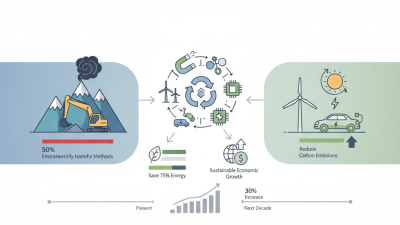
REOs are vital in electronics, renewable energy, and defense technologies. For example, neodymium is key in making powerful magnets for wind turbines and electric vehicles. However, the production process raises environmental concerns. The mining and refining of rare earth elements often lead to pollution.
Many companies are now focusing on sustainable sourcing methods. Innovation is critical in ensuring that Rare Earth Oxides can meet future demands. The balance between technological advancement and environmental responsibility remains a challenge. Understanding these elements is more important than ever.

Overview of Rare Earth Oxides and Their Importance
Rare earth oxides are crucial materials in modern technology. They play a significant role in electronics, renewable energy, and various advanced manufacturing processes. Each oxide has unique properties that make them valuable. For example, neodymium oxide is vital in creating powerful magnets, while cerium oxide is important for catalysts in automotive applications.
These elements are not particularly rare in the Earth's crust. However, their extraction and processing can be challenging. Many countries struggle with the environmental impact of mining activities. It raises questions about sustainability. Understanding these oxides is essential for innovation but also for responsible resource management. Companies and researchers are exploring alternatives but often face limitations.
The importance of rare earth oxides cannot be overstated. They drive improvements in technology and efficiency. Yet, the path forward is complex. Responsible sourcing and sustainable practices are essential. Without them, we risk depleting these valuable resources, leaving future generations with fewer options. Balancing needs and ethics is a conversation worth having.
Top 10 Rare Earth Oxides and Their Importance
This chart illustrates the ten best-known rare earth oxides, showcasing their significance in various industries such as electronics, renewable energy, and defense.
Key Characteristics of Rare Earth Oxides
Rare Earth Oxides (REOs) are crucial in modern technology. They are used in electronics, catalysts, and magnets. Each oxide has unique characteristics. For example, Neodymium oxide is known for its strong magnetic properties. Meanwhile, Cerium oxide exhibits excellent catalytic properties and aids in pollution control.
Understanding these characteristics is vital for various industries. Yttrium oxide is used in LEDs and phosphors. It enhances lighting efficiency. Similarly, Dysprosium oxide is essential for high-performance magnets used in electric vehicles.
Tip: When working with rare earth oxides, ensure appropriate safety measures. These materials can be hazardous if mishandled. Always use protective gear and work in a ventilated area.
Some properties are still not fully understood. Research is ongoing, and new uses may emerge. This uncertainty can lead to missed opportunities. Being aware of evolving applications can help industries adapt quickly.
Another tip: Collaborate with experts in the field. Their insights can provide valuable guidance. This can lead to innovative solutions using these rare materials.
Applications of Rare Earth Oxides in Modern Technology
Rare earth oxides play a crucial role in modern technology. These compounds have unique properties. They are involved in various applications, which often go unnoticed. For instance, europium oxide is essential in LED technology. It helps produce vibrant red colors.
Another important oxide is cerium oxide. It acts as an effective catalyst in automobile exhaust systems. This reduces harmful emissions. Additionally, neodymium oxide is vital for manufacturing strong permanent magnets. These magnets are used in electric motors and wind turbines, contributing to renewable energy.
Yet, the production of rare earth oxides raises environmental concerns. Mining activities can lead to soil and water contamination. There is also the challenge of recycling these materials. Improving sustainability in this area is essential. The future of technology relies on finding solutions for these issues. Balancing innovation with environmental responsibility is critical for progress.
Environmental and Economic Impacts of Mining Rare Earth Oxides
The extraction of rare earth oxides has significant environmental impacts. Mining activities often lead to soil erosion and water contamination. For instance, a study indicated that rare earth mining can produce more than 10,000 tons of toxic waste for every ton of material processed. This waste can release hazardous substances into local water supplies.
Economically, rare earth elements are crucial for high-tech industries. However, the intense mining practices raise questions about sustainability. Some reports show that up to 60% of the global supply comes from just a few locations. This concentration not only affects supply chains but also places immense pressure on the local environment.
Local communities often bear the brunt of these environmental impacts. The health effects from contaminated resources can linger for generations. The economic benefits from mining may not reach those communities adequately. Many people feel the short-term gains do not compensate for the long-term consequences. Reflecting on these issues is essential for future practices in the industry.
10 Best Rare Earth Oxides You Should Know About
| Oxide |
Chemical Formula |
Primary Use |
Environmental Impact |
Economic Impact |
| Lanthanum Oxide |
La2O3 |
Optics, Catalysts |
Toxic waste generation |
High demand in technology |
| Cerium Oxide |
CeO2 |
Polishing, Catalysis |
Chemical pollution |
Strong market in automotive |
| Neodymium Oxide |
Nd2O3 |
Magnets, Lasers |
Radioactive concerns |
Critical for renewable energy tech |
| Praseodymium Oxide |
Pr2O3 |
Alloys, Glass |
Fine particulate emissions |
Growing demand in electronics |
| Samarium Oxide |
Sm2O3 |
Magnets, Lasers |
Harmful dust exposure |
Used in military tech |
| Gadolinium Oxide |
Gd2O3 |
Magnetic materials |
Radiation safety concerns |
Vital for MRI technology |
| Terbium Oxide |
Tb4O7 |
Phosphors, Electronics |
Waste disposal issues |
High value for tech industries |
| Dysprosium Oxide |
Dy2O3 |
Superconductors, Magnets |
Toxicological risk |
Core for green technologies |
| Yttrium Oxide |
Y2O3 |
Phosphors, Ceramics |
Environmental risks in mining |
Steady demand in industry |
| Lanthanide Oxides |
Various |
Technology, Energy |
Potential groundwater contamination |
Increasing role in modern tech |
Future Trends in Rare Earth Oxides Research and Development
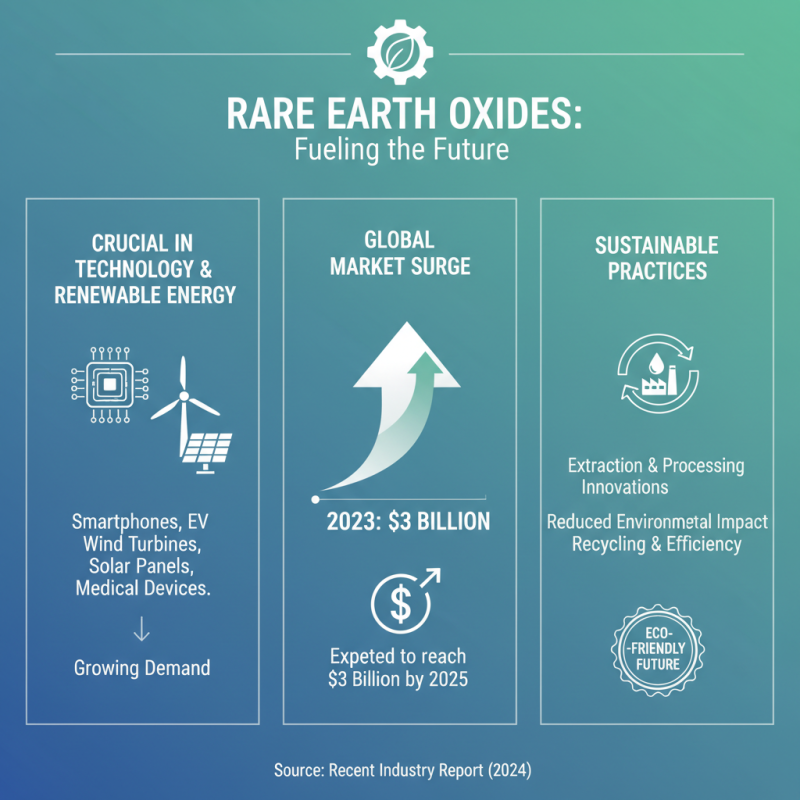
Rare earth oxides (REOs) are crucial in various industries, especially in technology and renewable energy. As the demand for these materials grows, research and development are evolving rapidly. According to a recent report, the global market for rare earth oxides is expected to reach $3 billion by 2025. This surge highlights the importance of sustainable practices in extraction and processing methods.
New technologies are emerging, focusing on increasing recycling rates of rare earth materials. Less than 1% of rare earth elements are currently recycled. This statistic shows a clear gap in sustainability. Researchers are exploring innovative methods to recover REOs from waste, thereby reducing environmental footprints.
Tips: Engaging in recycling can significantly lower costs. Always stay updated on new methods. Small-scale initiatives can lead to big changes. As scientists develop alternatives, industries may need to adapt. The balance between innovation and ethics is delicate. Careful consideration is crucial when expanding rare earth production.