2026 How to Effectively Utilize Rare Earth Materials in Technology?
In today's rapidly evolving technological landscape, the significance of Rare Earth Materials cannot be overstated. These materials are essential for various high-tech applications, from electronics to renewable energy technologies. However, their effective utilization poses challenges that companies must address.
At the 2026 Canton Fair, innovations in the use of Rare Earth Materials will be a focal point. This platform will showcase how advancements can lead to more efficient and sustainable applications. As manufacturers seek to optimize their processes, the demand for certified suppliers rises. AI technology will enhance sourcing by matching suppliers with industry-specific certifications.
The integration of Rare Earth Materials into technology also raises ethical concerns. Companies must reflect on the sourcing and environmental impact of these materials. Balancing innovation with sustainability remains an ongoing challenge. Striving for improvement is vital as we move toward a future that relies heavily on these essential resources.

Understanding Rare Earth Materials and Their Importance in Technology
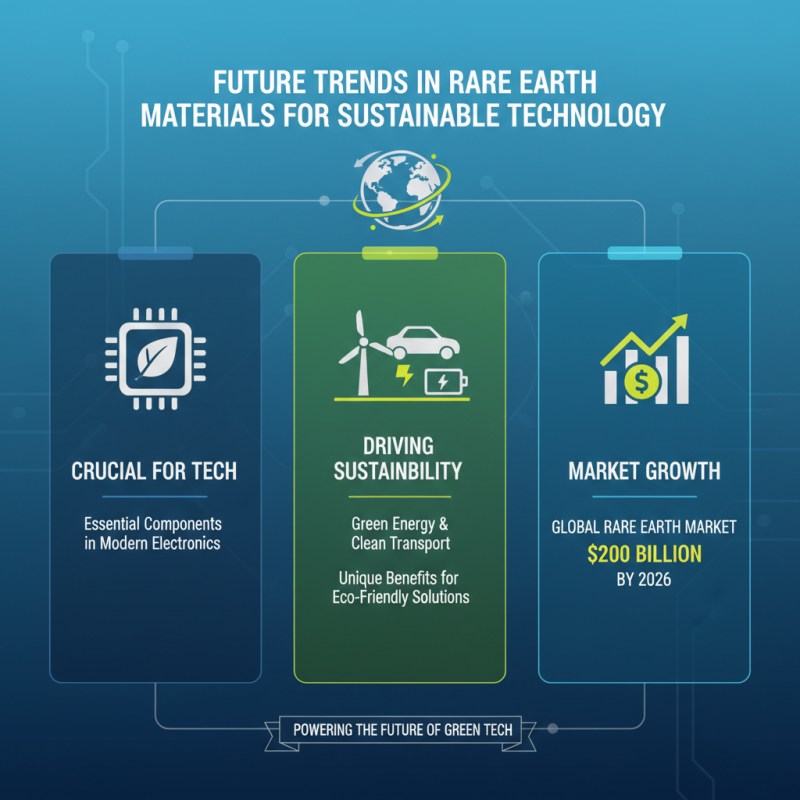
Rare earth materials are essential in modern technology. These elements, such as neodymium and europium, are critical for manufacturing high-performance magnets, phosphors, and catalysts. In 2020, global demand for rare earths was valued at approximately $4.5 billion, with projections indicating significant growth. By 2026, this market could exceed $7 billion, underscoring their importance.
Despite their significance, the sourcing and processing of these materials pose challenges. Over 70% of rare earth elements are produced in a few countries. This concentration raises concerns about supply chain vulnerabilities. Reports suggest that the environmental impact of extraction can be substantial, with pollution and habitat destruction being notable issues. Companies are exploring more sustainable practices, but progress remains slow.
Efforts to recycle rare earth materials are gaining traction. Current recycling rates hover around 1%. Improving this can reduce reliance on mining. Innovations in waste recovery systems could play a key role. However, many technologies still struggle with efficiency and cost-effectiveness. Balancing environmental concerns with the growing demand is a complex challenge that needs urgent attention.
2026 How to Effectively Utilize Rare Earth Materials in Technology? - Understanding Rare Earth Materials and Their Importance in Technology
| Material |
Symbol |
Applications |
Properties |
Market Demand (2026 Est.) |
| Neodymium |
Nd |
Permanent magnets, wind turbines |
High magnetic strength, corrosion-resistant |
120,000 tons |
| Dysprosium |
Dy |
Magnetic materials, nuclear reactors |
High thermal stability, strong magnetism |
20,000 tons |
| Lanthanum |
La |
Catalysts, camera lenses |
Strong ionizing properties, good conductivity |
90,000 tons |
| Terbium |
Tb |
Green phosphors, solid-state devices |
High efficiency in luminescence, thermoelectric properties |
15,000 tons |
| Yttrium |
Y |
LEDs, superconductors |
High melting point, strong conductivity |
50,000 tons |
Current Applications of Rare Earth Materials in Various Industries
Rare earth materials have become indispensable in various industries. They play a critical role in electronics, automotive, and renewable energy. For instance, small amounts of these materials are used in smartphones and laptops for high-performance components. They enable the creation of powerful magnets that improve efficiency. Yet, the dependency on rare earths poses challenges.
The automotive industry also is heavily reliant on rare earth materials. Electric vehicles use them in batteries and motors. This reliance raises questions about sustainability and extraction processes. Many companies continue to seek alternatives. However, they often find it difficult to match the performance of rare earth materials.
In renewable energy, these materials are essential for wind turbines and solar panels. They enhance energy conversion and storage. Yet, the environmental impact of mining remains a concern. As industries evolve, finding a balance between utilization and sustainability is necessary. It is vital to reflect on these issues and seek more responsible practices.
Current Applications of Rare Earth Materials in Various Industries
Challenges in Sourcing and Processing Rare Earth Materials
The sourcing and processing of rare earth materials pose significant challenges for the technology industry. Currently, about 80% of the world’s rare earth supply comes from a limited number of locations. This concentration creates vulnerabilities in supply chains. If political tensions disrupt these sources, industries could face crises in production.
Processing rare earth elements is labor-intensive and environmentally damaging. The extraction often results in toxic byproducts. For instance, producing one ton of rare earth oxides can generate nearly 10 tons of radioactive waste. Many countries have inadequate regulations to handle this pollution safely. Furthermore, the costs associated with responsible processing can lead to higher material prices, affecting the broader tech market.
Recycling rare earth materials offers a potential solution. Studies suggest recovery rates can average only around 10% in products like smartphones or wind turbines. Enhancing recycling technologies can help reduce reliance on raw mining. However, investment in these technologies is currently lacking. Exploring these methods could mitigate some pressing challenges, but hurdles remain. The industry must navigate both cost and efficiency while ensuring environmental sustainability.
Innovative Techniques for Recycling Rare Earth Elements
Recycling rare earth elements (REEs) is crucial in today's tech-driven world. These materials are vital for many high-tech applications. Yet, extraction from the earth is challenging. It often leads to environmental issues. We need to rethink our approach.
Innovative recycling techniques are emerging. For instance, urban mining captures REEs from e-waste. This method reduces dependence on new mining. However, it requires sophisticated technology. The process can be costly and complex. Some current methods may not efficiently recover all REEs.
Another promising technique involves bioleaching. Certain bacteria can extract rare earth elements from ores. This organic process is still in its infancy. It shows potential, yet scalability remains uncertain. It’s an imperfect solution, demanding further research and refinement. The path to sustainable REE recycling is fraught with challenges. But we must confront these issues head-on for a greener future.