What Are Rare Earth Metals and Their Key Uses?
Rare Earth Metals are vital components in modern technology. These elements, despite their name, are not particularly rare. They are indispensable in electronics, renewable energy, and military applications. Dr. Emily Zhao, a renowned expert in materials science, once stated, "The importance of Rare Earth Metals cannot be overstated; they are the backbone of innovation."
These metals, such as neodymium and dysprosium, enable the production of powerful magnets and efficient batteries. Many consumer products rely on them, including smartphones and electric vehicles. Yet their extraction and processing raise environmental concerns. The mining process can damage ecosystems and communities.
The market for Rare Earth Metals is complex and often monopolized. This situation calls for critical reflection on sustainability. As demand grows, so does the need for ethical sourcing practices. Ensuring balance in use and conservation is vital. The ongoing challenges in the Rare Earth Metals industry highlight the need for responsible innovation.

What Are Rare Earth Metals? Definition and Classification
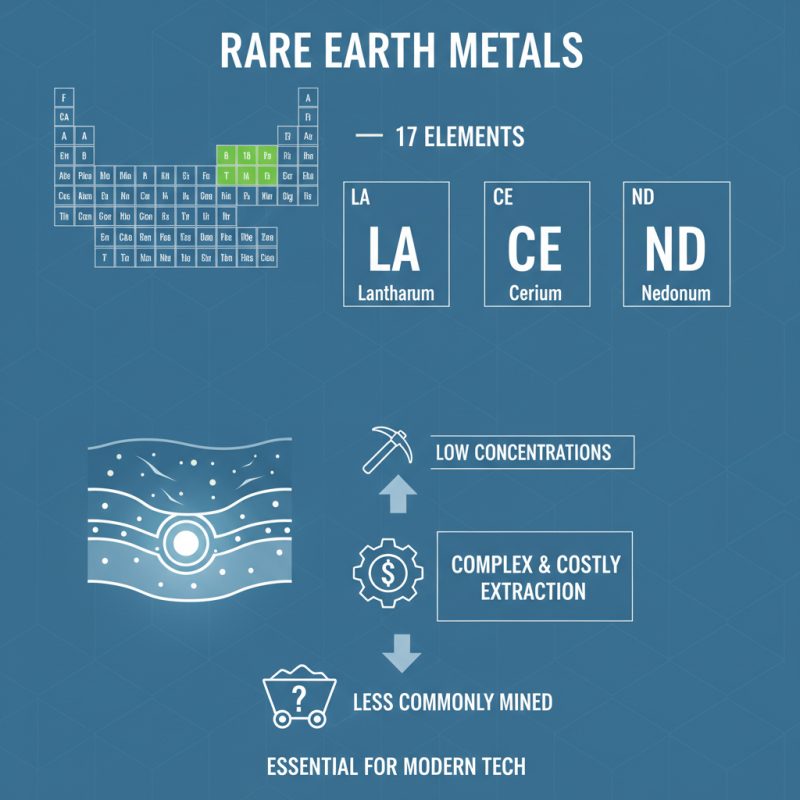
Rare earth metals are a group of 17 elements found in the periodic table. They include elements like lanthanum, cerium, and neodymium. These metals are not actually rare, but they are found in low concentrations. Their extraction is often complex and costly. As a result, they are less commonly mined than other minerals.
The classification of rare earth metals is generally split into two categories: light and heavy. Light rare earths include elements with atomic numbers 57 to 64. Heavy rare earths include those with atomic numbers 65 to 71. This division is significant for understanding their applications. Each category has distinct properties that make them valuable in various technologies.
Rare earth metals play crucial roles in modern industry. They are essential in making powerful magnets, vibrant displays, and efficient batteries. However, the mining process raises environmental concerns. The waste produced can be harmful. Many are exploring new ways to recycle these metals to reduce impact. Balancing technology and sustainability remains a pressing challenge.
Key Properties of Rare Earth Metals That Make Them Unique
Rare earth metals are unique for several reasons. They are not as rare as their name suggests. However, they are difficult to extract and refine. This process can harm the environment. Yet, their properties make them invaluable for modern technology.
One key property is their magnetic strength. Neodymium, for instance, creates powerful magnets used in wind turbines and electric vehicles. Another property is their ability to emit bright colors. Yttrium and europium are crucial for vibrant display screens. Their luminescent quality makes them essential in LED technology and phosphors.
The conductivity of some rare earth metals is also noteworthy. These metals enhance the efficiency of batteries and electronics. They improve performance while reducing energy loss. However, reliance on these metals can raise ethical concerns. Mining practices could impact local communities. The need to balance progress with responsibility is evident.
Key Properties and Uses of Rare Earth Metals
Rare earth metals possess unique properties that make them essential in various high-tech applications. Below is a chart depicting some key rare earth metals, their properties, and primary uses.
Major Sources and Global Production Statistics of Rare Earth Metals
Rare earth metals are essential for modern technology. They are found in many electronic devices, renewable energy applications, and military equipment. Despite their name, these metals are relatively abundant in the Earth's crust. Their extraction is often challenging and environmentally harmful. This has led to a critical look at how we obtain these resources.
China has been the dominant producer of rare earth metals. Over 60% of global production comes from there. Other countries, like Australia and the United States, are also trying to increase their output. The extraction processes in these regions vary significantly in efficiency and environmental impact. While some mines are making strides in sustainability, many still pose risks to local ecosystems and communities.
The fluctuating demand for rare earth metals creates uncertainty in the market. This leads to potential shortages and price spikes. Recycling efforts are gaining attention, but they are not yet widespread. People often overlook the long-term implications of rare earth mining. As technology continues to evolve, the focus should be on more sustainable practices.
Primary Applications of Rare Earth Metals in Technology and Industry
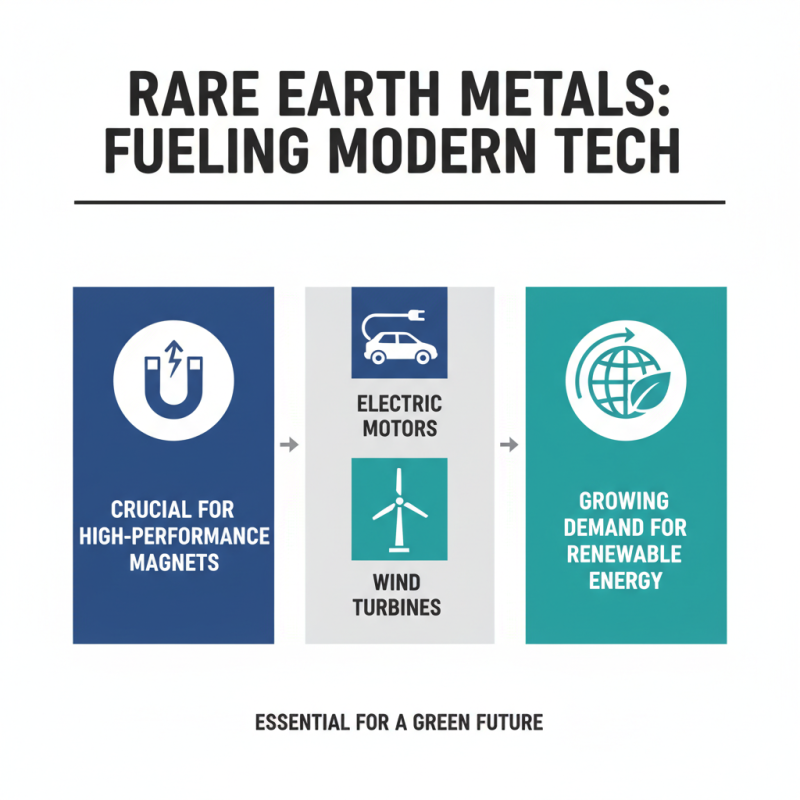
Rare earth metals play a crucial role in modern technology and industry. These elements, though not truly rare, have unique properties. They are essential for making high-performance magnets used in electric motors and wind turbines. The demand for these magnets is increasing as the world shifts toward renewable energy.
In the electronics sector, rare earth metals are critical for producing batteries and smartphones. The vibrant colors in LED displays come from these elements. However, the mining and processing of rare earth metals raise environmental concerns. Sustainable sourcing is a topic that needs more attention.
Additionally, rare earth elements are vital for military applications. They are used in precision-guided weapons and advanced communication systems. This reliance on these elements can create vulnerabilities in supply chains. As industries grow, so does the need for more responsible practices. Balancing progress and sustainability is a challenge that must be met.
Future Trends and Challenges in the Rare Earth Metal Supply Chain
The supply chain for rare earth metals is currently facing significant challenges. Global demand is rising, driven by technological advancements. Electric vehicles and renewable energy rely heavily on these metals. In fact, the demand for neodymium could increase by 50% by 2030.
One major challenge is the concentration of production. A few countries control most of the supply, creating vulnerabilities. If any disruption occurs in these regions, the entire market can feel the impact. Reports indicate that supply shortages may become common in the coming years. Producers must diversify sources to mitigate risks.
Tips: Diversification is key. Companies should explore partnerships with emerging markets. Consider investing in recycling initiatives. These strategies can help ensure a stable supply.
Another issue is environmental concerns. Extracting rare earth metals often leads to pollution and habitat destruction. Sustainable practices must be prioritized. There is a growing emphasis on responsible sourcing. Industry players must take this seriously. Lack of action can hurt their reputation and sales.
Tips: Stay informed about sustainable practices. Encourage suppliers to adopt eco-friendly methods. Transparency in sourcing can build trust with consumers.
What Are Rare Earth Metals and Their Key Uses?
| Rare Earth Metal |
Key Uses |
Future Trends |
Challenges |
| Neodymium |
Powerful magnets for motors and generators |
Growing demand in electric vehicles |
Supply chain vulnerabilities |
| Dysprosium |
Enhances magnetic properties in high-temperature applications |
Increase in hybrid and electric vehicles |
Environmental regulations impacting mining |
| Lanthanum |
Used in camera and telescope lenses |
Advancements in optical technologies |
Trade tensions affecting availability |
| Cerium |
Catalysts for automotive emissions control |
Boost in global automotive regulations |
Recycling challenges and efficiency |
| Terbium |
Green phosphors in LED technology |
Growth in solid-state lighting |
Limited sources and geopolitical issues |