What are Rare Earth Oxides and Their Uses?
Rare Earth Oxides are a group of 17 chemically similar elements essential for modern technology. They play a key role in various industries, from electronics to renewable energy. According to a 2022 market report, the global rare earth elements market is expected to reach $13.6 billion by 2027, growing at a CAGR of 7.2%.
These oxides are crucial for manufacturing powerful magnets, catalysts, and phosphors. For instance, neodymium iron boron magnets are vital for electric vehicles and wind turbines. Without Rare Earth Oxides, the transition to a more sustainable energy future would be hindered. However, reliance on a few sources creates vulnerability.
Moreover, mining and processing Rare Earth Oxides often raise environmental concerns. Practices can lead to habitat destruction and pollution. As demand increases, the industry faces pressure to adopt greener technologies and improve efficiency. The challenge lies in balancing development with sustainability, an ongoing concern that needs reflection for future progress.

Definition and Characteristics of Rare Earth Oxides
Rare earth oxides (REOs) are a group of chemical compounds derived from rare earth elements. These elements are categorized into two groups: light rare earth elements (LREEs) and heavy rare earth elements (HREEs). REOs are typically characterized by their high chemical stability and unique optical properties. They are often utilized in various industrial applications. For instance, neodymium oxide is critical for producing powerful magnets used in electric motors.
The global rare earth oxide market was valued at approximately $4 billion in 2020, with projections to grow annually by 11% through 2026. This growth is primarily driven by increasing demand for clean energy technologies, including electric vehicles and wind turbines. However, the supply chain faces challenges. The extraction process often raises environmental concerns. Additionally, geopolitical issues can impact global supply. Moreover, reliance on a few countries for REO production raises concerns about long-term sustainability.
REOs exhibit unique characteristics that make them indispensable in modern technology. They're used in phosphors for LED lights and catalysts in automotive applications. Yet, inefficiencies exist in recycling processes. Only a fraction of REOs from waste products is recovered. As technology advances, improving recycling methods could prove beneficial. This reflects a need for better resource management in the rare earth sector. Balancing demand with ecological impacts remains a critical challenge.
Usage of Rare Earth Oxides in Various Industries
This chart illustrates the application of rare earth oxides across various industries, showcasing their crucial roles in electronics, renewable energy, automotive, aerospace, and defense sectors, with the percentages indicating their respective usage rates.
Major Sources and Extraction Methods of Rare Earth Oxides
Rare earth oxides (REOs) play a crucial role in modern technology. They are derived from rare earth elements, primarily found in minerals like monazite and bastnasite. The extraction of REOs is not straightforward. It often involves complex processes that can be harmful to the environment.
Many REOs are obtained through mining. After the ore is extracted, it undergoes crushing and grinding. This step increases the surface area for further processing. Once ground, the minerals are often treated with chemicals to separate the desired oxides. This is where things can get tricky. Chemical methods can harm local ecosystems.
**Tip:** Always consider environmentally friendly extraction methods. Research shows that greener technologies are emerging, helping reduce pollution.
Another common method is hydrometallurgy. This involves using aqueous solutions to recover rare earth elements. While effective, it still poses risks. Wastewater containing toxic substances can contaminate nearby water sources. It's essential to manage this waste carefully.
**Tip:** Monitoring waste produced during REO extraction is vital. Regular assessments can help mitigate long-term impacts.
No method is perfect. Ongoing research aims to make processes more sustainable. However, finding a balance between demand and environmental impact remains a challenge. Our choices now will shape the future of rare earth oxide extraction.
What are Rare Earth Oxides and Their Uses?
| Rare Earth Oxide |
Major Sources |
Extraction Method |
Use Cases |
| Lanthanum Oxide (La2O3) |
Monazite, Bastnasite |
Hydrochloric Acid Leaching |
Catalysts, Optical Glass |
| Neodymium Oxide (Nd2O3) |
Bastnasite, Monazite |
Calcination and Reduction |
Magnets, Lasers |
| Samarium Oxide (Sm2O3) |
Monazite |
Hydrometallurgical Process |
Permanent Magnets, Nuclear Reactors |
| Yttrium Oxide (Y2O3) |
Yttrialite |
Hightemperature Reduction |
Phosphors, LEDs |
| Dysprosium Oxide (Dy2O3) |
LREE Ores |
Acid Leaching |
Batteries, Nuclear Applications |
Applications of Rare Earth Oxides in Technology and Industry
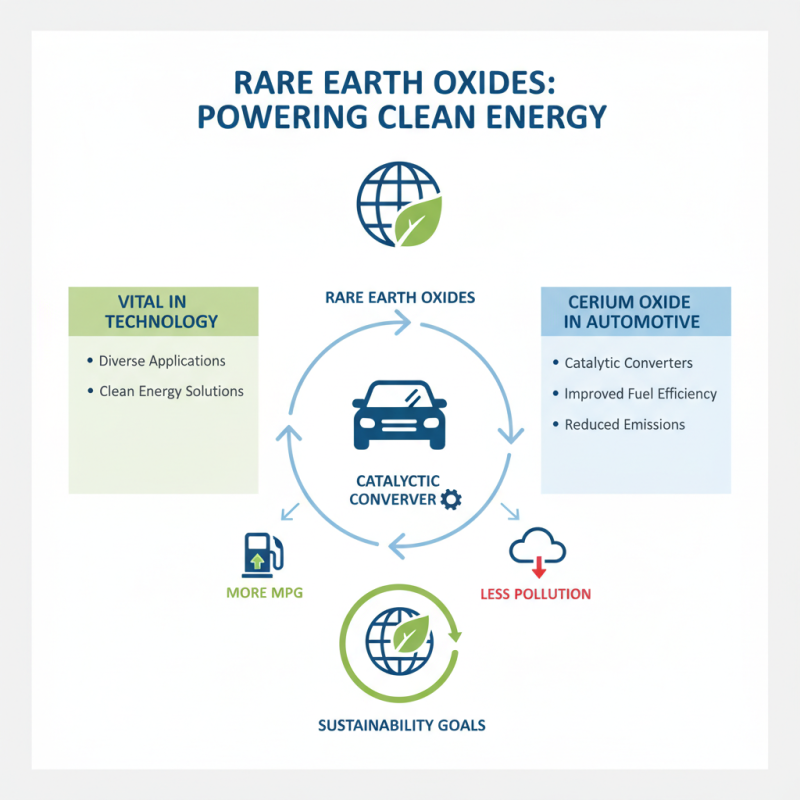
Rare Earth Oxides (REOs) are vital in various technologies. They play a significant role in clean energy solutions. For instance, Cerium oxide is used in catalytic converters. It improves fuel efficiency and reduces emissions. This contributes to sustainability goals for the automotive industry.
In the electronics sector, Neodymium oxide is crucial. It is used in making powerful magnets found in headphones and hard drives. Reports estimate that the global demand for these magnets will reach 200,000 metric tons by 2025. However, supply chain challenges often arise. Mining and processing REOs can be environmentally damaging. The industry faces pressure to adopt greener practices.
Furthermore, REOs are essential in medical technologies. They are used in imaging systems and cancer treatments. Yttrium oxide is commonly utilized in these applications. This sector expects steady growth as advancements continue. Yet, reliance on limited suppliers raises concerns. The journey towards sustainable sourcing remains an issue for many. Addressing these challenges is critical for future innovations.
Environmental Impact and Sustainability of Rare Earth Oxides
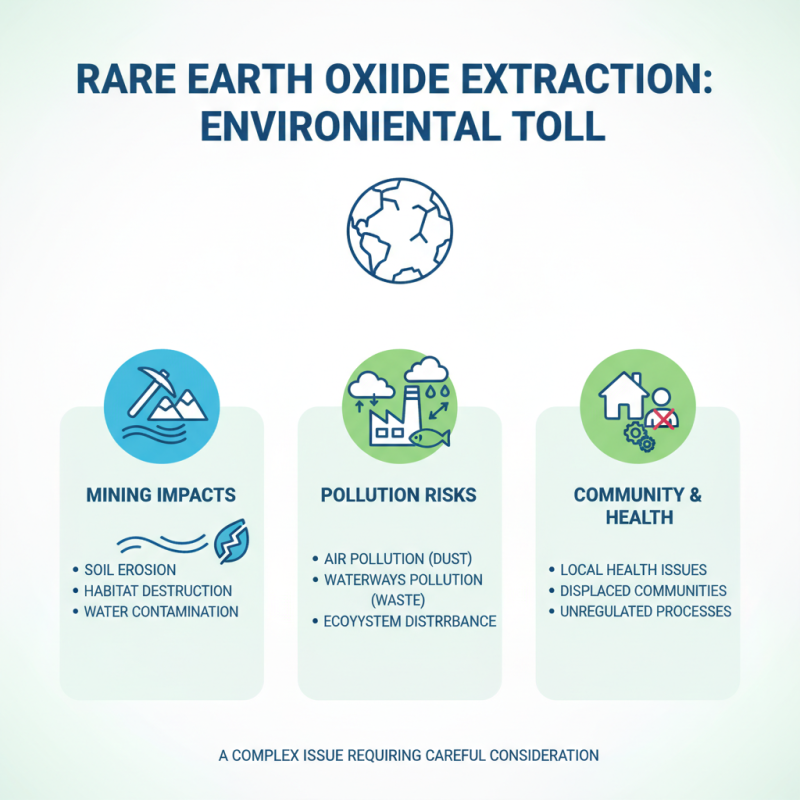
Rare earth oxides are essential materials in modern technology. However, their extraction often raises significant environmental concerns. Mining these oxides can lead to soil erosion, water contamination, and habitat destruction. When unregulated, these processes disturb ecosystems. The dust and waste generated can pollute air and waterways, impacting local communities. It’s a complex issue that warrants careful consideration.
Sustainability efforts are emerging to mitigate these impacts. Some companies are exploring closed-loop systems to minimize waste. Innovations like recycling rare earth metals from electronic devices are gaining traction. This approach reduces the need for mining and conserves natural resources. However, effective recycling technologies still face challenges. Many people are unaware of proper disposal methods for their electronics, leading to more hazardous waste. Addressing these gaps requires enhanced public awareness and education.
While rare earth oxides are crucial for technology, we must reflect on their environmental costs. Striking a balance between industrial needs and ecological preservation is essential. Continuous efforts are needed to improve extraction methods. The dialogue surrounding these materials is only beginning, and we must tread carefully.
Future Trends and Challenges in Rare Earth Oxide Usage
Rare earth oxides (REOs) play a vital role in modern technology. However, their usage presents challenges.
The environmental impact of mining these materials is significant. Pollution and habitat destruction often accompany extraction processes.
Moreover, supply chains for REOs can be complex and vulnerable to geopolitical tensions. Access to these materials may become limited in the future.
Future trends indicate that scientists are searching for alternatives. Recycling rare earth elements is one approach gaining traction.
It offers a way to reduce waste and reliance on virgin materials.
There is also a push for developing synthetic materials to mimic REO properties. While research in these areas is promising, hurdles remain.
The technology for efficient recycling is still in its infancy.
The demand for REOs continues to rise. Electric vehicles and renewable energy technologies are major drivers.
As industries grow, sustainability becomes crucial. Balancing the need for these materials with environmental stewardship is necessary.
The future should consider innovative solutions to support both economic and ecological health.