Rare Earth Metals play a crucial role in modern technology. These elements are essential for producing smartphones, electric vehicles, and renewable energy solutions. Their unique properties make them indispensable for many high-tech applications.
There are ten rare earth metals that are particularly noteworthy. Each of these metals possesses distinct characteristics that enhance the functionality of devices we use daily. However, the mining and processing of these elements can be environmentally damaging. This raises questions about sustainability and ethical sourcing.
Understanding rare earth metals is vital today. It highlights the balance between technological advancement and ecological responsibility. We must strive for better practices in extraction. Awareness is key to ensuring a responsible approach to these valuable resources.
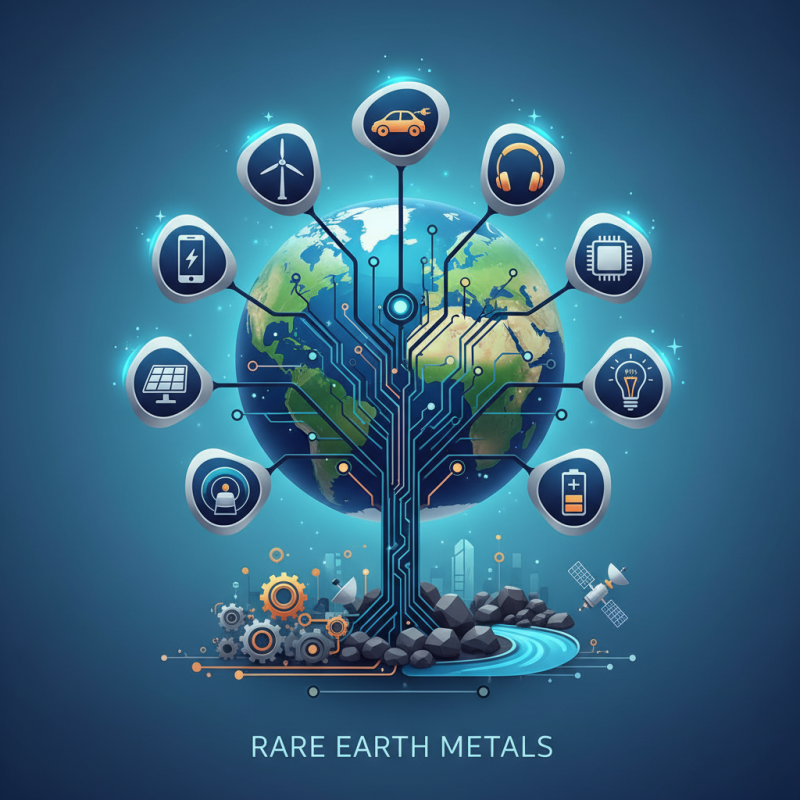
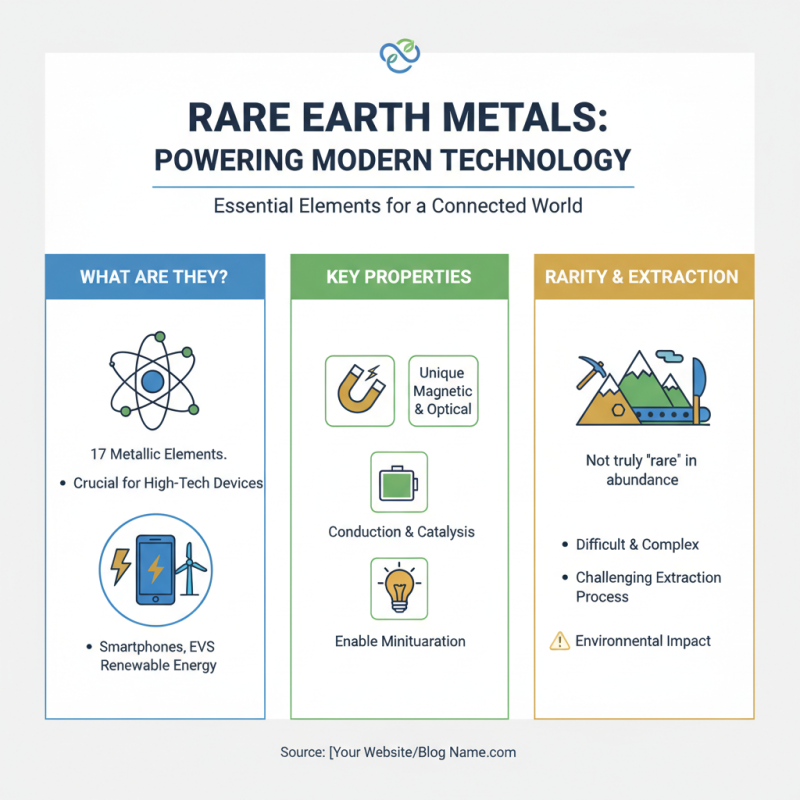
Rare earth metals are vital for modern technology. These elements power smartphones, electric vehicles, and renewable energy systems. There are 17 rare earth metals, each with unique properties. They are not truly rare in abundance but are difficult to mine and extract.
China dominates the production of these metals. This raises concerns about supply chain security. Many countries are exploring alternative sources. New mining projects are underway, but environmental impacts must be considered. Balancing technology needs and ecological responsibility is challenging.
Innovation in recycling rare earths is growing. Extracting these metals from old electronics presents a sustainable solution. However, the process is not yet efficient. More research is needed to perfect these methods. As demand increases, the industry must adapt and improve. The journey ahead will not be easy.

Rare earth metals are often categorized into two groups: light and heavy. Light rare earth metals include elements like lanthanum, cerium, and neodymium. These metals are abundant and widely used in various applications, including batteries and catalysts. For instance, neodymium is essential for powerful magnets in electric motors. According to a recent report by the U.S. Geological Survey, demand for neodymium is projected to increase by 5% annually.
On the other hand, heavy rare earth metals consist of elements like dysprosium and terbium. They are less abundant and more expensive. These metals are crucial for high-performance applications, such as in certain types of lasers and advanced electronics. A study from Research and Markets highlighted that the market for heavy rare earths is expected to grow significantly. However, the mining and extraction processes can raise environmental concerns. Furthermore, reliance on a few countries for supply can lead to vulnerabilities in the market.
While the distinction between light and heavy rare earth metals is significant, many industries still face challenges. The extraction process can be harmful. It's essential to focus on sustainable practices. As demand rises, we must evaluate our methods and seek innovative solutions. Balancing industry needs and environmental impacts remains a pressing issue.
Rare earth metals are vital for modern technology. They include elements like neodymium, europium, and dysprosium. Neodymium is critical for making powerful magnets. These magnets are used in electric motors and wind turbines. They enhance energy efficiency but can be challenging to extract sustainably.
Europium is known for its unique luminescent properties. It is commonly used in LED lights and screens. This element helps produce bright, vibrant colors. However, it's rare and difficult to mine, raising questions about its long-term availability. Meanwhile, dysprosium plays a key role in making hard-drive components. Its demand is rising in the tech industry, but securing a stable supply chain remains an issue.
The use of rare earth metals reflects a growing dependence on limited resources. These metals are essential but challenging to source. Concerns about environmental impact and mining practices are significant. Striking a balance between technological advancement and responsible usage is crucial. Each of these metals has its unique importance, but their extraction raises environmental concerns and sustainability challenges.
| Element | Symbol | Key Properties | Common Uses |
|---|---|---|---|
| Lanthanum | La | Soft, ductile, malleable, high melting point | Camera lenses, glass, catalysts in petroleum refining |
| Cerium | Ce | Lightest of the rare earths, high oxidation state | Polishing powders, catalytic converters |
| Praseodymium | Pr | Stability, resistance to corrosive environments | Alloys for aircraft engines, magnets |
| Neodymium | Nd | Strong magnetic properties | High-strength magnets, lasers |
| Promethium | Pm | Radioactive, rare | Luminous paint, atomic batteries |
| Samarium | Sm | Ferromagnetic, high melting point | Magnets, nuclear reactors |
| Europium | Eu | Red phosphorescence, low ionization potential | Fluorescent and LED lights |
| Terbium | Tb | High thermal stability | Phosphors, solid-state devices |
| Dysprosium | Dy | High magnetic susceptibility | Permanent magnets, nuclear reactors |
| Holmium | Ho | Strong magnetic properties | Lasers, magnetic materials |
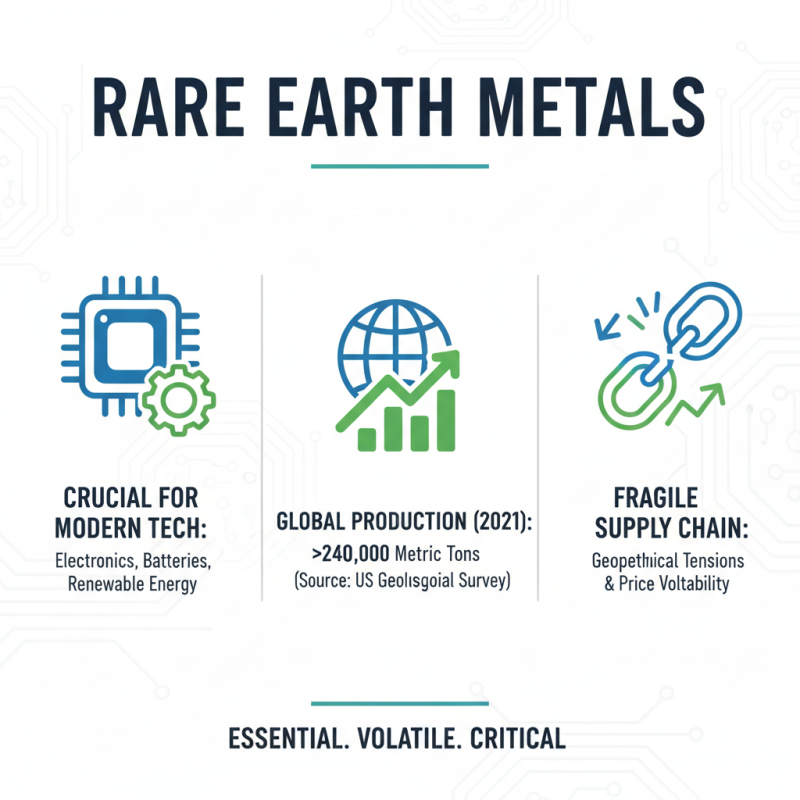
Rare earth metals play a crucial role in modern technology and industry. They are essential for manufacturing electronics, batteries, and renewable energy technologies. According to a 2021 report by the U.S. Geological Survey, global production reached over 240,000 metric tons, underscoring their importance. However, the supply chain is often fragile. Geopolitical tensions can disrupt availability, leading to price fluctuations.
The economic impact of these metals is significant. A study from the European Commission noted that the EU relies on imports for 98% of its rare earth metals. This dependency places nations in a vulnerable position. Moreover, the increasing demand from the green technology sector may drive prices higher. Electric vehicles and wind turbines require rare earth elements like neodymium. The projected growth rate for this sector is around 20% annually through 2025.
Despite their advantages, there are environmental concerns. Mining rare earth metals can lead to severe ecological damage. Waste management and resource depletion are pressing issues. Industry stakeholders must address these challenges to ensure sustainable practices. Balancing economic benefits and environmental responsibilities is complex but necessary for the future.
Mining and processing rare earth metals bring significant environmental challenges. The extraction process often leads to soil degradation. Contaminated water sources can endanger local ecosystems. As these elements are crucial for many technologies, demand continues to grow. However, the impact on the environment cannot be overlooked.
Chemical waste from mining operations poses serious risks. Heavy metals can leach into nearby habitats. Wildlife suffers, and plant life can be devastated. Poorly managed sites may lead to long-lasting damage. Many regions struggle to balance economic gain with ecological health. This creates a dilemma that requires careful consideration.
Efforts are underway to reduce the environmental footprint of rare earth metal extraction. Cleaner technologies are being explored. However, these methods are not widely implemented yet. The urgency for sustainable practices increases as awareness grows. Stakeholders must reflect on their choices to protect the planet while meeting industrial needs.