Top 10 Rare Earth Metals You Should Know About?
In the world of technology and sustainability, Rare Earth Metals play a crucial role. Dr. Michael L. Cummings, a noted expert in the field, once stated, “Understanding Rare Earth Metals is key to unlocking future innovations.” These metals, though rare, are vital for high-tech applications, including smartphones and electric vehicles.
Amid environmental concerns, the mining and refining processes of Rare Earth Metals pose significant challenges. Their extraction can lead to pollution and habitat destruction. Despite their importance, many industries face ethical dilemmas in sourcing these materials. This complex relationship with nature and technology invites reflection on our consumption patterns.
Exploring the top ten Rare Earth Metals highlights their unique properties and applications. Each metal serves specific needs in modern technology. However, it also raises questions about sustainability and responsibility. Balancing innovation with environmental stewardship is critical. The landscape of Rare Earth Metals is ever-evolving, pushing us to rethink our approach to technology and nature.

Overview of Rare Earth Metals and Their Importance
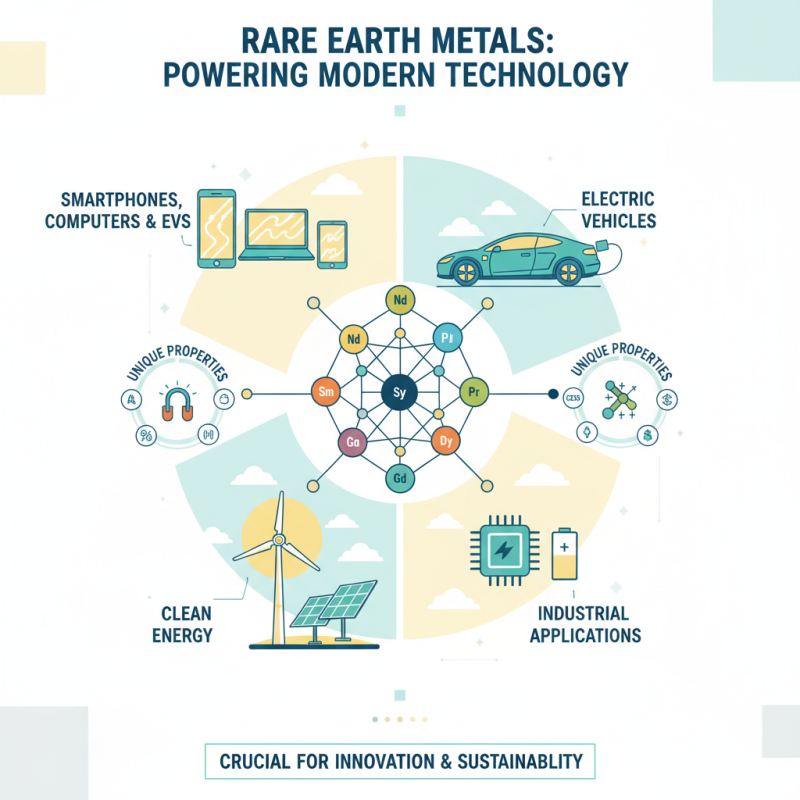
Rare earth metals are crucial for modern technology. They are a group of seventeen elements that play key roles in many applications. These metals power smartphones, computers, and electric vehicles. They are essential for clean energy technologies too, like wind turbines and solar panels. Their unique properties make them invaluable in many industries.
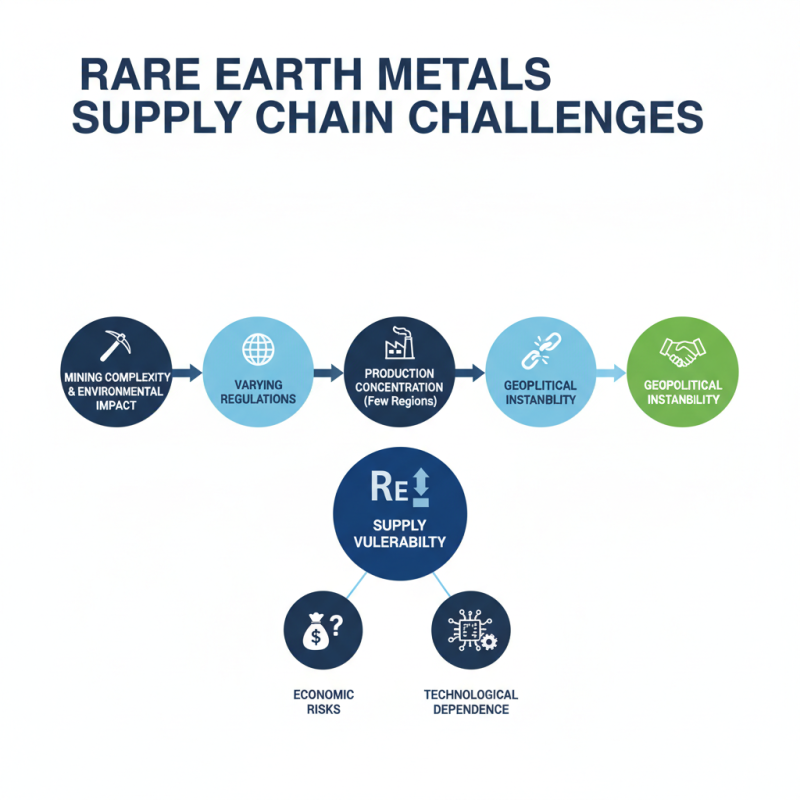
Despite their name, rare earth metals are not actually rare in existence. However, their extraction and processing can be quite complicated. Only a few countries dominate their production, raising concerns about supply chains. This concentration can lead to geopolitical tensions. Additionally, mining operations can pose significant environmental challenges. The impact on local ecosystems often requires careful management and oversight.
Understanding rare earth metals is vital. As technology advances, the demand for these materials is expected to rise. This may lead to further exploration of alternative sources and recycling methods. Society must balance progress with environmental responsibility. The future depends on finding sustainable solutions. How we handle these resources will shape technological innovations.
Identification of the Top 10 Rare Earth Metals
Rare earth metals are vital in modern technology. They play a key role in smartphones, electric vehicles, and renewable energy sources. Yet, many people don't know about them. These metals are not exactly rare in abundance. Instead, they are hard to extract and refine. Their specific properties make them unique.
Among the ten important rare earth metals, neodymium stands out. It is used in strong magnets, crucial for wind turbines and efficient motors. Promethium, on the other hand, is quite rare. It's found in small quantities and used in luminous paint. Then there's europium, known for its role in LED lights. Each metal has its unique characteristics and applications.
However, not all rare earth metals have positive impacts. Mining and refining can cause environmental issues. Proper regulations may not always be followed. Understanding these metals means recognizing their potential and the challenges they present. We need to reflect on the balance between technology and environmental responsibility. The story of rare earth metals is one of progress and concern.
Top 10 Rare Earth Metals
The following bar chart represents the top 10 rare earth metals based on their abundance in the Earth's crust and their applications in various industries.
Properties and Applications of Each Rare Earth Metal
Rare earth metals play a crucial role in modern technology. They are not truly rare but are challenging to extract economically. Neodymium, for instance, is vital for strong permanent magnets. These magnets are used in wind turbines and electric vehicles. In recent years, demand for neodymium has surged, driven by green energy initiatives.
Another important metal is lanthanum. It is commonly used in camera and microscope lenses. Lanthanum enhances optical clarity significantly. Research shows that its consumption in optical devices has increased by 15% annually. Meanwhile, gadolinium is essential in medical imaging, particularly MRI machines. The unique magnetic properties of gadolinium allow for better imaging results.
Cerium, often used in catalytic converters, remains crucial for reducing vehicle emissions. Its use has grown with the rise in vehicle production. However, concerns over environmental impacts remain. Extracting these metals raises issues related to sustainability. In the future, better recycling methods may be needed. It is essential to address these challenges as demand continues to rise.
Top 10 Rare Earth Metals You Should Know About
| Element |
Symbol |
Atomic Number |
Properties |
Applications |
| Lanthanum |
La |
57 |
Soft, ductile, and silvery white metal |
Used in camera lenses and studio lighting |
| Cerium |
Ce |
58 |
Shiny, silvery-white metal that oxidizes in air |
Used in catalytic converters and glass polishing |
| Praseodymium |
Pr |
59 |
Soft, silvery, and malleable metal |
Used in magnets and dyes for glasses |
| Neodymium |
Nd |
60 |
Bright silvery metal |
Used in strong magnets and lasers |
| Promethium |
Pm |
61 |
Soft and silvery-white metal |
Used in luminous paint and atomic batteries |
| Samarium |
Sm |
62 |
Hard and silvery metal |
Used in magnets and nuclear reactors |
| Europium |
Eu |
63 |
Soft, silvery metal |
Used in phosphorescent coatings and lasers |
| Gadolinium |
Gd |
64 |
Silvery-white and malleable metal |
Used in MRI contrast agents and neutron capture |
| Terbium |
Tb |
65 |
Soft and silvery-gray metal |
Used in green phosphors and solid-state devices |
| Dysprosium |
Dy |
66 |
Silvery metal with high magnetic susceptibility |
Used in magnets and nuclear reactors |
Global Distribution and Sources of Rare Earth Metals
Rare earth metals are crucial in modern technology. Their distribution around the globe varies widely. China holds the largest reserves, controlling much of the supply. Other countries like Australia and the United States also have notable sources. But the extraction methods can lead to environmental challenges. Mining often disturbs ecosystems and requires significant water usage.
In addition to mining, recycling rare earth metals from electronic waste is becoming more important. This process can reduce pressure on natural reserves. However, not all technologies are efficient in recovering these metals. Many materials still go to waste. The complexity of rare earth metal processing adds another layer of difficulty. It requires careful planning and innovation to improve recovery rates.
Countries are striving for more sustainable practices. Collaboration between industries can drive advancements. Yet, the balance between demand and environmental impact remains a challenge. Understanding these dynamics is vital as we move forward. The road is complex, requiring reflection on our handling of these critical resources.