What is Rare Earth Oxides and Their Importance in Modern Technology?
Rare Earth Oxides are critical materials in today’s technology landscape. These compounds play a key role in advancing various modern devices. Dr. Emily Carter, a leading expert in materials science, emphasizes their significance, stating, “Without Rare Earth Oxides, our tech-driven future would be dim.”
These oxides are essential for manufacturing high-performance electronics and electric vehicles. They enhance the efficiency of magnets, batteries, and phosphors, powering innovation across multiple sectors. However, the reliance on Rare Earth Oxides raises concerns. The mining and refining processes can be environmentally intrusive.
We must reflect on the balance between technological advancement and ecological responsibility. As demand grows, sustainable practices must evolve. The future hinges on our ability to harness Rare Earth Oxides wisely while protecting our planet.
Definition and Composition of Rare Earth Oxides
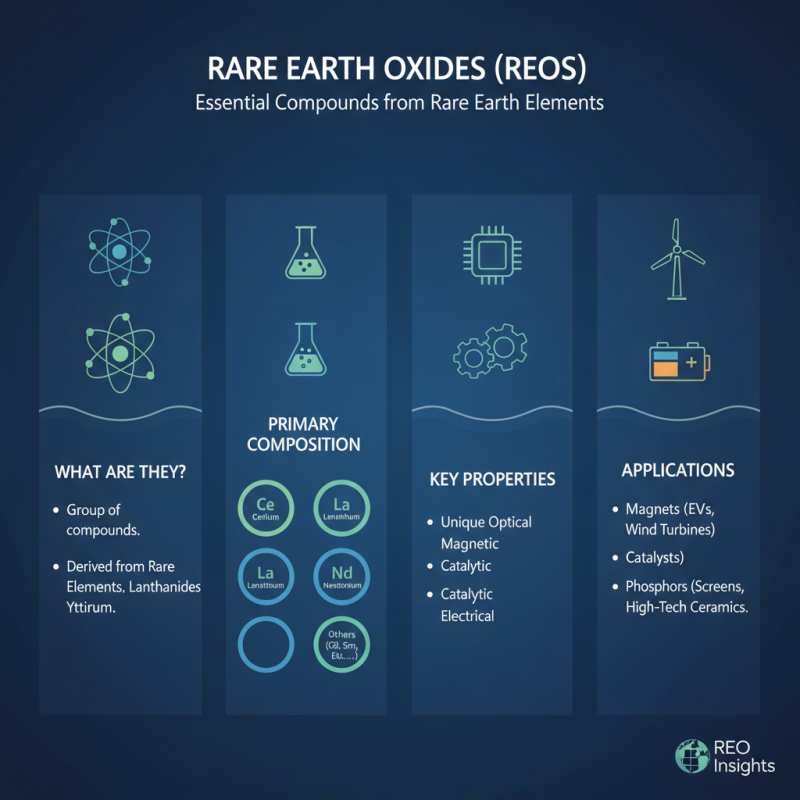
Rare Earth Oxides (REOs) are a group of compounds derived from rare earth elements. These elements include lanthanides and yttrium. Rare earth oxides are primarily composed of cerium, lanthanum, neodymium, and others. Each oxide has unique properties that make it valuable in various applications.
In technology, REOs play a critical role. Cerium oxide is known for its exceptional catalytic properties. It's used in catalytic converters for vehicles. Neodymium oxide is essential in making powerful magnets for electric motors. These applications are vital for advancements in green technology. Scientists are constantly exploring new uses for these materials.
Despite their benefits, there are drawbacks. The extraction process for rare earth elements can be environmentally damaging. Mining activities often lead to soil and water contamination. Additionally, there is growing concern over the supply chain. The reliance on limited sources raises questions about sustainability. Balancing these concerns is crucial as technology continues to evolve.
Historical Discovery and Development of Rare Earth Oxides
Rare earth oxides were discovered in the early 19th century. They became well-known through significant advances in chemistry. The first rare earth element, yttrium, was isolated in 1794 by Johan Gadolin. It marked the beginning of the discovery of this fascinating group of elements.
Over decades, other rare earth elements were identified. Europium was discovered in 1896, and it plays a key role in modern technology. In the mid-20th century, researchers began to understand the importance of these oxides. They are crucial in the production of electronics, magnets, and catalysts.
Tips: When studying rare earths, focus on their diverse applications. Consider their roles in renewable energy and electronic devices. Understand that their extraction can have environmental impacts. Balancing technology use and sustainability is vital.
The historical development of rare earth oxides shows a pattern of growing recognition. Initially overlooked, they are now essential to modern technology. Their journey from discovery to application reflects human innovation and resourcefulness. It's crucial to reflect on how this knowledge shapes our future.
What is Rare Earth Oxides and Their Importance in Modern Technology?
| Rare Earth Oxide |
Symbol |
Atomic Number |
Primary Use |
| Lanthanum Oxide |
La2O3 |
57 |
Catalysts in petroleum refining |
| Cerium Oxide |
CeO2 |
58 |
Glass polishing, catalysts |
| Praseodymium Oxide |
Pr6O11 |
59 |
Magnets, glasses |
| Neodymium Oxide |
Nd2O3 |
60 |
High strength magnets |
| Samarium Oxide |
Sm2O3 |
62 |
Magnets, lasers |
| Europium Oxide |
Eu2O3 |
63 |
Phosphors, LEDs |
| Terbium Oxide |
Tb4O7 |
65 |
Phosphors, magnets |
| Dysprosium Oxide |
Dy2O3 |
66 |
High-temperature magnets |
Key Applications of Rare Earth Oxides in Modern Technology
Rare earth oxides (REOs) play a crucial role in modern technology. They are essential for various applications, significantly impacting our daily lives. One of the most notable uses is in the production of powerful magnets. These magnets are found in electric motors and generators, driving the efficiency of renewable energy systems. Without REOs, electric vehicles and wind turbines would be far less efficient.
In electronics, REOs are vital in manufacturing screens and displays. They enhance color quality in televisions and computer monitors. Additionally, they aid in the production of phosphors for LED lights. This application has led to brighter, more energy-efficient lighting solutions. However, the growing demand for these materials raises concerns about sustainability and environmental impact. The mining processes can be detrimental, leading to habitat destruction.
The need for recycling REOs is evident. Significant amounts are wasted in discarded electronics. Finding ways to recover these materials from old devices is essential. This approach not only conserves resources but also reduces pollution. Innovations in recycling can lead to a more sustainable future for technology. However, the technology and infrastructure for this process are still in development. As we continue to rely on rare earth oxides, addressing these challenges is vital.
Environmental Impact and Ethical Considerations of Rare Earth Mining
Rare earth oxides play a vital role in modern technology. They are essential for producing smartphones, electric vehicles, and renewable energy solutions. However, their extraction raises significant environmental concerns. Mining activities often lead to habitat destruction, water pollution, and toxic waste generation. These impacts are alarming and require careful examination.
In many regions, rare earth mining has altered landscapes drastically. Forests have been cleared, and soil erosion has increased. Local communities sometimes suffer from contaminated water sources. This not only affects human health but also harms wildlife. Additionally, the demand for these minerals often leads to unethical labor practices. Workers in some mines face poor conditions and inadequate safety measures.
This situation calls for reflection. As technology advances, the environmental and ethical implications of resource extraction must not be overlooked. Sustainable mining practices could mitigate some of the damage. Innovations in recycling can also reduce dependency on new rare earth sources. Keeping these issues in mind is crucial as society moves towards a more tech-driven future.
Future Trends and Innovations in Rare Earth Oxide Utilization
Rare earth oxides are essential in many high-tech applications. They play a crucial role in devices like smartphones and electric vehicles. As technology evolves, the demand for these materials continues to rise. However, the extraction and processing of rare earth oxides often pose environmental challenges. Balancing economic benefit and ecological integrity is critical.
Future trends show an increased focus on recycling and sustainable sourcing. Innovations in extraction methods promise to reduce waste. New technologies are emerging that could make the process more efficient. For instance, researchers are exploring bioleaching techniques. This could offer greener solutions compared to traditional mining practices.
Emerging industries like renewable energy heavily rely on rare earth oxides. Wind turbines and solar panels utilize these materials for better performance. Yet, the geopolitical tensions surrounding their supply chain raise concerns. Ensuring a stable supply while addressing these challenges is an ongoing issue. As we innovate, continuous reflection on sustainability remains important.
Importance of Rare Earth Oxides in Modern Technology
This bar chart illustrates the global demand for various rare earth oxides, which are critical in modern technologies such as electronics, renewable energy, and advanced materials. The data reflects the importance of these elements in driving innovation and the future trends in their utilization.