Why Are Rare Earth Oxides Essential for Modern Technology?
Rare Earth Oxides are crucial for today’s technology. According to Dr. Emily Carter, a prominent expert in materials science, “Without Rare Earth Oxides, modern technology would grind to a halt.” This statement highlights their essential role in various high-tech applications.
These oxides serve as key components in electronics, renewable energy systems, and defense technologies. They enhance the performance of smartphones, electric vehicles, and wind turbines. The demand for Rare Earth Oxides has surged in the last decade. However, the supply chain faces challenges, including geopolitical tensions and environmental concerns.
The production of Rare Earth Oxides is not flawless. Extraction methods often lead to pollution and waste. This indicates a need for sustainable practices. Moreover, over-reliance on a few sources can create vulnerabilities in the market. We should reflect on how to balance technological progress with environmental stewardship and resource security. The future hinges on our approach to managing these vital materials.

Importance of Rare Earth Oxides in Technological Advancements
Rare earth oxides play a crucial role in technological advancements today. These materials are vital for the manufacture of many electronic devices.
Smartphones, laptops, and electric vehicles rely on them for enhanced performance. Their unique chemical properties make them perfect for high-tech applications. For instance, they improve battery efficiency and magnetic properties.
In the realm of renewable energy, rare earth oxides are essential.
Wind turbines and solar panels utilize them to increase energy conversion. However, the supply chain poses a challenge. Mining and processing these materials can be environmentally damaging. The pursuit of sustainability in this industry needs more attention.
There is also a risk of supply shortages.
As technology evolves, the demand for rare earth oxides will grow. Innovative solutions may help ease environmental concerns. Recycling these materials could reduce waste and reliance on new mining operations.
There’s much work to do to balance this demand with ecological responsibility. The future of technology hinges on how we manage these precious resources.
Key Applications of Rare Earth Oxides in Electronics and Renewable Energy
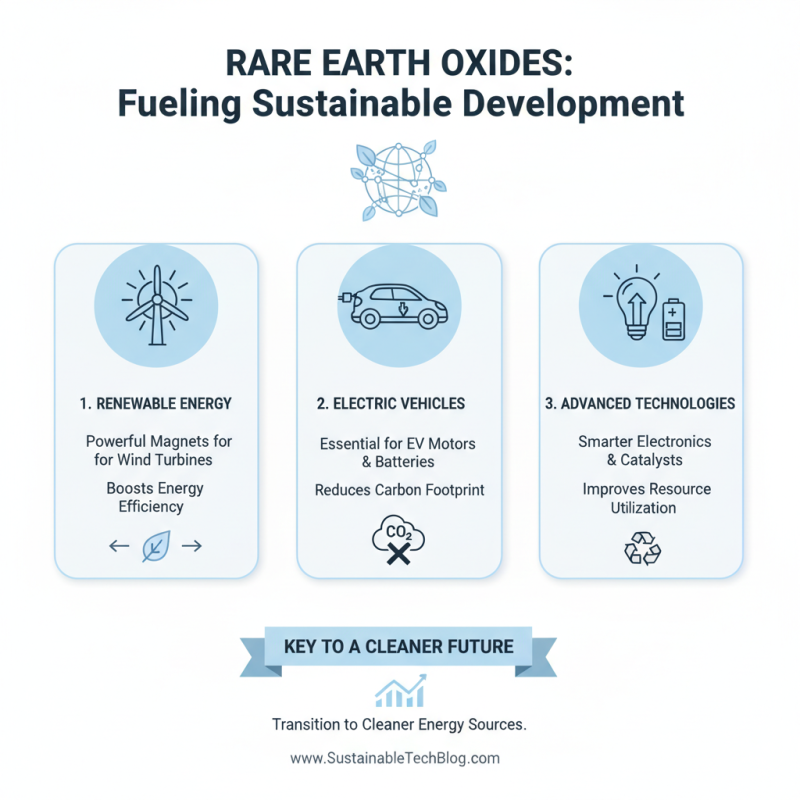
Rare earth oxides play a crucial role in modern technology. These materials are essential for various applications in electronics and renewable energy. For instance, they are key components in manufacturing high-performance permanent magnets. These magnets are found in electric motors and generators, which are vital for renewable energy systems.
In electronics, rare earth oxides are used in displays, such as LED screens and smart devices. They enhance brightness and color quality. This makes devices more appealing and energy-efficient. However, the extraction process can be harmful to the environment. It raises questions about sustainability and alternatives. More research is needed to find eco-friendly solutions.
Furthermore, rare earth elements are often concentrated in a few regions. This creates supply chain vulnerabilities. Dependence on specific areas can lead to geopolitical conflicts. Diverse sourcing and recycling strategies should be explored. The path forward is not straightforward, but innovation is necessary for a greener future.
Challenges in the Supply Chain of Rare Earth Oxides and Future Prospects
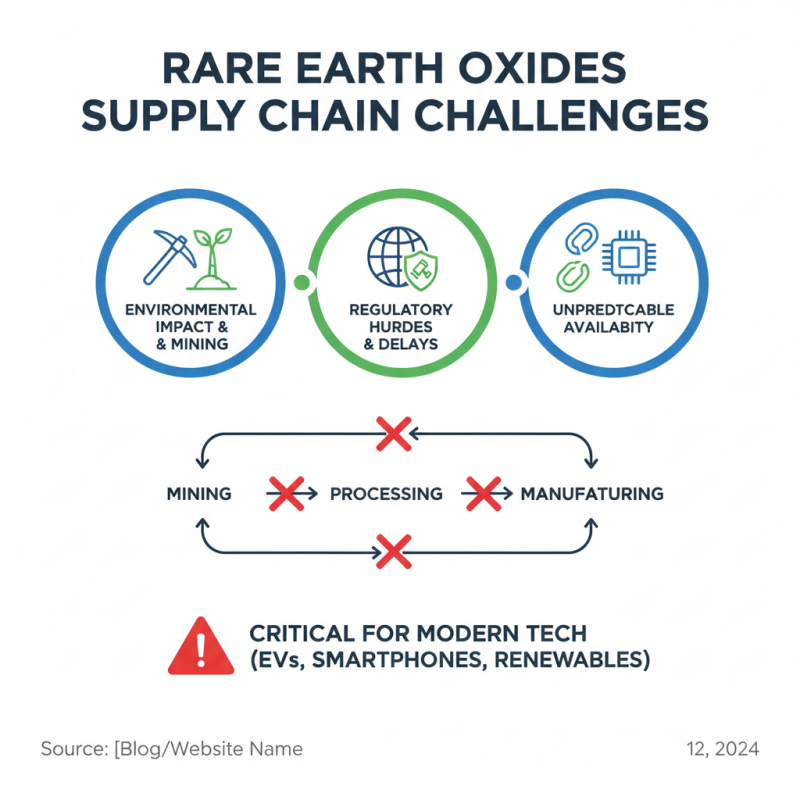
The supply chain of rare earth oxides faces significant challenges. These materials are vital for modern technology, yet their availability is unpredictable. Mining processes can be harmful to the environment. Regions rich in these resources often grapple with regulatory issues, leading to delays in extraction.
Geopolitical tensions further complicate matters. Supply disruptions can occur suddenly, affecting industries globally. This inconsistency creates uncertainty for manufacturers relying on these materials. The sector has seen increased demand, but the infrastructure is not adapting quickly enough.
Future prospects depend on innovation in recycling technologies. Improving recovery rates of rare earth oxides could alleviate some supply issues. However, the recycling process is still developing and can be inefficient. Investing in alternative materials is another avenue, yet it comes with its own set of challenges. Addressing these issues requires collaboration between governments, industries, and researchers.
Innovations Driven by Rare Earth Oxides in Emerging Technologies
Rare earth oxides (REOs) play a crucial role in modern technology. These unique materials drive innovations in various emerging fields. From smartphones to renewable energy solutions, REOs enhance performance and efficiency. For instance, they are essential for creating stronger magnets used in electric vehicles and wind turbines. This contribution is significant as the world shifts towards greener technologies.
Tips: Always consider the source of your materials. Recycling rare earth oxides is an important step toward sustainability. It reduces dependency on mining and preserves resources.
In optics, REOs are vital for manufacturing high-quality display screens. They improve color accuracy and brightness. However, the reliance on these materials raises concerns about availability. Access to rare earth elements can be unpredictable. This fact demands careful consideration as industries grow.
Tips: Explore alternative materials and technologies. Research is ongoing to find substitutes for rare earth oxides. Innovations could lead to more sustainable solutions. Keeping an eye on these developments can inform future projects.
Why Are Rare Earth Oxides Essential for Modern Technology?
| Application |
Rare Earth Oxide |
Purpose |
Emerging Technology |
| Smartphones |
Neodymium Oxide (Nd2O3) |
Used in powerful magnets for speakers and vibrators |
Consumer Electronics |
| Electric Vehicles |
Lanthanum Oxide (La2O3) |
Enhances battery performance |
Renewable Energy |
| Medical Imaging |
Yttrium Oxide (Y2O3) |
Used in scintillation detectors |
Healthcare Technology |
| Green Technologies |
Cerium Oxide (CeO2) |
Catalyst in diesel engines to reduce emissions |
Clean Energy |
| Displays |
Europium Oxide (Eu2O3) |
Red phosphor in LED lights |
Display Technology |