10 Best Rare Earth Alloy Uses You Need to Know?
Rare earth alloys play a crucial role in various industries, from technology to renewable energy. Renowned expert Dr. Emily Hart, a leader in materials science, states, "Rare earth alloys are the backbone of modern innovation." This highlights their significance and versatility in today's applications.
Many people overlook the unique properties of rare earth alloys. These materials combine different elements, enhancing their strength and resistance. They are vital in manufacturing high-performance magnets, batteries, and catalysts. Each application demonstrates the importance of quality and design in rare earth alloys.
Despite their advantages, the production of rare earth alloys presents challenges. Sourcing the raw materials can be difficult, and environmental concerns must be addressed. Awareness of these issues is essential for sustainable growth in the industry. As we explore the top ten uses of rare earth alloys, it is important to consider both their benefits and drawbacks in our modern world.

Overview of Rare Earth Alloys and Their Importance
Rare earth alloys play a crucial role in various industries, thanks to their unique properties. These materials are primarily composed of rare earth metals, which provide exceptional strength, corrosion resistance, and thermal stability. According to the International Energy Agency, rare earth elements contribute significantly to clean energy technologies, essential for reducing carbon emissions. For example, they are vital in producing high-efficiency magnets used in wind turbines and electric vehicles.
The demand for rare earth alloys is expected to grow. A report by Market Research Future predicts that the global rare earth market will reach $7 billion by 2026. This increase is largely driven by advancements in electronics, renewable energy, and aerospace applications. Not only do these alloys enhance performance, but they also contribute to the development of lighter and stronger materials, which is essential for modern engineering.
Tip: Always consider the environmental impact of rare earth mining. Sustainable practices are necessary to minimize ecological damage. Additionally, keep an eye on market trends for rare earth alloys, as prices can fluctuate based on global supply chains. Understanding these dynamics can help in making informed decisions in related investments or research.
10 Best Rare Earth Alloy Uses You Need to Know
This bar chart illustrates the importance level (from 1 to 10) of various applications of rare earth alloys. These materials are essential in many technologies, reflecting their critical role in modern society.
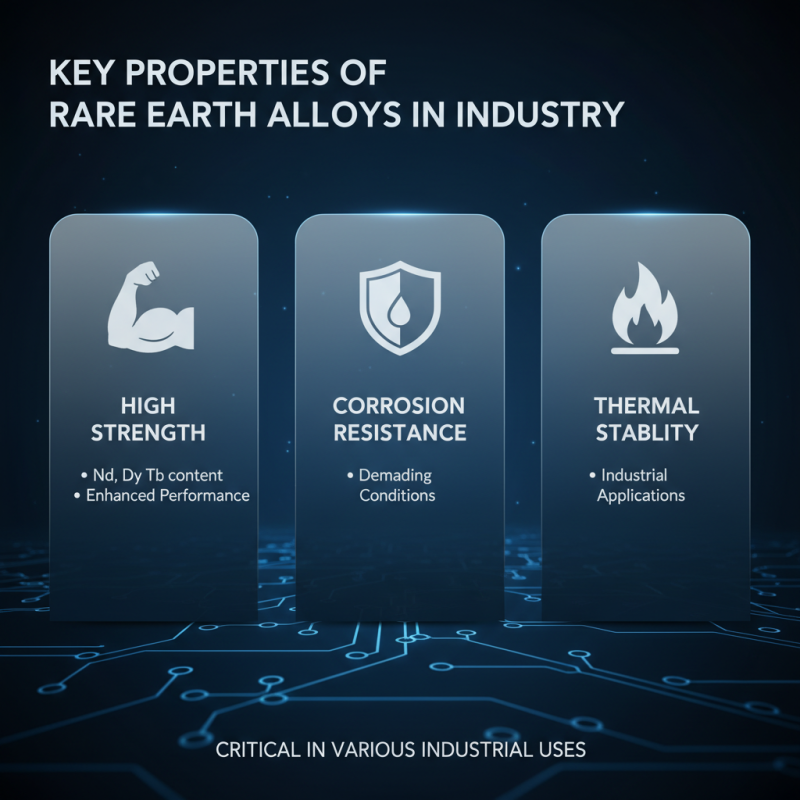
Key Properties of Rare Earth Alloys in Industry Applications
Rare earth alloys are critical in various industrial applications. Their unique properties, such as high strength, corrosion resistance, and thermal stability, make them invaluable. These alloys often contain elements like neodymium, dysprosium, and terbium, which enhance performance in demanding conditions.
According to a 2022 report by the U.S. Department of Energy, rare earth alloys can improve the efficiency of lightweight applications. In the aerospace sector, they are used in turbine engines where high heat resistance is essential. The alloy's ability to withstand high temperatures can extend the lifespan of these engines, reducing replacement costs.
Additionally, rare earth alloys significantly benefit electronics. Their magnetic properties improve the efficiency of electric motors and generators. A study by the International Energy Agency revealed that rare earth magnets can enhance performance by up to 30%. However, with rising demand, sourcing these materials sustainably remains a challenge. Some applications may face balancing performance and environmental impact.
Top 10 Applications of Rare Earth Alloys Across Different Sectors
Rare earth alloys are becoming essential in various sectors. Their unique properties enhance performance in many applications. For example, in the automotive industry, these alloys improve fuel efficiency in electric vehicles. A report by MarketsandMarkets states that the rare earth element market is projected to reach $12 billion by 2025, driven by automotive demand.
In the aerospace sector, rare earth alloys are utilized in high-strength components. They reduce weight while maintaining durability. The aerospace industry alone is expected to consume about 50% of the global rare earth production. However, there are concerns regarding supply chain sustainability. Most rare earth sources are concentrated in a few countries, leading to potential shortages.
Medical devices are another area benefiting from these alloys. They are used in imaging equipment and high-precision surgical tools. The increasing demand for advanced medical technology highlights a potential market growth of around 8.5% annually. This growth raises questions about the environmental impact of rare earth mining. Addressing these issues is crucial for future development.
Innovations in Rare Earth Alloy Technologies and Future Trends
Rare earth alloys are revolutionizing various industries. Innovations in these materials are driving forward technology, especially in electronics and clean energy sectors. Their unique properties enhance the performance of magnets, batteries, and even smartphones. For example, neodymium magnets, made from these alloys, are vital in wind turbines and electric vehicle motors.
Looking ahead, trends suggest a focus on sustainability. Researchers are exploring recycling methods for rare earth materials. This can reduce dependency on mining and lower environmental impact. Furthermore, advancements in processing technologies promise to make the production of rare earth alloys cleaner and more efficient. However, challenges remain. The supply chain for these materials is complex and sometimes unstable. Prices can fluctuate unpredictably, affecting manufacturers and consumers alike. Thus, while the future seems promising, cautious approaches are necessary in implementation.
Environmental Impact and Sustainability of Rare Earth Alloy Use
Rare earth alloys are crucial in modern technology, from electronics to renewable energy. However, their extraction and use pose significant environmental challenges. The European Commission reported that mining rare earth elements can lead to soil degradation and water contamination. Many mining practices neglect sustainability, emphasizing the need for eco-friendly methods.
The lifecycle of rare earth alloys highlights their impact on ecosystems. For instance, recycling rare earth materials can reduce the demand for virgin materials. A study by the United Nations Environment Programme suggests that recycling could fulfill up to 50% of demand by 2030. This shift not only conserves resources but also lowers carbon emissions.
Despite these benefits, challenges remain. The rarity of these materials means that mining activities can disrupt local communities. There's a fine balance between technological advancement and environmental preservation. As industries push for more efficient rare earth alloy usage, they must also prioritize sustainability. This includes investing in cleaner extraction techniques and promoting recycling initiatives.
10 Best Rare Earth Alloy Uses You Need to Know
| Use |
Description |
Environmental Impact |
Sustainability Practices |
| Permanent Magnets |
Used in motors and generators for electric vehicles and renewable energy systems. |
Potential pollution from mining; however, reduces carbon emissions in applications. |
Recycling programs for magnets in electric motors. |
| Catalysts |
Improve efficiency of chemical processes in oil refining and emission control. |
Reduces greenhouse gas emissions but requires careful waste management. |
Development of biodegradable catalysts to minimize waste. |
| Glass Additives |
Enhance the quality and stability of glass products. |
Low environmental impact if sourced responsibly; mining can cause habitat destruction. |
Use of recycled materials and sustainable sourcing practices. |
| Phosphors |
Used in LEDs and display technologies. |
Energy-intensive production; potential pollution. |
Research on non-toxic alternatives and improved manufacturing processes. |
| Battery Construction |
Enhances performance and lifespan of rechargeable batteries. |
Resource-intensive mining but supports renewable energy transition. |
Focus on second-life applications and battery recycling technology. |