Top 10 Rare Earth Oxides Suppliers in China for Global Buyers?
The demand for Rare Earth Oxides continues to surge worldwide. These materials are vital for various industries, including electronics, renewable energy, and defense. However, sourcing these essential oxides can be challenging due to their limited availability.
China plays a crucial role in this market, dominating the supply chain. Numerous suppliers across the nation offer a range of Rare Earth Oxides, each varying in quality and reliability. Understanding the landscape can be daunting for global buyers.
Identifying the top suppliers is essential for ensuring consistent quality and supply. A detailed assessment of these companies reveals their strengths and weaknesses. Each supplier offers unique insights that can shape purchasing decisions. As the global market evolves, remaining informed about these suppliers is vital for success.
Overview of Rare Earth Oxides and Their Importance in Global Supply Chains
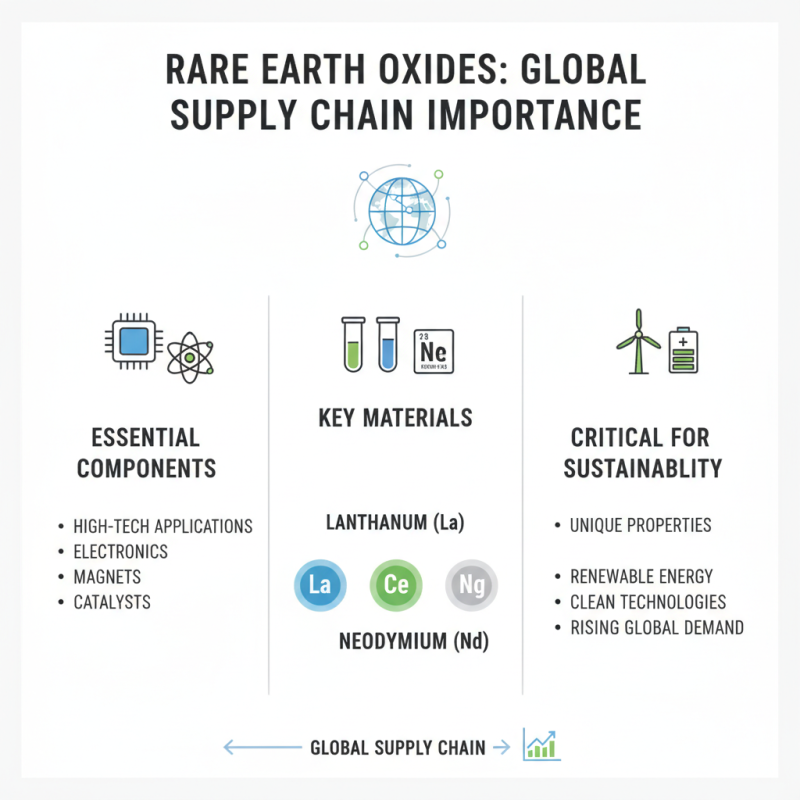
Rare earth oxides are essential components in various high-tech applications. They enhance the performance of electronics, magnets, and catalysts. These materials include lanthanum, cerium, and neodymium. Their unique properties make them critical for sustainable technologies such as renewable energy. The demand for these oxides continues to rise globally.
China is a key player in the supply chain of rare earth oxides. The country holds a significant portion of the world's reserves. This dominance raises questions about dependency and stability. Global buyers often rely on Chinese suppliers for consistent quality. However, geopolitical factors can disrupt supply. It’s essential for companies to diversify their sources.
Investors and manufacturers must consider the implications of relying heavily on a single supplier. Fluctuating prices and trade restrictions pose risks. Understanding the landscape of rare earth oxides aids strategic planning. Challenges exist, but so do opportunities for innovation and collaboration. Balancing supply risks with demand is crucial for future growth.
Key Factors Influencing the Selection of Rare Earth Oxides Suppliers
When selecting rare earth oxides suppliers in China, several factors play a crucial role.
Quality assurance is paramount. Buyers should demand detailed
certifications of purity and consistency. Without this, the risk of inferior products
increases significantly. It is advisable to visit facilities. On-the-ground assessments reveal a lot about operational practices.
Another key factor is supply chain transparency. Suppliers should offer clear insights into
their sourcing and processing methods. Miscommunication can lead to serious delays. Additionally, understanding logistics capabilities
matters deeply. Robust logistics ensure timely delivery, especially for global customers.
Lastly, building a trustworthy relationship with suppliers is important. Engaging in open
dialogue fosters collaboration. It allows both parties to address potential issues proactively. A reliable supplier engages in
short feedback cycles. This enables continuous improvement and creates a more resilient supply chain.
In the end, thorough research and genuine engagement lead to better outcomes for buyers.
Top Chinese Suppliers: Profiles and Capabilities in Rare Earth Oxides
In recent years, China has solidified its position as a leader in the rare earth oxide market. This sector has shown an annual growth rate of over 5% based on industry reports. Chinese suppliers are critical players for global buyers due to their extensive mining and processing capabilities. They dominate approximately 80% of global rare earth production. This concentration raises concerns about supply chain vulnerabilities for industries reliant on these materials.
The profiles of these suppliers reveal a diverse range of capabilities. Many focus on innovative extraction methods. Some companies emphasize environmental sustainability in production. Despite advancements, challenges remain. These include fluctuating prices and geopolitical tensions, which can impact supply stability. Suppliers are aware of these issues. They actively seek to diversify their sources and improve operational efficiency.
Quality control is paramount in this sector. Suppliers invest heavily in technological upgrades to enhance product purity. Industry reports indicate that the demand for high-purity rare earth oxides is rising sharply. This trend reflects the growing use of these materials in electronics and renewable energy sectors. While most suppliers are committed to quality, inconsistencies in production can occur. Maintaining reliability is an ongoing challenge in this evolving market landscape.
Market Trends and Future Projections for Rare Earth Oxides Supply in China
China's dominance in the rare earth oxides market continues to shape global supply chains. According to industry reports, China accounts for nearly 70% of global rare earth oxides production. As electric vehicle and renewable energy sectors flourish, demand for these materials is growing rapidly. Projections suggest that the market could expand by 6% annually over the next five years, reaching a value of over $5 billion by 2028.
However, challenges loom over this vibrant market. Environmental concerns and mining restrictions have led to fluctuating supply levels. In recent years, stricter government regulations have been implemented, impacting the production rates of rare earth elements. Companies need to adapt to these changes while maintaining quality and consistency. Supply chain transparency remains a crucial issue that requires ongoing attention from suppliers and buyers alike.
Tip: Engage with multiple suppliers to mitigate risks associated with supply disruptions. Build relationships for better negotiations and ensure consistent quality. Understanding local regulations is essential, as it can affect market access and pricing. The landscape is evolving, and awareness is key.
Challenges and Considerations for Global Buyers in Sourcing Rare Earth Oxides
Sourcing rare earth oxides in China presents unique challenges for global buyers. The supply chain is often complex. Buyers must navigate various regulations and standards. Understanding the local market conditions is crucial. Price volatility can create additional pressures. Buyers may find themselves caught off guard by sudden changes in pricing or availability.
It’s essential for buyers to establish reliable relationships with suppliers. Communication can sometimes be a barrier, especially across cultures. If misunderstandings arise, they can lead to setbacks. Due diligence is necessary to ensure suppliers meet quality standards. Not all suppliers offer the same product consistency.
Moreover, logistics play a significant role in sourcing rare earth oxides. Shipping delays and customs issues can disrupt plans. Buyers must account for these variables in their procurement strategies. An effective contingency plan is vital. Staying informed about geopolitical factors also impacts sourcing decisions. Ultimately, thorough research and careful planning are key to navigating this market.