2026 Top Trends in Rare Earth Magnet Recycling Innovations?
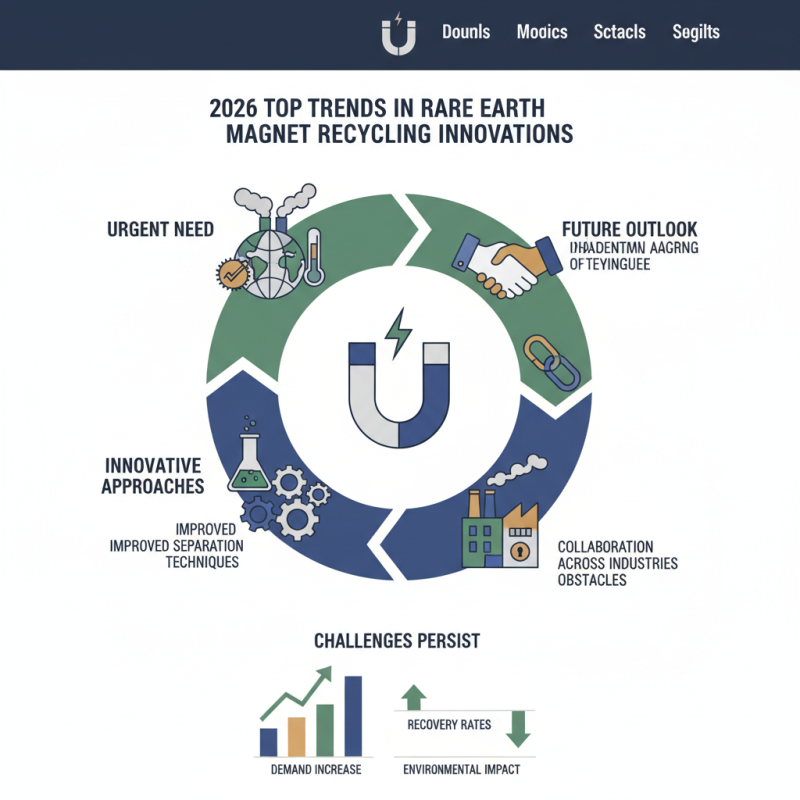
The urgent need for sustainable practices drives innovations in Rare Earth Magnet Recycling. As industries expand, the demand for rare earth magnets increases, raising concerns about their environmental impact. Traditional recycling methods often fall short, leading to waste and resource depletion.
Innovative approaches are emerging in 2026. Companies are exploring new technologies for efficient recycling processes. For example, hydrometallurgical methods present a promising solution, though they require further refinement. There’s a need for improved separation techniques to enhance recovery rates.
However, challenges persist. Current recycling infrastructure is often inadequate. Many facilities struggle with outdated equipment and lack of investment. This creates a disconnect in the recycling loop, causing valuable materials to go to waste. The future of Rare Earth Magnet Recycling rests on overcoming these obstacles and fostering collaboration across industries.
Emerging Technologies in Rare Earth Magnet Recycling for 2026
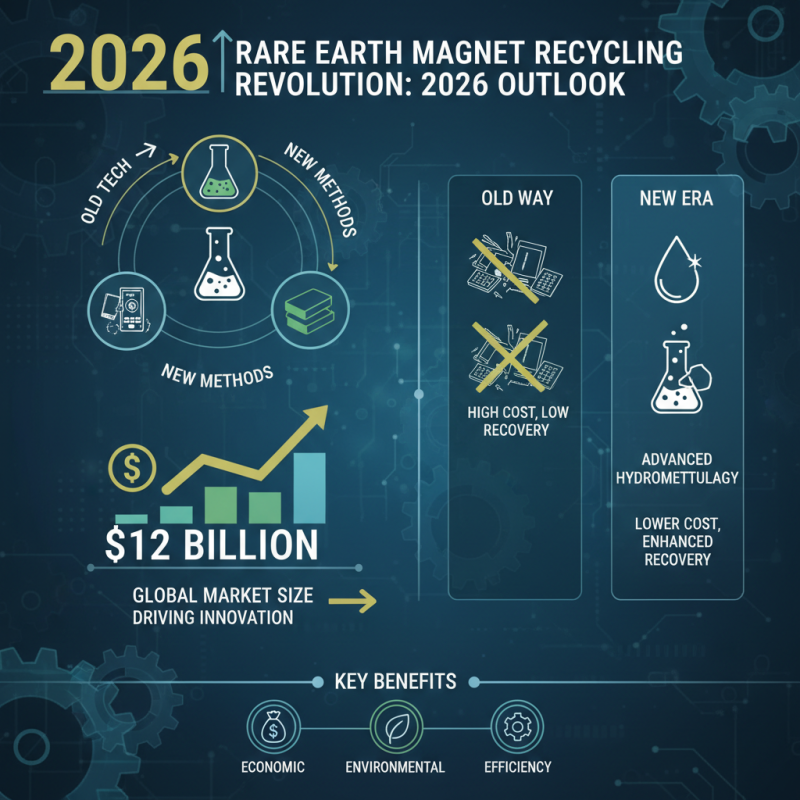
In 2026, the focus on rare earth magnet recycling is shifting dramatically. Emerging technologies are paving the way for more efficient methods. For instance, recent studies reveal that the global rare earth market size is projected to reach $12 billion by 2026, emphasizing the need for innovation in recycling processes. New techniques are lowering costs and enhancing recovery rates. Some innovations include advanced hydrometallurgical methods, which separate rare earth elements more effectively.
Tips: Consider exploring local recycling facilities. Many are adopting new technologies.
Experts predict that automation will play a major role in future recycling operations. This automation could lead to increased efficiency. Yet, challenges remain in scaling up these technologies. Ensuring that smaller operations can implement these innovations is crucial. Not all facilities are equipped to adapt quickly.
Tips: Stay informed about emerging technologies. They can impact your choices in recycling solutions.
Investing in research is vital for the industry. Collaboration between academia and manufacturers may yield significant advancements. However, maintaining quality and environmental standards is a pressing issue. Balancing innovation with sustainability will define the industry's future. Future trends will rely on continuous improvement and adaptability in the recycling sector.
Key Players and Innovations Driving the Recycling Industry Forward
The future of rare earth magnet recycling is teeming with potential. Various players are pushing advancements in this field. Innovative techniques are emerging, enhancing efficiency and effectiveness in reclaiming valuable materials. Many technologies focus on solvent-based extraction. This method promises better yield rates. However, it can be challenging to optimize the extraction process.
Research institutions are also central to driving these innovations. They are exploring new chemical methods to improve recovery rates. Their findings often lead to pilot projects that test feasibility. Yet, translating these findings into commercial applications remains complex. Many ideas may seem promising but face practical barriers. The continuous feedback loop between research and industry is essential.
Collaboration is crucial in this evolving landscape. Whether between startups and established firms, partnerships can amplify progress. However, not all collaborations yield desired results. Some efforts may falter under market pressures. It’s vital to learn from these experiences. This process of trial, error, and adjustment will refine the industry. As these players innovate, the recycling industry is set to transform.
2026 Top Trends in Rare Earth Magnet Recycling Innovations
| Trend |
Description |
Impact on Industry |
Expected Growth (%) |
| Advanced Separation Techniques |
Innovative methods to efficiently separate rare earth elements from magnets. |
Increases recovery rates and reduces waste. |
25% |
| Hydrometallurgical Processes |
Use of aqueous chemistry to extract and recycle rare earth elements. |
Lower environmental footprint compared to traditional methods. |
30% |
| Increasing Regulation Compliance |
Stricter regulations pushing companies toward sustainable recycling solutions. |
Encourages industry to innovate and adapt. |
20% |
| Partnerships and Collaborations |
Collaboration between companies and research institutions to enhance recycling technologies. |
Accelerates innovation through knowledge-sharing. |
15% |
| Automation in Recycling Processes |
Implementation of robotics and AI in the recycling process. |
Enhances efficiency and reduces labor costs. |
35% |
Environmental Impact and Sustainability Benefits of Magnet Recycling
The recycling of rare earth magnets can significantly reduce environmental impact. According to recent studies, up to 90% of the materials can be recovered from end-of-life products. This process lowers the need for new raw materials, which often involve harmful mining operations. Mining for rare earth elements generates large amounts of carbon emissions. Recycling mitigates this. Producing new magnets from recycled materials uses 30% less energy compared to creating them from virgin resources.
Moreover, the sustainability benefits are profound. An estimated 1 ton of recycled rare earth magnets can save around 20 tons of CO2 emissions. This is a crucial factor as global efforts to combat climate change intensify.
However, the recycling process is not without challenges. The technologies involved are still developing. Many facilities lack the capability to recycle these materials efficiently. Inconsistencies in recycling rates also exist across different regions.
In conclusion, the potential for rare earth magnet recycling is substantial. Yet, there is much work to be done. Innovating new recycling technologies and increasing public awareness are key to maximizing its benefits. The future of magnet recycling hinges on finding these solutions.
Challenges and Opportunities in Rare Earth Magnet Recycling Processes
In the realm of rare earth magnet recycling, several challenges hinder effective processes. One major hurdle is the complex composition of these magnets. They often contain neodymium, dysprosium, and other materials. Extracting these components is not straightforward. Traditional recycling methods struggle with efficiency. According to a recent study by the International Energy Agency, only 1% of rare earth metals are recycled today.
Opportunities exist to develop innovative technologies. Advanced separation techniques, such as hydrometallurgy or biotechnological approaches, show promise. They can help recover valuable elements with reduced environmental impact. Also, the demand for these materials continues to rise. In 2022, the global market for rare earth magnets reached approximately $13 billion. It is projected to grow at a CAGR of 8% through 2028. This growth emphasizes the need for effective recycling solutions.
Reflections on current practices are essential. Many companies lack comprehensive strategies for recycling magnets. Coordination among industries is often missing. Without investment in research, progress may stall. A thorough approach to overcoming the challenges will be crucial for sustainable development in this sector.
2026 Trends in Rare Earth Magnet Recycling Innovations
Future Market Trends and Economic Implications of Recycling Innovations
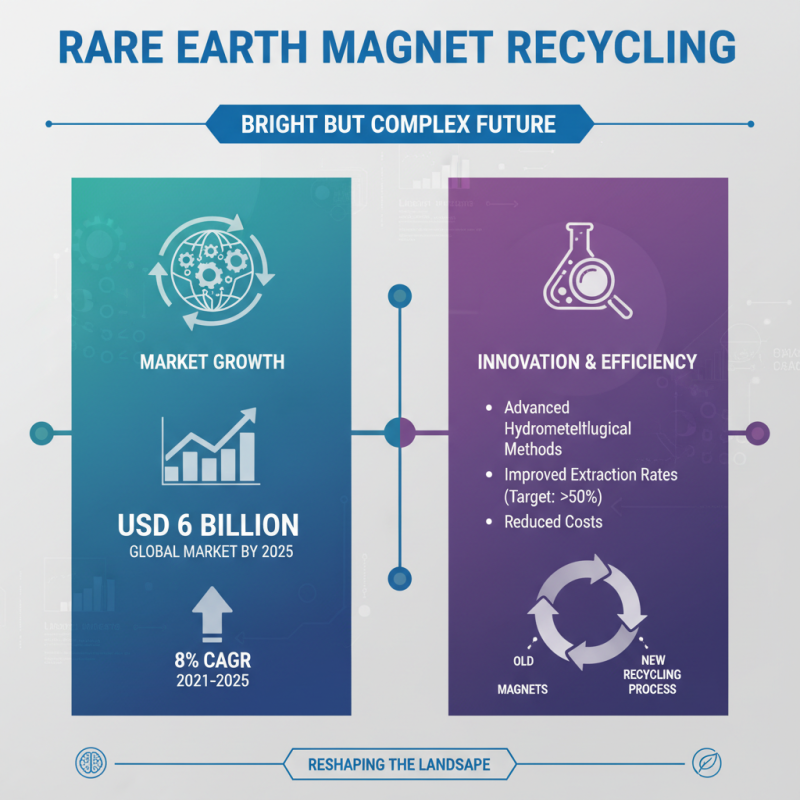
The future of rare earth magnet recycling is bright but complex. Recent reports suggest that the global rare earth recycling market could reach USD 6 billion by 2025, growing at a CAGR of 8% from 2021. Innovations in recycling processes are reshaping this landscape, with companies looking to enhance efficiency and reduce costs. For instance, advanced hydrometallurgical methods are being developed to improve extraction rates, which currently hover around 50%.
Economic implications are profound. With the increasing scarcity of rare earth materials, recycling becomes essential for sustainability. In 2023, the cost of raw rare earth elements increased by over 15%. This spike emphasizes the need for more robust recycling technologies. However, challenges remain. Industrial buyers still show hesitancy toward recycled materials due to perceived quality issues. Market adoption is slow, often due to outdated recycling infrastructure.
These factors demand attention. Recycling technologies must elevate to meet the market's expectations. The energy costs involved in recycling processes are often substantial and need reevaluation. Investing in cleaner and more effective solutions is vital. Without these improvements, the economic advantages of recycling may not be fully realized, leaving both environmental and financial benefits on the table.