How to Choose the Right Rare Earth Magnets for Your Projects
When embarking on a project that requires effective and reliable solutions, the choice of materials can significantly influence the overall success. Among these, Rare Earth Magnets stand out due to their exceptional strength and versatility. These magnets, composed of elements such as neodymium and samarium, provide a magnetic force far superior to conventional magnets, making them ideal for various applications ranging from electronics to industrial uses. However, selecting the right Rare Earth Magnets for your specific needs can be a daunting task, given the multitude of options available.
Understanding the unique properties of Rare Earth Magnets is crucial for making an informed decision. Factors such as magnet grade, size, shape, and coating options play pivotal roles in determining the suitability of these magnets for your project. Additionally, it’s essential to consider the environmental and physical conditions in which the magnets will operate, as these can significantly impact their performance and longevity. By gaining clarity on these aspects, you can ensure that you choose the right Rare Earth Magnets that not only meet your requirements but also enhance the efficiency and effectiveness of your project.

Understanding Different Types of Rare Earth Magnets: Neodymium vs. Samarium-Cobalt
When selecting the appropriate rare earth magnets for projects, understanding the two primary types—Neodymium and Samarium-Cobalt—is essential. Neodymium magnets, known for their exceptional strength, are particularly effective in applications requiring compact and powerful solutions. According to a report by Markets and Markets, the global neodymium magnet market is projected to reach USD 22.53 billion by 2026, driven largely by the increasing demand in sectors such as automotive and electronics. These magnets have a maximum energy product of around 52 MGOe, which makes them highly efficient for tasks such as small motor manufacturing and magnetic holding applications.
On the other hand, Samarium-Cobalt magnets, though typically more expensive, offer distinct advantages in specific environmental conditions. With a maximum energy product ranging from 20 to 30 MGOe, they provide good resistance to demagnetization and are more stable at higher temperatures, making them suitable for applications in aerospace, automotive, and military sectors where temperature fluctuations and exposure to corrosive environments are common. The global market for Samarium-Cobalt magnets is also growing, projected to expand at a CAGR of approximately 6% through 2027, reflecting their increasing adoption for precision applications that require consistent performance under challenging conditions. Each type of magnet has its unique properties, and choosing the right one hinges upon the specific requirements of the intended application.
Key Factors Influencing Magnet Strength: Grading Systems and Material Composition
When selecting rare earth magnets for various applications, understanding the grading systems and material composition is crucial for ensuring optimal performance. Rare earth magnets are primarily composed of
neodymium,
samarium,
cobalt, or a combination thereof, with neodymium magnets (NdFeB) being the most powerful commercially available magnets.
These magnets are graded based on their maximum energy product, which reflects their strength and capability. The grading typically follows a notation system like
N35, N42, or N52, where a higher number indicates stronger magnetic properties. For instance, according to industry reports,
N52 magnets can have a maximum energy product of around 50 MGOe (Mega Gauss Oersteds),
making them suitable for demanding applications such as motors and sensors.
In addition to grading, the composition of the magnet material plays a significant role in its performance and durability. Most commonly, neodymium magnets include
iron,
boron, and other elements that enhance their magnetic capabilities.
Data from the International Magnet Industry Association highlights that the proportion of these materials directly affects the magnet’s corrosive resistance and thermal stability.
For example, magnets coated with nickel or
epoxy tend to exhibit enhanced protection against corrosion, thereby extending their lifespan in various environments.
Therefore, evaluating both the grading system and the material composition is essential for choosing the right rare earth magnet tailored to specific project requirements.
Assessing Application Needs: Load Capacity and Environmental Considerations
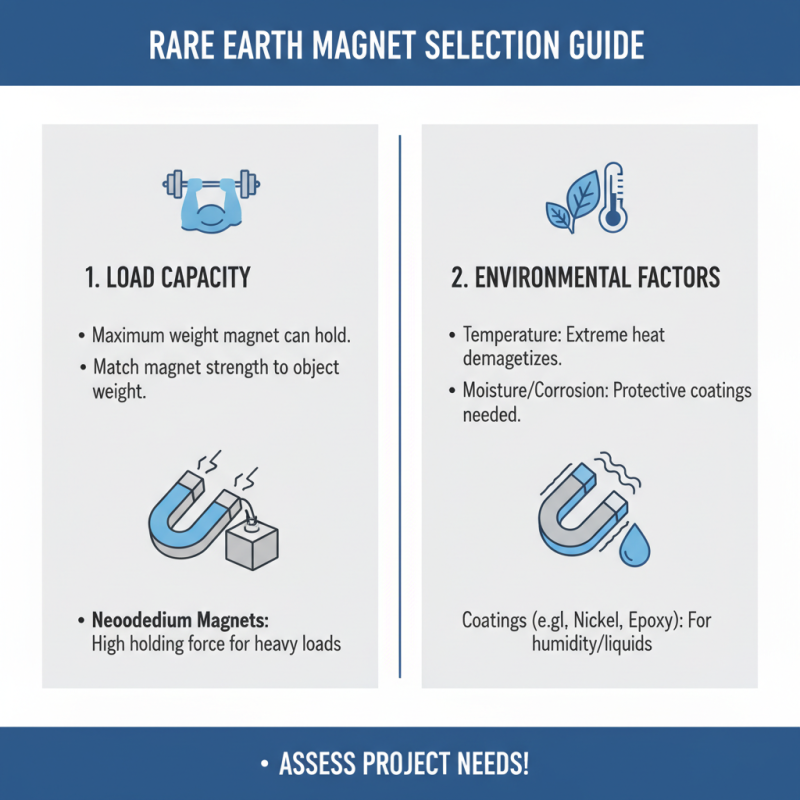
When selecting rare earth magnets for your projects, it's crucial to assess application needs, particularly load capacity and environmental considerations. Load capacity refers to the maximum weight a magnet can hold under specific conditions. Understanding the weight of the objects you intend to use the magnets with will help you choose the right strength. For example, if you're working on a project that involves lifting or holding substantial weight, opt for neodymium magnets, as they offer impressive holding force per unit volume.
Environmental factors play a significant role in the longevity and performance of your chosen magnets. Some rare earth magnets can degrade over time when exposed to elements such as moisture, temperature fluctuations, or corrosive substances. Therefore, consider whether your project will be indoors or outdoors. If you anticipate exposure to challenging conditions, look for magnets that come with protective coatings or are specifically designed for high-performance applications in various environments.
Tips: When determining the load capacity, always include a safety margin in your calculations—aim for at least a 50% surplus to account for unexpected stresses. Additionally, if your project involves frequent movement of magnets, consider using those with a lower pull force, allowing for easier handling without compromising on effectiveness. Always evaluate your project's specific requirements and environments to ensure optimal magnet selection.
Evaluating Cost-Effectiveness: Price vs. Performance Metrics in Magnet Selection
When selecting rare earth magnets for various projects, evaluating cost-effectiveness is crucial. The price of these magnets can vary significantly based on their composition, size, and performance characteristics. According to the latest reports from the International Magnetics Association, neodymium magnets, which dominate the rare earth market, can cost anywhere from $50 to $100 per kilogram, depending on market fluctuations and purity levels. However, investing in higher-grade magnets can yield better performance and longevity, leading to reduced maintenance costs over time.
Performance metrics such as magnetic strength, operational temperature limits, and tolerance to environmental conditions should also be considered. For example, a high-performance neodymium magnet may exhibit a maximum energy product (BHmax) of about 40 MGOe, allowing for efficient and compact design in applications ranging from motors to medical equipment. A recent industry analysis indicated that projects utilizing high-quality rare earth magnets could see efficiency gains of up to 30%, reinforcing the idea that a careful balance between upfront investment and long-term performance can significantly impact overall project success. Investing in superior materials often translates into better reliability and innovation capabilities, outweighing the initial cost differences when viewed through the lens of lifecycle cost assessment.
Conducting Safety and Handling Procedures: Best Practices for Rare Earth Magnets
When working with rare earth magnets, adhering to safety and handling procedures is crucial due to their strong magnetic forces. One of the primary best practices is to always maintain a safe distance from other metallic objects. The strong attraction can lead to quick and violent collisions, potentially causing injury or damage to nearby equipment. It is advisable to work in a clear area, devoid of metal tools or electronic devices that can be inadvertently attracted to the magnets.
Additionally, wearing appropriate personal protective equipment (PPE) is essential when handling these magnets. Safety goggles can protect your eyes from any unexpected snap that may occur when magnets are brought too close to one another. Gloves can also be beneficial for preventing pinching injuries, especially when handling larger, heavier magnets. Furthermore, it’s important to educate everyone involved in the project about the properties and behavior of rare earth magnets, ensuring that all team members understand the risks and proper procedures to minimize accidents. By fostering a culture of safety, the risks associated with rare earth magnets can be significantly reduced, enabling a more efficient and secure working environment.
Rare Earth Magnets: Strength Comparison
This bar chart illustrates the strength comparison of different grades of rare earth magnets, measured in Gauss. The N52 grade magnet exhibits the highest strength, making it a preferred choice for many applications requiring powerful magnets.