How to Source Rare Earth Oxides for Global Procurement?
The demand for Rare Earth Oxides (REOs) is surging across various industries, driven by the rapid advancement of technology. According to a report by the United States Geological Survey, global production of rare earth elements reached over 210,000 metric tons in recent years. This increase reflects the essential role REOs play in sectors like electronics, renewable energy, and defense.
Sourcing these critical materials efficiently has become a priority for businesses worldwide. Supply chain disruptions and geopolitical tensions have impacted availability. As a result, many companies seek diversified suppliers and innovative procurement strategies. The challenge lies not only in finding reliable sources but also ensuring quality and sustainability in the extraction process.
Navigating this complex landscape requires expertise and vigilance. Industry reports indicate that approximately 70% of REOs are sourced from China, highlighting concerns around supply security. Companies must evaluate both the environmental impact and the ethical implications of their sourcing decisions. Balancing cost, quality, and responsibility in procurement can be daunting. Nonetheless, it is crucial for long-term success in harnessing the potential of Rare Earth Oxides.

Understanding Rare Earth Oxides: Composition and Importance in Industry
Rare earth oxides (REOs) are crucial for various industrial applications. They play a significant role in the production of high-performance magnets, catalysts, and phosphors. These materials enhance the efficiency of electronics and renewable energy systems. Despite their name, rare earths are not necessarily rare; they require extensive and careful extraction processes.
REOs consist of lanthanides and other elements like yttrium and scandium. Their unique properties make them indispensable. For instance, neodymium is essential for powerful magnets in wind turbines and electric vehicles. Meanwhile, europium and terbium are vital for vibrant colors in screens. Understanding their composition helps streamline procurement strategies.
Tips for sourcing REOs include conducting thorough market research. Collaborate with trusted suppliers who have established networks. Building strong relationships is key. Monitor geopolitical developments that might impact supply chains. Stay updated on recycling methods for existing REOs. The industry is increasingly valuing sustainability. Consider both traditional and alternative sources to ensure a steady supply.
Recognizing the complexity and challenges in sourcing REOs is important. Supply can fluctuate due to global demands. It's essential to reflect on how changing technologies may affect reliance on these materials. A comprehensive approach to sourcing can mitigate risks and enhance procurement success.
How to Source Rare Earth Oxides for Global Procurement?
Understanding Rare Earth Oxides: Composition and Importance in Industry
| Element |
Symbol |
Atomic Number |
Typical Uses |
Market Demand |
| Lanthanum |
La |
57 |
Camera Lenses, Glass Additives |
Moderate |
| Cerium |
Ce |
58 |
Catalysts, Glass Polishing |
High |
| Praseodymium |
Pr |
59 |
Magnets, Glass Coloring |
Moderate |
| Neodymium |
Nd |
60 |
High-Intensity Magnets |
Very High |
| Dysprosium |
Dy |
66 |
High-Temperature Magnets |
Increasing |
| Terbium |
Tb |
65 |
Green Phosphors, Magnets |
Moderate |
| Yttrium |
Y |
39 |
LEDs, Phosphors |
High |
Global Demand for Rare Earth Oxides: Current Trends and Future Projections
The global demand for rare earth oxides is witnessing a significant surge. Industries such as electronics, renewable energy, and automotive are driving this trend. Analysts predict that this demand will continue to grow over the next decade. With governments focused on green technologies, the need for rare earth elements is becoming vital.
In sourcing these materials, it’s crucial to consider sustainability. Ethical mining practices are paramount. Many suppliers are now integrating eco-friendly methods into their operations. Transparency in the supply chain builds trust. Buyers should also explore partnerships with companies committed to sustainable practices.
Tips: When sourcing, verify the origin of materials. Ask for certifications that prove ethical sourcing. Stay informed about market trends. This can help you make better procurement decisions. Additionally, consider diversifying suppliers to mitigate risks. It’s important to adapt quickly in a fast-evolving market.
While the future seems promising, challenges remain. Supply chain disruptions can occur. Staying agile and responsive is essential to navigate these uncertainties. Continuous assessment of your procurement strategy will help you stay ahead.
Key Players in the Rare Earth Market: Suppliers and Producers Overview
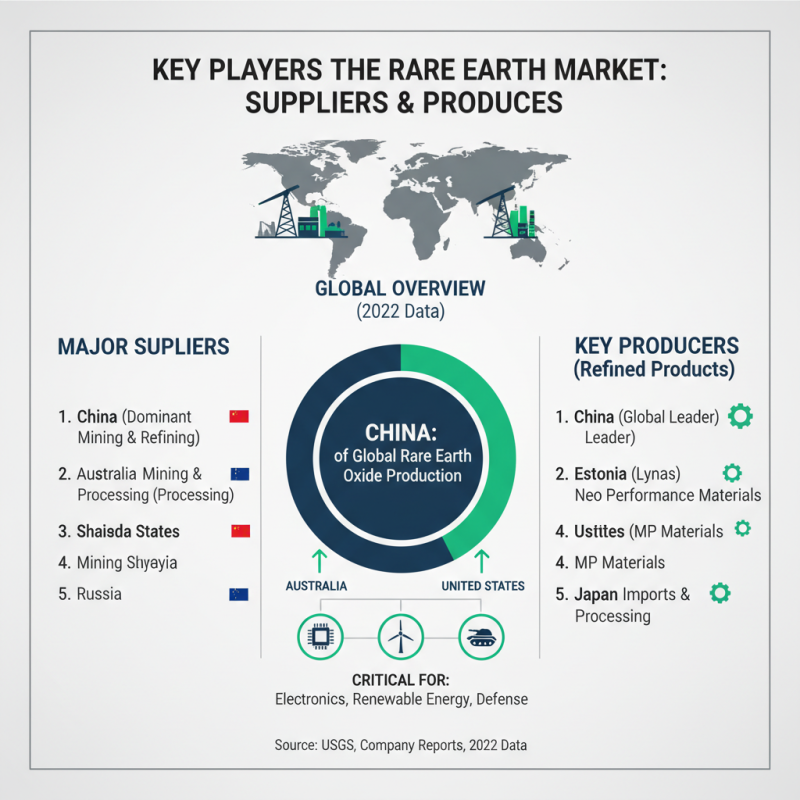
The rare earth market is increasingly vital for various industries, including electronics, renewable energy, and defense. Key players include mining companies and refining facilities across the globe. China remains a dominant force, producing around 60% of the world’s rare earth oxides as of 2022. Other significant suppliers include Australia and the United States, which are working to expand their domestic capacities.
Recent data suggests that global demand for rare earth elements could reach 200,000 tons by 2030. This surge is driven by technologies like electric vehicles and wind turbines. However, sourcing these materials is complex. Many regions face strict environmental regulations and geopolitical tensions that can disrupt supply chains. Companies must weigh reliability and cost versus ethical sourcing and sustainability.
While there are opportunities to invest in North American and Australian companies, risks remain. Production can be subject to fluctuating market prices and changing policies. Ongoing research is critical to find alternatives and reduce dependency on specific sources. An informed approach is essential for businesses to navigate this challenging landscape effectively.
Sourcing Strategies for Rare Earth Oxides: Methods and Best Practices
Sourcing rare earth oxides requires a nuanced understanding of global supply chains. You must identify reliable suppliers who prioritize quality and sustainability. Building strong relationships with reputable sources is essential. Networking at industry conferences can offer insights into current trends and potential partners.
Utilizing digital platforms revolutionizes procurement processes. Many suppliers list their offerings online, making it easier to compare costs and quality. However, thorough vetting is crucial. Some suppliers may not meet international standards. Conducting due diligence helps avoid pitfalls and ensures compliance.
Continuous market monitoring is vital. Prices fluctuate based on demand and geopolitical factors. Adapting your strategy to market changes can minimize risks. Engaging with procurement experts can provide valuable perspectives. Reflection on past sourcing decisions can illuminate areas for improvement. Creating a flexible sourcing strategy is key to navigating this complex landscape.
Challenges in Global Procurement of Rare Earth Oxides: Risks and Mitigation
Sourcing rare earth oxides can be challenging. These materials are essential for various industries, including electronics and renewable energy. However, the global procurement of rare earth oxides faces significant risks.
Political instability in producing countries can disrupt supply chains. Environmental regulations also impact availability and cost.
Buyers often encounter quality inconsistencies. Different suppliers may provide varying grades of rare earth oxides. This inconsistency can lead to expensive production downtimes. Furthermore, geopolitical tensions can make accessing reliable suppliers difficult. Many companies experience delays due to sudden policy changes.
Mitigating these risks requires careful planning and relationship management. Establishing diverse supplier networks is crucial. Companies should also invest in long-term contracts to secure stable pricing. Quality control measures help ensure consistency. Regular audits of suppliers minimize disruptions in production. Companies must adapt to the evolving landscape of rare earth oxides sourcing.