What Are the Key Benefits of Rare Earth Oxides for Industry?
In today's industrial landscape, Rare Earth Oxides play a significant role in various high-tech applications. Dr. John Smith, a leading expert in materials science, states, "The unique properties of Rare Earth Oxides are revolutionizing technology." These compounds are essential in electronics, magnets, and even renewable energy solutions.
Rare Earth Oxides enhance efficiency and performance in numerous industries. In electronics, they ensure better conductivity and durability. In the field of renewable energy, they help improve the efficiency of wind turbines and solar panels. However, the extraction and processing of these materials raise concerns about environmental impact. Companies must balance innovation with sustainability, promoting responsible usage.
While the advantages of Rare Earth Oxides are clear, challenges remain. The mining process can be harmful to local ecosystems. It demands careful management. As industries continue to evolve, the focus must be on sustainable practices. A deeper understanding of both the benefits and challenges will lead to better advancements in technology. This presents an opportunity for industries to innovate responsibly.

Key Characteristics of Rare Earth Oxides in Industrial Applications
Rare earth oxides (REOs) are crucial in various industrial sectors. Their unique chemical properties make them valuable for many applications. REOs exhibit high thermal stability, which enhances their effectiveness under extreme conditions. For example, they are vital in catalysts for petroleum refining, improving efficiency and reducing emissions. These oxides also have strong magnetic properties, making them essential for high-performance magnets used in electric motors and generators.
Moreover, REOs play a critical role in optics and electronics. Their luminescent properties allow for the creation of bright displays and lasers. Yet, sourcing these materials can be challenging. Mining processes often lead to environmental concerns and geopolitical issues. These factors require careful consideration of REO sustainability. Industries must utilize them responsibly while seeking alternatives to mitigate the environmental impact.
With ongoing innovation, the demand for rare earth oxides will likely increase. Their versatility opens doors in clean energy technologies and advanced manufacturing. However, balancing their benefits with environmental stewardship remains a pressing challenge. As industries evolve, the role of rare earth oxides will continue to spark discussion about sustainable practices and responsible sourcing.
Role of Rare Earth Oxides in Advanced Manufacturing Technologies
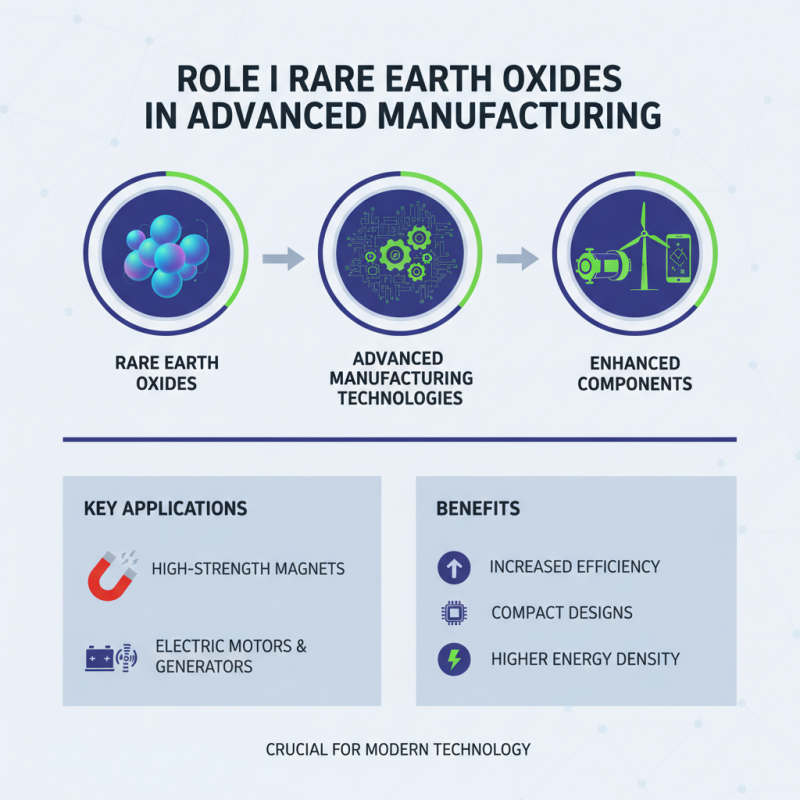
Rare earth oxides play a crucial role in advanced manufacturing technologies. These materials enhance the performance of various components. They are essential in the production of high-strength magnets, which are vital for electric motors and generators. Without them, the efficiency of these machines would significantly decline. The magnetic properties of rare earth oxides enable compact designs and increased energy density in numerous applications.
In electronics, rare earth oxides are indispensable. They improve thermal stability and luminescent properties in displays. For instance, they are used in phosphors for LED lighting, creating brighter and more energy-efficient solutions. Utilizing these oxides can also lead to lighter, more durable electronic devices. However, the supply chain for rare earths can be unpredictable. This uncertainty prompts companies to consider alternative materials, although none replicate their unique properties.
Advanced manufacturing benefits from the versatility of rare earth oxides. They assist in creating innovative materials for aerospace and automotive industries. Yet, reliance on these materials raises environmental concerns. Companies must strive for sustainability while pursuing high performance. The balance between innovation and ecological responsibility is an ongoing challenge within the industry.
Environmental Benefits of Utilizing Rare Earth Oxides in Industry
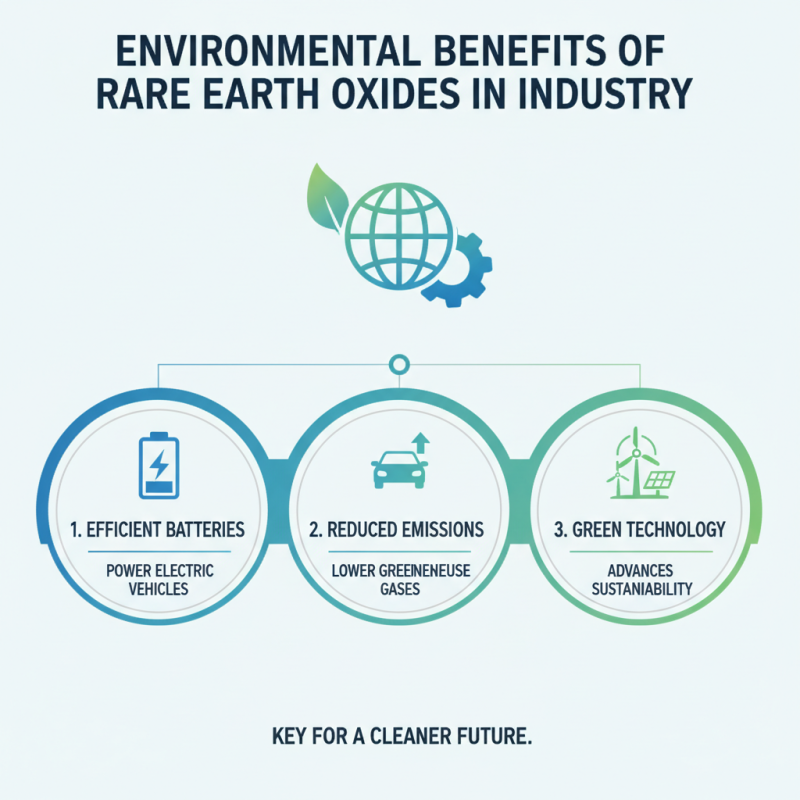
The environmental benefits of utilizing rare earth oxides in industry are significant. These materials play a critical role in advancing green technologies. For instance, rare earth oxides are essential for producing efficient batteries. These batteries support electric vehicles, reducing greenhouse gas emissions.
Another advantage lies in the recycling potential of rare earth oxides. By reusing these materials, we can minimize waste. Recycling conserves natural resources and reduces mining activities. However, this process can be challenging. Not all rare earth elements are easy to extract from products.
Moreover, rare earth oxides contribute to cleaner energy solutions. They enhance the performance of wind turbines and solar panels. This boosts energy efficiency, lowering the industry's carbon footprint. Despite these benefits, the environmental impact of extraction requires careful management. Striking a balance between production and sustainability is crucial. The journey towards greener industries is ongoing, and rare earth oxides are at the forefront.
Economic Impact of Rare Earth Oxides on Global Markets and Trade
Rare earth oxides (REOs) significantly influence global markets and trade. Their applications in technology, renewable energy, and electronics drive demand. Industries rely on these materials for manufacturing products, from smartphones to electric vehicles. The growing push for green technologies increases the need for REOs. Countries are investing heavily in mine production and recycling initiatives.
The economic impact of rare earth oxides is palpable. Countries rich in these resources enjoy trade advantages. They can dominate supply chains and set market prices. Conversely, regions with limited access face challenges. This could lead to reliance on imports, affecting their trade balances. There’s a growing realization of the need for sustainable sourcing methods.
However, dependence on REOs can create uncertainties. Political tensions can disrupt supply chains. Environmental concerns also arise regarding mining practices. There’s a delicate balance between economic growth and responsible resource management. The conversation surrounding REOs is evolving, revealing both opportunities and important questions for the future.
Key Benefits of Rare Earth Oxides for Industry
Future Trends in the Use of Rare Earth Oxides Across Various Industries
Rare earth oxides (REOs) are increasingly essential in various industries. Their unique properties make them suitable for many applications, including electronics, renewable energy, and automotive sectors. According to a 2021 report by Grand View Research, the global rare earth oxide market is expected to reach $10 billion by 2028, growing at a CAGR of 9.7%. This growth reflects the rising demand for efficient materials in cutting-edge technology.
In renewable energy, REOs play a crucial role in manufacturing high-performance permanent magnets. These magnets are vital for wind turbines and electric vehicles. The International Energy Agency noted that the integration of REOs can increase the efficiency of these devices significantly. However, the extraction and processing of these materials raise environmental concerns. Many companies are exploring recycling methods, but progress remains slow.
Despite their benefits, reliance on rare earth oxides presents challenges. Supply chains can be vulnerable, and geopolitical factors often influence availability. A 2022 analysis from the U.S. Geological Survey highlighted that over 80% of rare earth elements are processed in China. This monopolization raises concerns about long-term sustainability in industries that rely heavily on these resources. Future trends may include alternative materials and improved recycling technologies to mitigate these issues.