2026 Top Rare Earth Oxides Trends for Global Buyers?
The global market for Rare Earth Oxides is undergoing significant transformation as we step into 2026. With increasing demand in various industries such as electronics, automotive, and renewable energy, understanding the trends in this sector is crucial for global buyers. According to a report from Mordor Intelligence, the market for Rare Earth Oxides is projected to grow at a CAGR of 8.5% from 2021 to 2026. This growth presents both opportunities and challenges for stakeholders involved.
Dr. Emily Chen, a recognized expert in rare earth materials, emphasizes the importance of staying informed. She states, "Innovation in extraction and processing methods will shape the future of Rare Earth Oxides." As advancements continue, market players must adapt to changing dynamics. The shift towards greener technologies and electric vehicles further intensifies the demand. However, buyers must remain cautious. Supply chain vulnerabilities and geopolitical tensions can significantly affect availability and prices.
Navigating the Rare Earth Oxides landscape requires a keen understanding of trends and market fluctuations. The potential for innovation is vast, yet the path remains riddled with uncertainties. Buyers should not overlook the significance of strategic partnerships and investment in sustainable practices to secure their position in this evolving market.

Emerging Rare Earth Oxides Trends Shaping Global Markets in 2026
The landscape of rare earth oxides is shifting rapidly. Emerging trends are reshaping global markets for 2026. Notably, sustainability is becoming a crucial factor. Buyers increasingly prefer suppliers who demonstrate environmentally friendly practices. This reflects a growing awareness of climate impact.
Technological advancements are also influencing demand. Innovations in electric vehicles and renewable energy are driving the need for specific rare earth elements. Consumers are more informed about these connections. They seek transparency from producers about sourcing and production methods. This empowerment leads to smarter purchasing decisions.
However, challenges persist. Supply chain disruptions can occur, affecting availability. Buyers must remain vigilant and adaptable. Understanding market volatility becomes essential. In an ever-evolving industry, continuous education and awareness are paramount. This year may redefine how buyers approach rare earth oxides. Taking calculated risks can yield significant rewards.
Key Factors Influencing Demand for Rare Earth Oxides Worldwide
The global demand for rare earth oxides continues to grow, influenced by several key factors. Innovations in electronics and renewable energy technologies require these materials. According to a recent market report, the global rare earth oxide market is projected to reach USD 10 billion by 2026. This demand is driven by sectors like electric vehicles and clean energy solutions, which heavily rely on rare earth elements.
Moreover, geopolitical factors play a crucial role in supply chain dynamics. Trade policies and export restrictions from key producing nations can create volatility in availability. This scenario urges global buyers to consider diversifying their sources. Analysts emphasize the need for strategic planning to ensure stable access to these essential materials.
Tips: When sourcing rare earth oxides, always evaluate both quality and reliability of suppliers. Conduct thorough market research to understand potential supply risks. Engage with industry experts to stay updated on trends and shifts in demand. Each purchase decision should be grounded in comprehensive data analysis, reflecting a proactive approach to market fluctuations.
Sustainable Practices in the Production of Rare Earth Oxides
The production of rare earth oxides is moving towards sustainable practices. Traditional mining methods often lead to significant environmental degradation. This raises questions about the impact on local ecosystems and communities. It's essential to rethink these outdated techniques.
Innovative technologies are emerging. Many companies explore recycling rare earth materials from electronic waste. This approach can reduce the dependence on mining. It also minimizes pollution. However, challenges remain in creating efficient recycling processes. Not all materials can be recovered easily.
Sustainable practices should be prioritized. Direct sourcing from responsible mines is one step. Transparency in the supply chain is also vital. Buyers need to know where materials come from. This awareness can encourage more environmentally friendly choices. Yet, understanding these processes fully can be difficult. There are no perfect solutions, but improvement is a continuous journey.
2026 Top Rare Earth Oxides Trends for Global Buyers - Sustainable Practices in the Production of Rare Earth Oxides
| Rare Earth Oxide |
Market Demand (Metric Tons) |
Sustainable Production Practices |
Projected Growth Rate (2026) |
| Lanthanum Oxide (La2O3) |
12,000 |
Recycling from E-waste |
5% |
| Cerium Oxide (CeO2) |
15,000 |
Water-based extraction methods |
4% |
| Neodymium Oxide (Nd2O3) |
20,000 |
Closed-loop mining |
6% |
| Praseodymium Oxide (Pr6O11) |
8,000 |
Biomining techniques |
5% |
| Dysprosium Oxide (Dy2O3) |
5,000 |
Zero-waste production |
7% |
Regional Analysis of Rare Earth Oxides Supply Chains in 2026
The global supply chain for rare earth oxides is evolving rapidly. In 2026, regional dynamics will significantly impact production and distribution. Countries rich in rare earth resources are becoming key players. For instance, nations like Australia and China dominate current mining outputs. Their geographical advantages shape market trends.
Supply chains are also fostering collaboration among different regions. Asia's manufacturing strength complements Europe’s demand for technological innovations. This synergy could enhance efficiency in the supply chain. However, geopolitical tensions may disrupt these collaborations. Nations reliant on imports may face challenges in securing stable supplies.
Sustainability is at the forefront of discussions in 2026. The push for eco-friendly production methods is reshaping the industry. Manufacturers must balance economic growth with environmental responsibility. This endeavor is complex and often met with criticism. The path forward requires careful planning and open dialogue among stakeholders. As the landscape continues to change, adaptability will be crucial for success in the rare earth oxide market.
Technological Innovations Driving Rare Earth Oxides Applications
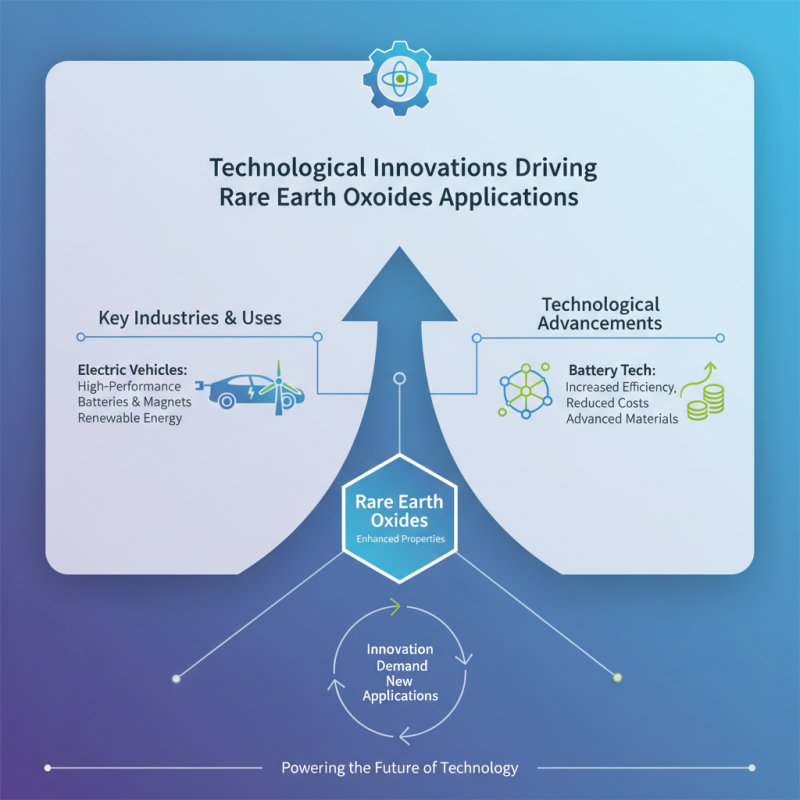
The application of rare earth oxides is undergoing significant transformation due to technological innovations. Industries are exploring new ways to utilize these materials. For instance, in the electric vehicle sector, rare earth oxides are essential for high-performance batteries and magnets. Innovations in battery technology are increasing efficiency while reducing costs. This creates a demand for advanced materials with improved properties.
Moreover, rare earth oxides play a critical role in renewable energy technologies. Wind turbines and solar panels benefit from their unique magnetic and optical properties. New processing techniques are emerging to enhance purity and reduce environmental impacts. However, the reliance on these materials poses challenges. Supply chain vulnerabilities and geopolitical issues can disrupt access to rare earth oxides.
The future will demand continuous innovation. Developing alternative materials is essential for sustainability. Researchers are actively investigating substitutes that could lessen reliance on rare earths. Collaboration between industries and academia will be crucial. As technology evolves, the landscape of rare earth oxides will shift, creating challenges and opportunities for global buyers.