Top 5 Rare Earth Materials You Need to Know for Global Sourcing?
In the world of manufacturing and technology, Rare Earth Materials play a crucial role. These elements are essential for the production of advanced electronics, renewable energy technologies, and defense systems. According to a report from the U.S. Geological Survey, global consumption of rare earths was estimated at 170,000 metric tons in 2022.
However, sourcing these materials is increasingly challenging. More than 85% of rare earth supplies come from China, which raises concerns about market stability and sustainability. Companies must navigate complex supply chains to secure reliable sources. This landscape makes it vital for businesses to understand the key rare earth materials that are critical for their operations.
Economies worldwide face a growing demand for rare earth materials, especially in green technology. Yet, the market's volatility and reliance on a single source present risks. It is essential to be aware of the significant rare earth elements, such as Neodymium and Dysprosium, and their applications in various industries. Awareness of these factors can inform better sourcing strategies and promote a more resilient supply chain.

Introduction to Rare Earth Materials and Their Significance in Global Sourcing
Rare earth materials are crucial in today’s technology-driven world. These elements play a vital role in manufacturing electronics, renewable energy, and defense systems. With increasing global demand for gadgets and green technologies, understanding these materials becomes essential for sourcing strategies.
Many industries rely on rare earths for their unique properties. For example, neodymium is used in magnets for wind turbines and electric vehicles. Dysprosium enhances the durability of these magnets. However, sourcing these materials can be challenging. They are often found in limited geographical areas. Supply chain disruptions can significantly impact availability and prices.
Companies need to navigate this complex landscape. Ethical sourcing is a growing concern. Environmental effects of mining should not be overlooked. Transparency in the supply chain fosters trust but is rarely achieved. Gaining knowledge about rare earth materials and their applications can enhance decision-making. Being informed helps businesses mitigate risks associated with global sourcing challenges.
Key Characteristics That Define Rare Earth Materials
Rare earth materials play a crucial role in modern technology. These elements possess unique properties, making them essential for industries like electronics and renewable energy. They are not as rare as their name suggests, but their extraction and processing are complex. This complexity is one defining characteristic.
One key aspect of rare earth materials is their magnetic properties. Neodymium, for example, is vital for high-performance magnets. These magnets are used in everything from electric vehicles to wind turbines. According to industry reports, the global market for neodymium magnets is expected to reach $48 billion by 2026. The growing demand highlights the importance of sourcing these materials responsibly.
Another important characteristic is their chemical stability. Lanthanum, used in catalysts, shows resilience under various conditions. Industry insights indicate a potential growth in demand for lanthanum due to stricter emissions regulations. However, supply chains for these materials can be fraught with challenges, such as geopolitical tensions, which require constant monitoring. While the potential for growth is significant, the pathways to obtaining these materials are often uncertain.
Top 5 Rare Earth Materials You Need to Know for Global Sourcing
| Material |
Symbol |
Atomic Number |
Key Characteristics |
Common Uses |
| Neodymium |
Nd |
60 |
Strong magnetic properties, high thermal stability |
Permanent magnets, lasers |
| Dysprosium |
Dy |
66 |
High melting point, excellent ability to absorb neutrons |
Nuclear reactors, high-performance magnets |
| Europium |
Eu |
63 |
Phosphorescent properties, reacts with oxygen |
TV screens, fluorescent lamps |
| Terbium |
Tb |
65 |
Good thermal and chemical stability |
Solid-state devices, green phosphors in displays |
| Lanthanum |
La |
57 |
Good conductivity, shiny silvery-white metal |
Camera lenses, hydrogen storage |
Top Five Rare Earth Materials Essential for Various Industries
Rare earth materials are crucial for many industries, from electronics to renewable energy. These materials are not truly rare, but rather concentrated in specific locations. Understanding their importance is vital for global sourcing.
Neodymium is essential for making powerful magnets. These magnets are key components in wind turbines and electric vehicles. The market for neodymium is expected to grow by 10% annually, reflecting the increasing demand for green technology. However, sourcing this material can be challenging. A concentration in a few countries makes supply chains vulnerable.
Lanthanum is another important material, widely used in catalysts and glassmaking. Its demand is rising alongside the automotive and electronics industries. In 2021, the global lanthanum market was valued at approximately $3.8 billion. The growth is driven by innovations in clean energy and hybrid vehicles. Yet, sourcing lanthanum raises questions about environmental impact and access.
Understanding these materials helps companies make informed decisions. The complexities in sourcing require a careful approach. Balancing demand with sustainable practices is crucial.
Challenges in Sourcing and Supply Chain Management of Rare Earth Elements
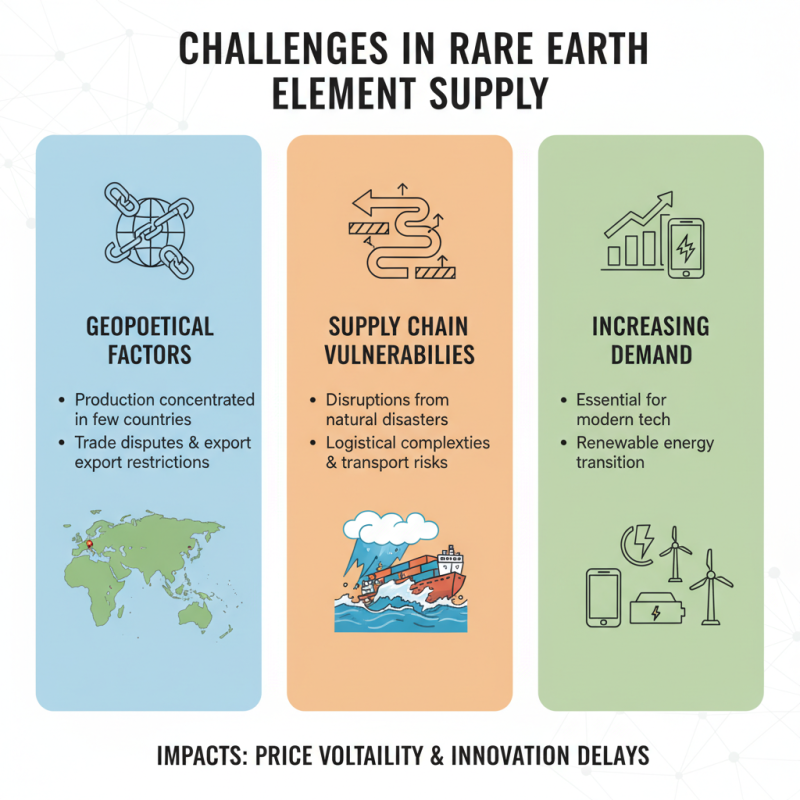
Sourcing rare earth elements poses significant challenges for businesses. These materials are essential for technologies ranging from smartphones to renewable energy sources. The supply chain often faces disruptions due to geopolitical factors. For instance, production is concentrated in a few countries. This geographical dependency creates vulnerabilities.
Logistical hurdles also complicate sourcing. Transporting rare earth materials is not straightforward. Regulations vary by country, adding layers of complexity. Companies often struggle with quality control and traceability. Knowledge of local conditions is crucial for effective sourcing. Accurate data is hard to come by, making it challenging to make informed decisions.
Additionally, sustainability issues cannot be ignored. Mining rare earths has environmental impacts. Companies must consider the ethical implications of their sourcing strategies. They need to balance demand with responsible practices. Engaging local communities can enhance trust. However, this often requires resources that many smaller firms lack. The path forward is fraught with uncertainties, demanding careful navigation.
Future Trends and Innovations in Rare Earth Material Sourcing Strategies
The landscape of rare earth material sourcing is evolving rapidly. Companies are now focusing on sustainability and ethical sourcing practices. As global demand grows, traditional methods may not suffice. Innovators are emerging, looking for alternative solutions that balance efficiency with environmental stewardship.
Recent innovations include recycling initiatives that repurpose electronic waste. This can alleviate the pressure on the mining sector. However, challenges persist. The technical complexities of extracting rare earth elements from used devices require specialized knowledge. Not all companies have the expertise needed for this transition.
Exploring partnerships is essential. Collaborations with research institutions can lead to new methods for efficient extraction. Trust and transparency in the supply chain are becoming vital. Consumers and stakeholders now demand accountability. As sourcing strategies evolve, a shift toward circular economies might emerge. Adapting to these changes can redefine how industries approach rare earth materials.
Top 5 Rare Earth Materials You Need to Know for Global Sourcing
Top 5 Rare Earth Materials for Global Sourcing
This chart illustrates the global production in metric tons for the top five rare earth materials, highlighting their significance in sourcing strategies.