
Choosing Rare Earth Magnets begins with the application, not the strongest catalog rating. A neodymium magnet may deliver exceptional energy density, but heat, corrosion, shock, and demagnetizing fields can quickly reduce its performance. Samarium cobalt often handles high temperatures better, although it costs more and can be brittle. Small details matter: a 3-millimeter air gap, a thin nickel coating, or repeated impacts may change the design outcome.
Market reliability also deserves attention. The International Energy Agency’s Global Critical Minerals Outlook 2024 reports that China produces more than 90% of refined rare earth materials and about 94% of sintered permanent magnets. The U.S. Geological Survey reported global rare-earth mine production of approximately 350,000 metric tons in 2023, measured as rare-earth-oxide equivalent. These figures show why material traceability, supplier qualification, and realistic lead times belong in magnet selection.
“Rare earth elements are not rare; they are just rarely found in economic concentrations,” explains industry consultant Jack Lifton. His observation remains useful, but it does not answer every engineering question. A magnet’s grade, geometry, operating temperature, coating, and assembly method must be checked together. Start with the working temperature. Then examine the required holding force, available space, and exposure to moisture. Avoid choosing only by maximum gauss. That shortcut is tempting—and sometimes wrong. A practical selection process should compare NdFeB, SmCo, and ferrite alternatives through test samples, thermal measurements, and documented supplier data. Performance on paper is not always performance inside a motor, sensor, separator, or medical device.
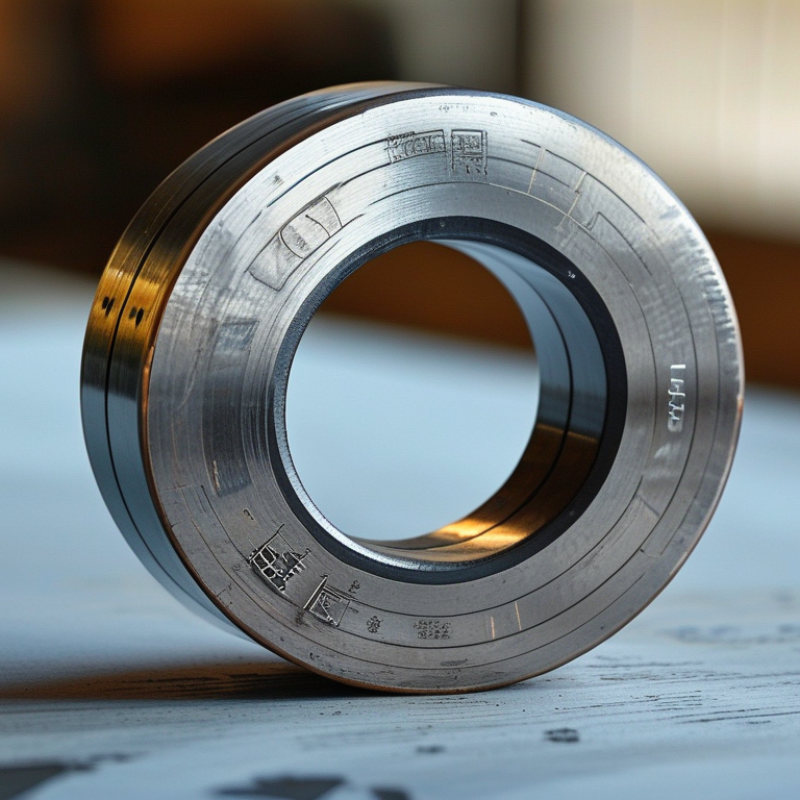
How to Choose Rare Earth Magnets for Your Application?
Understanding rare earth magnet types starts with the working environment. Neodymium magnets provide very high magnetic strength in compact sizes. They suit motors, sensors, magnetic couplings, and lifting equipment. However, standard neodymium grades can lose performance at elevated temperatures. They also need protective coatings in humid or corrosive settings. Small surface damage can expose the material underneath.
Samarium cobalt magnets offer excellent temperature stability and strong resistance to corrosion. They are useful near heat sources, although they usually cost more and can be more brittle. Their magnetic strength is often lower than comparable neodymium grades. Ferrite magnets are not rare earth magnets, but they remain useful when size, weight, and peak strength are less critical. They handle corrosion well and can reduce project costs.
Compare more than the listed pull force. Check remanence, coercivity, maximum operating temperature, and magnetic energy product. Mechanical shock matters too. A thin magnet may crack during pressing or assembly. In one practical design review, the strongest available grade looked ideal on paper but failed after repeated heating cycles. The better choice used a lower-strength grade with a safer temperature margin. Measure the real air gap, not only the drawing. Test the magnet inside its final housing, with nearby steel and fasteners included. Tolerances, coating thickness, and magnetization direction can change performance. A supplier’s datasheet is valuable, but application testing remains necessary.
Understanding rare earth magnet types and key properties helps match the magnet to the required force, temperature, and working environment.
Neodymium magnets generally provide the highest magnetic energy product, typically about 27–59 MGOe, but their operating temperature is commonly limited to approximately 80–200°C, depending on grade and design.
Samarium cobalt magnets typically offer about 16–33 MGOe and can operate at approximately 250–350°C. They are often preferred for high-temperature applications and provide better resistance to corrosion than neodymium magnets.
Actual limits depend on magnet grade, irreversible demagnetization requirements, mechanical assembly, temperature cycling, and the surrounding environment.
Choosing a rare earth magnet begins with the magnetic circuit, not the catalog grade. Define the required holding force, air gap, pole geometry, and working temperature. A 1 mm gap can change performance sharply. Measure the field at the actual operating distance.
Specify resistance to irreversible demagnetization, not only maximum energy product. A design exposed to vibration may need a wider magnetic safety margin. Temperature matters too. NdFeB magnets commonly lose usable performance as heat rises, while SmCo offers stronger high-temperature stability. The correct choice depends on measured duty conditions. A calculation alone can mislead.
Environmental requirements should include humidity, salt, chemicals, and coating damage. ISO 9227 salt-spray testing can compare corrosion protection, but it does not perfectly predict service life. Sealants, plating thickness, and assembly gaps deserve inspection. USGS estimated global rare-earth mine production at 350,000 metric tons of rare-earth-oxide equivalent in 2023, showing the scale of this critical-material supply chain. The IEA’s Global Critical Minerals Outlook 2024 also highlights growing demand and supply-chain concentration. That makes material efficiency worth reviewing.
Mechanical requirements are often underestimated. Define shock loads, cyclic movement, shear forces, and adhesive exposure. A magnet may meet its pull-force rating yet fail after repeated impact. Test the complete assembly, including housing and adhesive. Small details matter. Even experienced teams sometimes specify a magnet before defining the environment. That habit deserves correction.
Choosing a rare earth magnet starts with the working environment, not the strongest catalog number. In practical design reviews, engineers often compare N35, N42, and N52 grades first. A higher grade is not always better. N52 provides higher energy density, but it can lose performance faster under heat, impact, or an unstable magnetic circuit. For motors, sensors, and compact actuators, calculate the required pull force, air gap, operating temperature, and demagnetization risk. The U.S. Geological Survey reported global rare earth mine production of approximately 350,000 metric tons of rare-earth-oxide equivalent in 2023. That scale supports wide availability, but it does not remove the need for precise material selection.
Shape changes the magnetic field as much as grade does. Discs suit axial pull applications, while blocks provide directional force along a flat face. Rings support shafts and rotary assemblies. Arc magnets fit motors because their curved surfaces follow the rotor or stator path. A small air gap matters. So does pole alignment. According to the International Energy Agency’s Global Critical Minerals Outlook 2024, demand for magnet rare earths is linked closely to electric vehicles and wind power. This pressure can affect lead times and material consistency. I would not choose by grade alone; that shortcut is attractive, but incomplete.
Tips: Select the lowest grade that meets force and temperature requirements. Check the manufacturer’s reversible temperature coefficient and maximum operating temperature. Test the final geometry in the real assembly. A bench test can mislead. Also review coating thickness, since a tight mechanical fit may fail after corrosion protection is added. Document the grade, shape, tolerance, and magnetization direction before ordering.
How to Choose Rare Earth Magnets for Your Application?
Coating selection starts with the working environment. Nickel-based coatings suit many indoor assemblies and provide a hard, smooth surface. Epoxy coatings offer better protection in humid or chemically exposed areas. However, coating damage can expose the magnet underneath. Small gaps matter. Check abrasion, salt exposure, cleaning fluids, and contact with dissimilar metals. Coating thickness also changes the final magnet size. That detail can affect a tight mechanical fit.
Temperature limits require more than reading one catalog value. Each magnet grade has a maximum operating temperature. Continuous heat may cause irreversible magnetic loss. Short temperature spikes can still weaken performance. Temperature changes everything. Measure the hottest point near the magnet, not only the surrounding air. Adhesives may fail earlier than the magnet material. This is an easy detail to miss. Allow for heat from motors, sunlight, friction, and nearby electronics.
Safety factors should reflect real loading conditions. Pull force ratings often assume direct contact with thick steel and a clean surface. Actual assemblies may include air gaps, paint, vibration, misalignment, or sliding loads. Test the complete design when possible. For lifting or retaining parts, a factor of two may be insufficient under shock or repeated cycling. Consider corrosion, aging, manufacturing tolerance, and accidental impact. A neat datasheet number can still mislead. I would rather use conservative test results than optimistic calculations. Record the test temperature and surface condition. That record makes later design decisions more reliable.
| Magnet Material | Typical Maximum Working Temperature | Approximate Curie Temperature | Corrosion Resistance | Common Coating or Surface Treatment | Recommended Environment | Key Advantages | Main Limitations | Suggested Initial Safety Factor | Typical Applications |
|---|---|---|---|---|---|---|---|---|---|
| Sintered Neodymium-Iron-Boron (NdFeB) | Approximately 80–230 °C, depending on grade; standard grades are often limited to about 80–120 °C. | Approximately 310–400 °C, depending on composition and grade. | Poor in humid, salty, or chemically aggressive environments unless adequately protected. | Nickel-copper-nickel plating, epoxy coating, zinc plating, aluminum coating, or specialized organic protection. | Dry indoor environments when uncoated; plated or sealed versions for controlled outdoor or humid service. | Highest magnetic strength and energy density among commercially common permanent magnets. | Temperature-sensitive; exposed surfaces can corrode, and coatings may be damaged by impact, abrasion, or chemicals. | Use a magnetic holding-force factor of at least 2:1 for stable static loads; 3:1 or higher for vibration, shock, overhead, or uncertain loads. | Compact motors, sensors, magnetic couplings, speakers, lifting fixtures, generators, and actuators. |
| Samarium-Cobalt (SmCo) | Approximately 250–350 °C, depending on grade and application conditions. | Approximately 700–850 °C. | Better intrinsic corrosion resistance than NdFeB; surface protection may still be required in severe environments. | Usually uncoated, or protected with epoxy, nickel-based plating, or another application-specific finish. | High-temperature, vacuum, chemical, and outdoor applications where dimensional and magnetic stability are important. | Excellent temperature stability, high coercivity, and strong resistance to demagnetization. | More brittle, generally more expensive, and usually lower in maximum magnetic strength than high-performance NdFeB. | Use at least 2:1 for predictable static loads; consider 3:1 or greater where thermal gradients, vibration, or impact are present. | High-temperature motors, aerospace equipment, vacuum systems, sensors, magnetic bearings, and industrial actuators. |
| Temperature-Resistant NdFeB | Approximately 150–230 °C for suitable high-temperature grades; verify the manufacturer’s reversible and irreversible loss data. | Generally approximately 320–400 °C, depending on grade. | Still vulnerable to corrosion without suitable surface protection. | High-temperature epoxy, nickel-based plating, aluminum coating, or hermetic encapsulation selected for the actual temperature range. | Applications requiring more magnetic strength than SmCo but operating above the limit of standard NdFeB. | Higher strength-to-volume ratio than many SmCo designs while offering improved thermal capability over standard NdFeB. | Higher-temperature grades may have lower remanence, higher cost, and greater sensitivity to coating and assembly processes. | Use at least 2:1 after accounting for temperature-related force reduction; use 3:1 or more for dynamic or safety-critical assemblies. | Automotive sensors, industrial motors, high-temperature couplings, pumps, and compact electromechanical systems. |
Choosing a rare earth magnet starts with the operating environment, not the catalog price. In application reviews, I examine temperature, vibration, moisture, and required holding force. A magnet that works on a test bench may weaken beside a motor or heater. Measure the real air gap. Small gaps can hide design errors.
Cost has several layers. Compare magnet price, machining, coating, freight, inspection, and replacement labor. A cheaper grade may require thicker parts or tighter tolerances. That can erase the initial saving. Ask for a written quotation with material grade, dimensions, tolerances, coating, and test conditions. Vague quotes deserve caution.
Supplier quality matters as much as chemistry. Request certificates, sample data, and traceable batch records. Independent testing can verify flux, dimensions, and corrosion resistance. For critical assemblies, order pilot lots before approving volume production. Check how the supplier handles nonconforming pieces. Fast replies are useful, but documented corrective action is better. I would also compare lead times during normal and peak demand. A supplier promising everything may understand less than one admitting a limitation.
Long-term performance needs evidence, not optimistic claims. Run thermal aging, humidity exposure, pull-force checks, and repeated assembly tests. Record results at defined intervals. Coatings deserve special attention; a damaged surface can start corrosion quickly. Design with a safety margin, yet avoid excessive magnet strength that raises cost or complicates handling. Recheck the design after field feedback. Early calculations are often incomplete.