Best Rare Earth Magnets for Global Sourcing Needs?
In today's global market, the demand for Rare Earth Magnets is surging. These powerful magnets are crucial for various industries, including automotive, electronics, and renewable energy. Dr. Emily Hart, a leading expert in magnet technology, once stated, "Rare Earth Magnets are essential for innovation and competitive advantage in modern manufacturing." Her insights underscore the pivotal role these magnets play in driving advancements.
Rare Earth Magnets are not just strong; they are also versatile. They enable smaller, more efficient devices while maintaining performance. As industries seek solutions to enhance productivity, sourcing high-quality Rare Earth Magnets becomes critical. However, challenges persist. Sourcing can be complex due to supply chain issues and fluctuating prices.
Understanding these challenges is vital for businesses looking to thrive. Companies must prioritize reliability and quality when sourcing Rare Earth Magnets. Striking the right balance between cost and quality can be difficult. Reflecting on these dynamics helps us appreciate the intricate landscape of the Rare Earth Magnet industry.

Overview of Rare Earth Magnets and Their Applications
Rare earth magnets are vital in many industries. These magnets are made from alloys of rare earth elements. They are known for their exceptional strength and durability. Applications span across electronics, automotive, and renewable energy sectors.
In electronics, rare earth magnets are found in speakers, hard drives, and headphones. Their compact size allows for more powerful and efficient devices. In the automotive industry, they are critical in electric motors and hybrid vehicles. Renewable energy systems, like wind turbines, also rely on these magnets for efficiency.
Tips: Always consider your specific application when sourcing. Evaluate the required magnetic strength for your project. Compare various grades to find the best fit. Testing is essential; sometimes, size and form factor matter more than strength. Recognizing these factors can prevent costly mistakes.
These magnets can, however, have limitations. Their performance can degrade under extreme conditions. They may be more expensive than standard magnets. Sourcing them requires careful planning and understanding of market trends. Flexibility in your sourcing strategy will lead to better results.
Best Rare Earth Magnets for Global Sourcing Needs
This chart illustrates the magnetic strength of various types of rare earth magnets measured in Megagauss Oersteds (MGOe). Neodymium magnets are shown to have the highest magnetic strength, making them advantageous for numerous applications in electronics and automotive industries. Samarium-Cobalt magnets also provide significant strength and are favored for high-temperature applications, while traditional ceramics and Ferrite magnets offer lower strengths suitable for various general uses.
Key Properties of Rare Earth Magnets for Sourcing Decisions
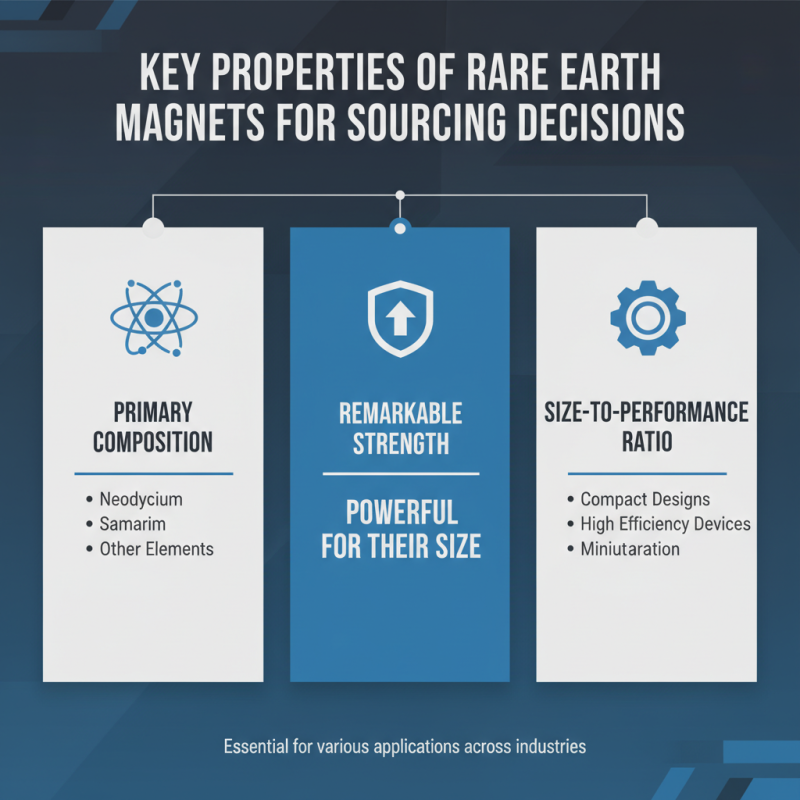
When sourcing rare earth magnets, understanding their key properties is essential. These magnets are primarily composed of neodymium, samarium, and other elements. Their remarkable strength and size-to-performance ratio make them invaluable in various applications.
Magnetic strength is a crucial factor. Knowing the maximum holding force can guide decisions in practical applications. The temperature tolerance of a magnet varies significantly. Some can function in extreme heat, while others may lose strength. It’s vital to assess the thermal stability needed for specific projects.
Another important aspect is corrosion resistance. Rare earth magnets may require coatings for longevity. Yet, over-coating can hinder performance. Therefore, selecting the right balance is crucial. Additionally, the cost variability of these magnets can impact sourcing decisions. Price can hinge on raw material availability and production methods. Evaluating supplier reliability is equally necessary, as it ensures consistent quality. This multifaceted approach can help optimize sourcing strategies.
Factors to Consider When Selecting Rare Earth Magnets
When selecting rare earth magnets, several factors come into play. Understanding their applications is critical. These magnets are used in various industries, from electronics to automotive. Their strength is beneficial, but considerations extend beyond just power.
Consider the specific requirements of your project. The size and shape of the magnet can greatly impact performance. For example, a small but powerful magnet may suffice for lightweight applications. However, heavier machinery requires larger magnets.
Tips: Always evaluate the operating temperature. Some rare earth magnets lose strength in extreme conditions. Testing under your operating conditions is wise.
Cost is another factor. Higher-grade rare earth materials often come at a premium. Reflect on whether the enhanced performance justifies increased expenditure. Striking a balance between quality and cost-effectiveness is important.
Tips: Don't overlook supplier reliability. Research a supplier's history. Trustworthy suppliers ensure consistent quality in their magnets. Make sure to ask about their product testing protocols.
Selecting the right rare earth magnet demands careful consideration. An informed choice will lead to more efficient applications and help avoid potential pitfalls down the line.
Top Manufacturers and Suppliers of Rare Earth Magnets Globally
When it comes to sourcing rare earth magnets, understanding global manufacturers is crucial. These magnets, made from elements like neodymium and samarium, have distinct properties. They are essential in various applications, including motors, sensors, and medical devices. Global suppliers often specialize in different types, catering to diverse industries.
In recent years, the demand for rare earth magnets has surged dramatically. Countries across Asia, Europe, and North America are key players in production. This creates challenges and opportunities for sourcing. While some manufacturers excel in quality, others may struggle with consistency. Buyers need to evaluate manufacturers carefully to ensure reliable supply chains.
Transparency is a vital aspect of sourcing. A supplier's ability to provide clear information about their production processes influences decisions. It is worth noting that not all manufacturers maintain the same standards. Some may lack the necessary certifications or expertise to meet strict quality requirements. This situation calls for thorough research before making commitments.
Market Trends and Future Outlook for Rare Earth Magnets
The global market for rare earth magnets is evolving rapidly. A surge in demand is driven by industries like electric vehicles, renewable energy, and consumer electronics. Companies are seeking reliable sourcing for these magnets due to their critical role in various high-performance applications.
Recent trends indicate a growing need for sustainable sourcing practices. Environmental considerations are influencing how manufacturers approach production. There’s a push towards recycling rare earth materials, a challenging yet necessary process. The industry is also facing scrutiny regarding the supply chain, as geopolitical factors affect availability.
As manufacturers adapt, they must remain vigilant. The dynamic market requires constant innovation and flexibility. Rare earth magnets offer exceptional strength, but sourcing can be complex. Future outlooks suggest a potential for market volatility but also opportunities for growth. Adaptation in sourcing strategies will be essential in navigating these shifts.