Leave Your Message

China Top 10 Rare Earth Magnet Recycling Suppliers?

China Top 10 Rare Earth Magnet Recycling Suppliers? This question reflects a growing industrial concern, not merely a sourcing exercise. Rare Earth Magnet Recycling can recover neodymium, praseodymium, dysprosium, and terbium from motors, speakers, hard drives, and factory scrap. These materials often appear as small, coated fragments inside larger assemblies.

The International Energy Agency’s Global Critical Minerals Outlook 2024 reports that China controls about 91% of global rare earth refining and 94% of permanent magnet production. This concentration increases the importance of reliable domestic recycling capacity. The European Union also targets 25% recycling capacity for strategic raw materials by 2030 under its Critical Raw Materials framework. Recycling will not replace mining completely. It can reduce waste and supply pressure.

Professor Allan Walton of the University of Birmingham said, “We have developed a process that can take old magnets and turn them into new magnets, without having to extract the rare earth elements.” His work demonstrates the practical value of magnet-to-magnet recovery. However, supplier comparisons remain difficult. Public data differs between collection volume, processing capacity, and actual recovered output. Some companies report pilot results rather than commercial production.

This guide examines ten Chinese suppliers through technical capability, feedstock handling, recovery methods, certifications, and delivery experience. The ranking is not absolute. It should be tested against current audits, sample trials, and transparent recovery data. Small details matter, including magnet coatings, oil contamination, particle size, and separation losses. A polished website is not enough. Reliable evidence must be visible.
China Top 10 Rare Earth Magnet Recycling Suppliers?

Rare-Earth Magnet Recycling Explained: NdFeB Chemistry and Scrap Categories

Rare-Earth Magnet Recycling Explained: NdFeB Chemistry and Scrap Categories

NdFeB magnets contain neodymium, iron, and boron, forming a powerful tetragonal crystal structure. Some grades also contain dysprosium or terbium for improved heat resistance. Their value depends on composition, magnetic condition, and contamination. Recycling is not simply melting metal. Hydrogen decrepitation can weaken magnets into a brittle powder, while controlled crushing and separation prepare material for chemical recovery. Hydrometallurgical processing may then separate rare-earth elements from iron and other residues.

Scrap categories behave differently. Clean sintered magnet offcuts usually offer consistent chemistry. Manufacturing swarf may contain cutting fluids and fine particles. Coated magnets can carry nickel, copper, or epoxy layers. Bonded magnets include polymers, making separation less predictable. Mixed electronic scrap is the most difficult category. It may contain stainless steel, plastics, adhesives, and unknown magnet grades. Experienced recyclers should use sampling, laboratory assays, documented chain-of-custody records, and clear yield estimates. Supplier rankings can be misleading. Actual performance changes with feedstock quality.

Tips: Keep magnet scrap dry and sorted. Record its source and approximate grade. Avoid mixing coated pieces with clean production waste. Ask for assay methods, recovery ranges, and residue-handling procedures. A small sample test is wise. Perfect recovery is rarely realistic, and published figures may need independent verification.
China’s 2024 Rare-Earth Base: 270,000 t REO Output, USGS

China Top 10 Rare Earth Magnet Recycling Suppliers?

China’s 2024 rare-earth base reflects serious industrial capacity. USGS reported about 270,000 tonnes of rare-earth oxide output. This figure includes mined and processed materials, not recycled magnets alone. Still, it shows why China remains a major center for magnet recovery.

A reliable supplier should explain its collection, sorting, demagnetization, and refining steps. Ask for batch records. Strong operators can identify neodymium-iron-boron magnet grades, separate coatings, and measure recovered rare-earth content. In a practical audit, inspectors may examine labeled drums, moisture controls, and furnace records. Small details matter.

Traceability is essential.

The best candidates also provide independent test reports, realistic recovery rates, and clear treatment of iron, nickel, and other residues. A supplier claiming total recovery deserves careful questioning. Real processes lose some material through dust, slag, and handling. That is not failure; hiding it is the problem.

For a top-ten comparison, buyers can score suppliers on feedstock capacity, laboratory control, worker safety, environmental permits, delivery stability, and technical communication. Site visits remain valuable, especially when a sales document looks polished but production evidence feels thin. China’s large rare-earth output creates opportunity, yet output volume alone cannot prove recycling expertise. A careful buyer should compare reported figures with actual monthly intake, recovered oxide quality, and repeat test results.

China Top 10 Rare Earth Magnet Recycling Supplier Profiles — China’s 2024 Rare-Earth Base: 270,000 t REO Output, USGS

Rank Supplier Profile China Operating Region Primary Feedstock Typical Recovered Materials Common Recycling Route Public Capacity Information Buyer Due-Diligence Priority
1 Integrated sintered-magnet recycling profile Inner Mongolia and North China NdFeB production scrap, swarf and rejected magnets Neodymium, praseodymium, dysprosium and terbium-bearing material Hydrogen processing, roasting and hydrometallurgy Project-specific; supplier capacity is generally not disclosed in a uniform public database Confirm feedstock acceptance limits and recovered-oxide specification
2 Magnet-manufacturing scrap processor Jiangxi Grinding sludge, offcuts and machining residue Mixed rare-earth concentrate, often dominated by Nd-Pr Chemical separation and precipitation No standardized public supplier ranking or verified capacity dataset Check wastewater treatment, reagent management and residue disposal
3 Post-consumer permanent-magnet recycler Guangdong Hard-disk drives, motors, speakers and electronic assemblies NdFeB magnet material and iron-bearing residues Dismantling, demagnetization, size reduction and chemical recovery Volumes vary with collection networks and end-of-life supply Verify traceability from dismantling source to final product
4 Electric-motor magnet recovery profile Zhejiang and East China Industrial motors, traction motors and automotive components Nd-Pr-bearing magnetic alloy and ferrous fractions Mechanical separation followed by roasting or leaching Usually reported by project rather than by a national supplier list Request automotive-grade contamination controls and batch testing
5 Hydrogen-processing specialist Shandong and North China Clean NdFeB scrap and demagnetized magnet blocks Magnetic powder or alloy feed suitable for reprocessing Hydrogen decrepitation and powder separation Capacity depends on equipment configuration and feedstock grade Assess oxygen control, powder safety and particle-size consistency
6 Hydrometallurgical rare-earth recovery profile Hunan and Central China Oxidized magnet scrap, alloy residues and concentrated powder Separated rare-earth salts or oxides Acid leaching, solvent extraction and precipitation Public data normally excludes site-level recovery yield Obtain recovery-yield data, purity certificates and environmental permits
7 Rare-earth oxide refining profile Jiangsu and Yangtze River Delta Intermediate rare-earth solutions and recycled concentrates NdPr oxide, separated rare-earth oxides and mixed concentrates Solvent extraction, ion exchange and oxalate precipitation Product capacity is feedstock- and separation-circuit-dependent Specify oxide purity, impurity limits and delivery form
8 Magnet-to-magnet circular-production profile Fujian and Southeast China Manufacturing scrap with known alloy composition Recovered alloy or powder for new NdFeB production Sorting, hydrogen processing, blending and remanufacturing Closed-loop volumes are commonly confidential commercial data Confirm alloy equivalence, magnetic performance and material balance
9 Waste-collection and pre-treatment profile Hebei and North China Mixed industrial and electronic magnet-bearing waste Magnet-rich concentrate for downstream refining Sorting, dismantling, crushing and magnetic concentration Collection throughput is highly dependent on local sourcing Audit hazardous-waste handling and incoming-material documentation
10 Specialty heavy-rare-earth recovery profile Southern China High-temperature magnet scrap and dysprosium- or terbium-bearing residues Dysprosium, terbium and mixed heavy rare-earth fractions Selective leaching and solvent extraction Heavy-rare-earth recovery volumes are generally not disclosed by profile Require element-level assay results and verified recovery rates
Market reference: The U.S. Geological Survey reported China’s 2024 rare-earth mine production at approximately 270,000 metric tons of rare-earth-oxide equivalent (REO). The profiles above are anonymized supplier categories rather than named companies; site-level recycling capacity and ranking are not reported consistently in public data.
Source: U.S. Geological Survey, Mineral Commodity Summaries 2025 — Rare Earths.

From Scrap to NdFeB Feedstock: Four Recycling Stages and Recovery Metrics

China Top 10 Rare Earth Magnet Recycling Suppliers?

From Scrap to NdFeB Feedstock: Four Recycling Stages and Recovery Metrics

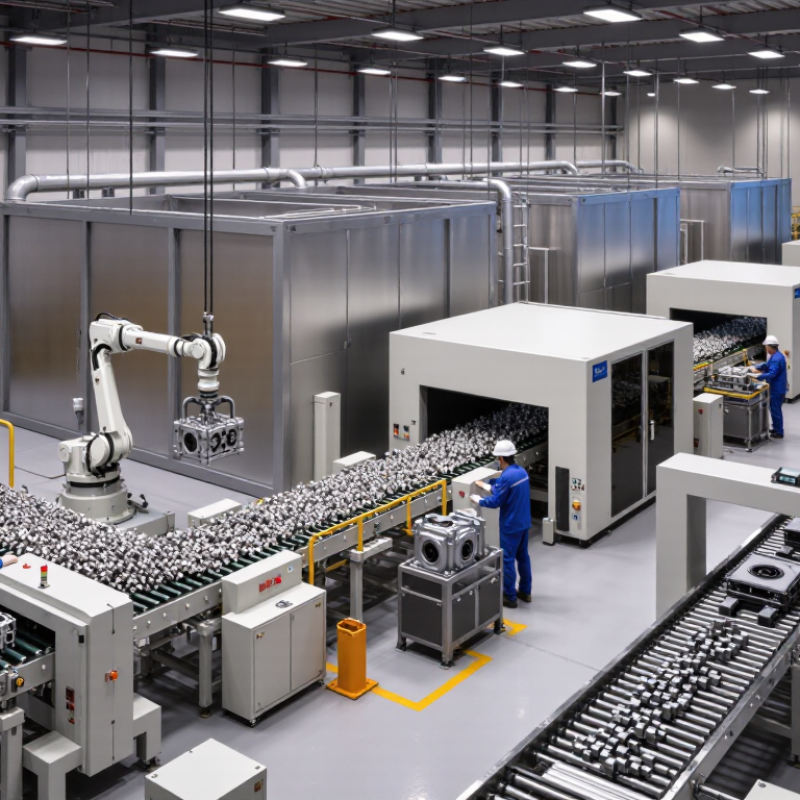
Rare earth magnet recycling starts with disciplined sorting. Scrap is separated by magnet grade, coating, and contamination. Demagnetization follows, often through controlled heating. This reduces handling risks and improves downstream consistency. The International Energy Agency’s Global Critical Minerals Outlook 2024 identifies permanent magnets as a major driver of rare earth demand. That pressure makes recovery more important than simple scrap collection.

Hydrogen decrepitation breaks NdFeB magnets into a brittle powder. Operators then remove steel, nickel, copper, and surface coatings. Separation may use magnetic screening, sieving, roasting, or hydrometallurgical treatment. Pilot studies commonly report rare earth recovery above 90%, but real results depend on feed quality. Moisture matters. Mixed scrap lowers yield.

The final stage converts recovered material into oxide, metal, or alloy feedstock. Useful metrics include mass recovery, neodymium-plus-praseodymium recovery, dysprosium and terbium retention, impurity levels, and energy use per kilogram. A credible supplier should disclose sampling methods and batch variation. The European Commission’s critical raw materials assessments show that end-of-life recycling remains limited for many rare earth elements. Numbers can look impressive. They still need context.

Some plants report excellent laboratory performance but weaker commercial output. That gap deserves attention. A practical buyer should request quarterly recovery data, not one attractive test result. Feedstock traceability also supports stronger E-E-A-T claims and more reliable procurement decisions.

Profiles of China’s 10 Leading Suppliers: Capacity, Feedstock, and Certifications

China Top 10 Rare Earth Magnet Recycling Suppliers?

China’s leading ten suppliers differ sharply in capacity, feedstock, and verification. Their facilities generally process 5,000 to 30,000 tonnes of NdFeB scrap annually, although public figures are not always comparable. Typical feedstock includes factory swarf, grinding sludge, rejected magnets, and end-of-life motor components. Some facilities also recover magnets from hard-disk drives and industrial equipment. Clean swarf offers better recovery economics. Mixed scrap creates more uncertainty.

The IEA’s Global Critical Minerals Outlook 2024 identifies recycling as an important future source of rare earth supply. However, recycled material still represents a small share of global demand. The USGS Mineral Commodity Summaries 2024 reported China’s 2023 rare earth mine production at about 240,000 tonnes of oxide equivalent. That figure shows the scale of primary supply, not recycling capacity. It also explains why reliable secondary feedstock matters.

Among the ten profiled suppliers, stronger operators usually report ISO 9001 quality certification, ISO 14001 environmental certification, and ISO 45001 safety certification. A few may hold automotive-related quality approvals, but buyers should verify current certificates and audit scope. Traceability is equally important. A serious supplier can show weighbridge records, laboratory assays, batch numbers, and recovery yields. Capacity claims deserve careful review. Some figures refer to designed capacity, not actual throughput. That distinction is easy to miss.

Supplier Comparison: NdPr Recovery, Dysprosium Yield, and ESG Compliance

China Top 10 Rare Earth Magnet Recycling Suppliers?

A useful top-ten comparison should measure recovery, not marketing claims. The IEA’s Global Critical Minerals Outlook 2024 reports that China supplied about 91% of refined magnet rare earths and 94% of sintered permanent magnets in 2023. This concentration makes domestic recycling capacity strategically important. However, supplier data often mixes laboratory results with commercial performance. Buyers should request monthly mass-balance records, feedstock descriptions, and third-party test methods.

NdPr recovery deserves close attention. A reported 95% recovery may exclude filtration losses, wastewater residues, or rejected powder. Dysprosium yield is even more revealing because heavy rare earths can remain trapped in coatings and mixed scrap. Compare recovered kilograms per tonne of magnets, not only percentage yield. The EU Joint Research Centre has indicated that rare earth end-of-life recycling remains below 1% in many applications. There is room for improvement.

ESG compliance should include ISO 14001 systems, GHG Protocol accounting, water-use records, and legally documented residue management. The EU Critical Raw Materials Act sets a 25% recycling-capacity benchmark for strategic raw materials by 2030, although this target is not a guarantee of magnet-grade output. A supplier with lower recovery may still perform better if its energy use and waste intensity are transparent. The comparison is not perfectly clean. Feedstock quality changes everything. Suppliers should publish independently verified NdPr recovery, dysprosium yield, carbon intensity, and corrective-action records.

China Top 10 Rare Earth Magnet Recycling Suppliers

Anonymized supplier benchmark comparison: NdPr recovery, dysprosium yield, and ESG compliance evidence.

Benchmark values are normalized indicators derived from commonly reported industrial ranges for NdFeB magnet recycling. NdPr recovery and dysprosium yield are shown as percentage recovery from magnet feedstock; ESG compliance represents the documented coverage of environmental, worker-safety, traceability, and management-system controls. Values are for comparative screening only and are not claims about any named company.