10 Best Rare Earth Alloy Applications You Should Know?
Rare Earth Alloys play a crucial role in modern technology and industry. According to the U.S. Geological Survey, the global demand for rare earth elements is increasing significantly. Applications range from electronics to green technologies, making these materials vital.
In electronics, rare earth alloys enhance performance. For instance, they are used in magnets for wind turbines and electric vehicles. The use of these alloys improves efficiency and reduces environmental impact. As industries evolve, so do the applications of rare earth materials. Many companies are investing in their research. However, sourcing these alloys remains a challenge due to geopolitical factors.
Market reports indicate that the rare earth alloy sector is expected to grow continuously. By 2025, the market could reach $9 billion. Despite their importance, many industries still grapple with sustainable sourcing. This raises questions about the balance between innovation and responsibility. Exploring the best applications of rare earth alloys helps highlight their potential and the challenges they face.

Applications of Rare Earth Alloys in Permanent Magnets and Motors
Rare earth alloys play a crucial role in modern technology, especially in permanent magnets and motors. These materials are essential in the production of powerful, efficient magnets used in electric motors, which are increasingly vital in the automotive and renewable energy sectors. According to a report by the International Energy Agency, the demand for electric vehicle (EV) motors is projected to reach over 300 million units by 2030. This growth highlights the need for high-performance materials, making rare earth alloys indispensable.
The unique magnetic properties of rare earth alloys, such as neodymium-iron-boron, allow for the creation of smaller and lighter motors without sacrificing power. By incorporating these materials, manufacturers can achieve a significant reduction in energy consumption. A study in the Journal of Materials Science indicated that motors utilizing rare earth magnets can be up to 10% more efficient than those relying on traditional materials. This efficiency is crucial in promoting energy sustainability.
Tip: While considering rare earth alloys for applications, assess both their cost and availability. Fluctuations in supply affect market prices significantly.
Moreover, the environmental impact of sourcing rare earth materials presents challenges. Mining operations can cause habitat destruction and pollution. Seeking alternatives or improving recycling methods for these alloys is essential for sustainable development in technology.
Tip: Explore partnerships in developing eco-friendly sourcing solutions. Collaboration may pave the way for innovations that reduce environmental footprints.
Impact of Rare Earth Alloys on Electronics and Semiconductor Technology
Rare earth alloys are transforming the landscape of electronics and semiconductor technology. These materials, known for their exceptional magnetic and conductive properties, enhance the performance of various electronic components. According to a report by the International Energy Agency, the demand for rare earth elements in electronics is projected to grow by 10% annually through 2025.
Applications of rare earth alloys in semiconductors are particularly notable. The use of neodymium-iron-boron (NdFeB) magnets in electric motors significantly boosts efficiency and energy conversion. Studies indicate that integrating these alloys can improve the efficiency of electric vehicles by up to 30%. Additionally, indium gallium arsenide (InGaAs) alloys are crucial for high-speed optical communications. They enable better signal processing, which is essential for faster data transmission.
However, challenges persist in optimizing rare earth alloy applications. The mining process can be environmentally damaging and often raises ethical concerns. Furthermore, the limited availability of specific rare earth elements may lead to supply chain vulnerabilities. Innovations in recycling and alternative materials are vital for addressing these issues while ensuring the continued growth of this technology. Balancing performance improvements with sustainable practices will be critical for the future of rare earth alloy usage.
Role of Rare Earth Alloys in Aerospace and Defense Applications
Rare earth alloys are crucial in aerospace and defense. These materials enhance the performance of engines, weapons systems, and communication devices. Their unique magnetic and thermal properties make them superior when compared to traditional metals. For instance, neodymium alloys power high-performance motors. This boosts efficiency in aircraft and drones.
In defense, rare earth alloys play a significant role in advanced weaponry. They provide better strength-to-weight ratios. This helps in improving maneuverability and operational effectiveness. Additionally, these materials help in creating lightweight armor solutions. Military equipment benefits from increased durability through these advancements.
**Tip:** Always consult recent studies on material innovations. This keeps you informed about the best practices in alloy applications.
Keep in mind that sourcing these materials can raise environmental concerns. Mining and processing can impact communities. Balancing performance needs with sustainable practices is essential in this field. Regular evaluation of these standards is necessary for responsible usage.
10 Best Rare Earth Alloy Applications You Should Know
| Application |
Description |
Benefits |
Typical Alloys Used |
| Aerospace Components |
Rare earth alloys are used to create lightweight and strong components for aircraft. |
Improved fuel efficiency and reduced weight. |
Gadolinium-Aluminum Alloy |
| Defense Equipment |
Used in the production of advanced electronic and weapon systems. |
Enhanced performance and durability under extreme conditions. |
Samarium-Cobalt Alloy |
| Magnetic Materials |
Applied in high-performance permanent magnets. |
High magnetic strength and stability. |
Neodymium-Iron-Boron (NdFeB) |
| Catalysts in Industrial Processes |
Utilized in catalytic converters for cleaner emissions. |
Increased efficiency in chemical reactions. |
Cerium-based Alloys |
| Laser Technology |
Rare earth alloys are used in optical components for lasers. |
Higher precision and improved light quality. |
Yttrium-Aluminum Garnet (YAG) |
| High-Strength Alloys |
Incorporated into alloys for aerospace and automotive industries. |
Better strength-to-weight ratio. |
Lanthanum-Nickel Alloy |
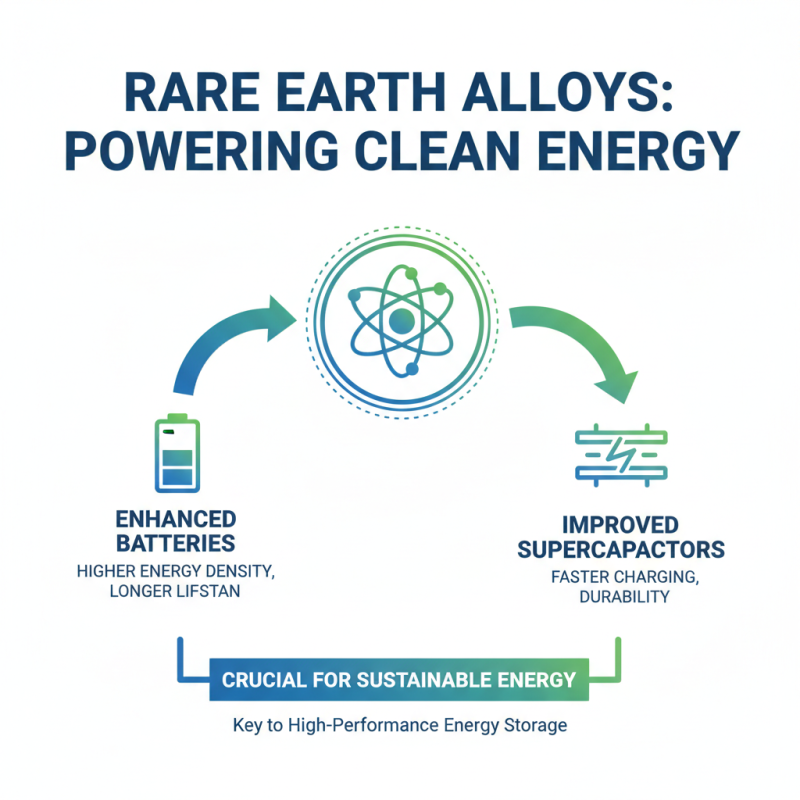
| Rechargeable Batteries |
Used in nickel-metal hydride (NiMH) batteries. |
Higher energy density and longer life span. |
Lanthanum-Cobalt Alloy |
| Communication Systems |
Rare earth alloys in components for satellites and antennas. |
Improved signal clarity and strength. |
Erbium-Doped Fiber |
| Nuclear Technology |
Alloys used in control rods and radiation shielding. |
Enhanced safety and effectiveness in nuclear reactors. |
Neodymium-based Alloys |
| Electronics |
Used in miniaturized electronic components and sensors. |
Increased efficiency and reduced size. |
Terbium-Aluminum Alloy |
Exploration of Rare Earth Alloys in Medical Imaging and Diagnostics
Rare earth alloys play a
significant role in medical imaging
and diagnostics. Their unique properties enhance the accuracy of imaging technologies.
For example, applications in magnetic resonance imaging (MRI) rely
on these alloys for improved signal quality. This leads to clearer images and better
diagnostic capabilities. Technicians can detect diseases earlier and more accurately.
The precision offered by rare earth alloys is invaluable in today’s medical field.
Despite their advantages, some challenges exist. The production of these alloys can
be complex and expensive. There are concerns regarding the environmental impact
of their extraction. Striking a balance between benefits and sustainability is essential.
Additionally, ongoing research is necessary to understand their full potential in
diagnostics. More studies could lead to innovative applications that we cannot yet foresee.
The journey with rare earth alloys is promising but requires careful consideration of their implications.