Best Practices for Rare Earth Elements Recycling in 2026?
In 2026, the significance of Rare Earth Elements Recycling will be more crucial than ever. As the global demand for clean technologies grows, recycling these critical metals becomes essential. According to a recent report from the International Energy Agency, nearly 80% of rare earth elements are used in green technologies, from electric vehicles to wind turbines. This trend highlights a pressing need for sustainable practices in recycling.
Experts, such as Dr. Emily Chen, a leading authority in the field, underscore this urgency. She states, "Recycling rare earth elements is not just an option; it is a necessity for a sustainable future." However, the current recycling processes are often inefficient and underdeveloped. Companies must address these shortcomings to optimize recovery rates.
Challenges remain, particularly in developing effective separation technologies. Many recycling facilities struggle to meet industrial standards. This gap underscores the need for innovation and investment in research. The journey towards successful Rare Earth Elements Recycling is complex and requires collective effort across industries.

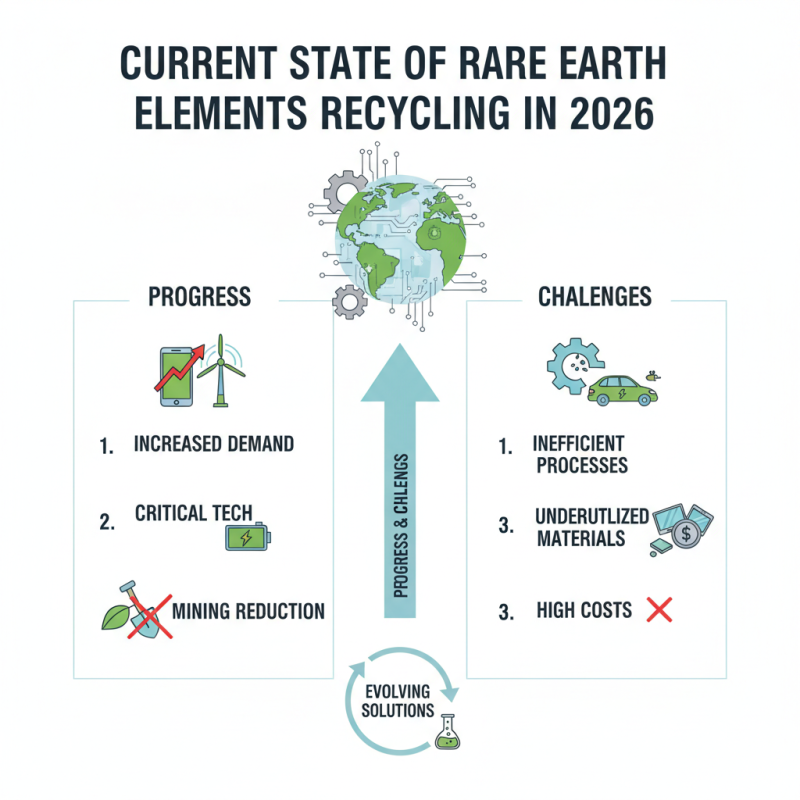
Current State of Rare Earth Elements Recycling in 2026
The current state of rare earth elements (REE) recycling in 2026 highlights both progress and challenges. Over recent years, the demand for REEs has increased significantly. These elements are critical in various technologies, from renewable energy to electronics. Recycling has emerged as a viable solution to reduce dependency on mining. However, efficient recycling processes are still developing. Many materials remain underutilized, and extraction methods can be inefficient and costly.
Technological advancements are essential for improving REE recycling. Current methods include hydrometallurgy and pyrometallurgy, but both have limitations. For instance, hydrometallurgy may require toxic solvents. This raises environmental concerns. Pyrometallurgy, while effective, consumes considerable energy. There is a pressing need for innovation in these recycling technologies. Universities and research institutions are exploring new approaches. However, collaboration between industry and academia is still lacking.
Market dynamics also affect REE recycling efforts. The fluctuating prices of these elements can discourage investment in recycling technologies. Additionally, consumer awareness remains low. Many people are uninformed about the importance of REE recycling. This gap reflects the need for more public education. Improvements in infrastructure and recycling programs are crucial for tackling these issues. The recycling industry must prioritize sustainable practices to gain consumer trust and participation.
Technological Innovations Enhancing Recycling Efficiency
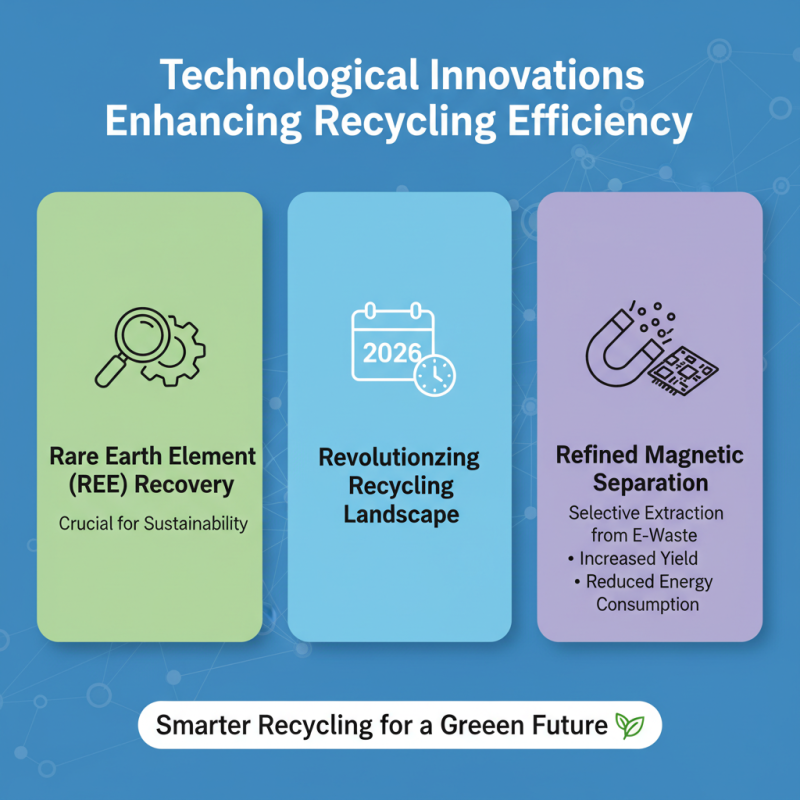
Advancements in recycling technologies are crucial for improving the efficiency of rare earth elements (REE) recovery. In 2026, innovations are expected to revolutionize the recycling landscape. For instance, magnetic separation techniques are becoming more refined. These methods can selectively extract REEs from electronic waste, increasing yield and reducing energy consumption.
Hydrometallurgical processes are making strides as well. Researchers are developing greener solvents that enhance the leaching of REEs from ores and waste. This not only improves extraction rates but also minimizes environmental impact. Additionally, automated sorting technologies are evolving, allowing for quicker identification of valuable materials in complex waste streams.
Despite these advancements, challenges remain. The recycling sector must address material contamination issues, which complicate processing. Not all technologies are commercially viable yet. It is essential for stakeholders to evaluate the effectiveness and sustainability of these innovations continuously. Enhancing collaboration among researchers, industries, and policy-makers could play a vital role in refining these approaches and optimizing the recycling of rare earth elements.
Regulatory Framework and Policy Impacts on Recycling Practices
The regulatory framework governing rare earth elements recycling is evolving rapidly. Governments are responding to the growing demand for sustainable practices. Policies now emphasize recycling as a solution to reduce environmental impacts. However, inconsistencies in regulations across regions can lead to confusion. Different standards may hinder collaboration between countries and companies.
Public awareness plays a crucial role in shaping these policies. Engagement from communities can influence decision-makers. Education on the benefits of recycling rare earth elements is essential as it helps foster a culture of sustainability. Yet, many still lack basic knowledge about the recycling process. This gap indicates a need for improvement in outreach efforts.
As policies develop, the challenge remains to balance economic viability with environmental responsibility. Financial incentives for recycling practices may vary significantly. Some programs successfully encourage innovation, while others struggle. Reassessing these initiatives is necessary for better outcomes. Stakeholders must work together to find common ground in their recycling efforts. Addressing these imperfections will help in formulating effective strategies for the future.
Economic Viability and Market Trends Affecting Rare Earth Recycling
The recycling of rare earth elements (REEs) is gaining traction as economic pressures mount. Recent reports indicate that the global market for REE recycling could exceed $6 billion by 2026. This growth is primarily driven by the escalating demand for electronics, electric vehicles, and renewable energy technologies.
Current trends show a push towards circular economy models. Companies are exploring methods to recover REEs from discarded products. For instance, a recent study highlighted that recycling one ton of neodymium could save over $100,000 in mining costs. These statistics underscore the financial incentives of investing in recycling technologies.
Challenges remain in the industry. Recycling processes can be energy-intensive and costly. Moreover, the quality of recycled materials often does not meet manufacturer standards. Companies are actively working to improve these processes, yet there is no one-size-fits-all solution. Continuous innovation and collaboration among stakeholders are essential for addressing these obstacles effectively.
Best Practices for Rare Earth Elements Recycling in 2026
Sustainability Challenges and Solutions in Rare Earth Elements Recovery
The recycling of rare earth elements (REEs) presents significant sustainability challenges in 2026. Global demand for REEs is projected to grow by over 10% annually, driven by their critical role in technologies like electric vehicles and renewable energy sources. However, the recycling rates for these materials remain low, often less than 1% for many consumers. According to a recent report by the International Energy Agency, much of the world's REEs are extracted without sufficient regard for environmental impact, leading to adverse effects on ecosystems.
To address these sustainability concerns, innovative recycling solutions must be embraced. Advanced separation technologies offer promising avenues for recovering valuable REEs from electronic waste. By employing hydrometallurgical processes, we can extract up to 90% of specific rare earth metals. Yet, challenges remain in scaling these techniques for industrial applications.
Tip: Always ensure e-waste is processed through certified recycling programs. This can significantly improve the quality of recovered materials.
Consumer awareness is vital for improving recycling rates. Educating the public about how to properly dispose of electronic devices can create a more sustainable cycle. Many people remain unaware of the value in their discarded electronics.
Tip: Host local recycling events to encourage community participation. Collaboration can lead to better recovery rates and innovative solutions within the industry.