How to Source Rare Earth Materials for Your Business Needs?
Sourcing rare earth materials can be a challenging yet vital process for businesses today. These specialized resources play a crucial role in various industries, from electronics to renewable energy. Understanding where and how to obtain these materials is key to maintaining a competitive edge.
Many companies struggle with locating reliable suppliers. The market for rare earth materials is often unstable and dominated by a few key players. This makes it essential to build solid relationships with trustworthy suppliers. Engaging in thorough research helps in identifying the best sources for your business needs.
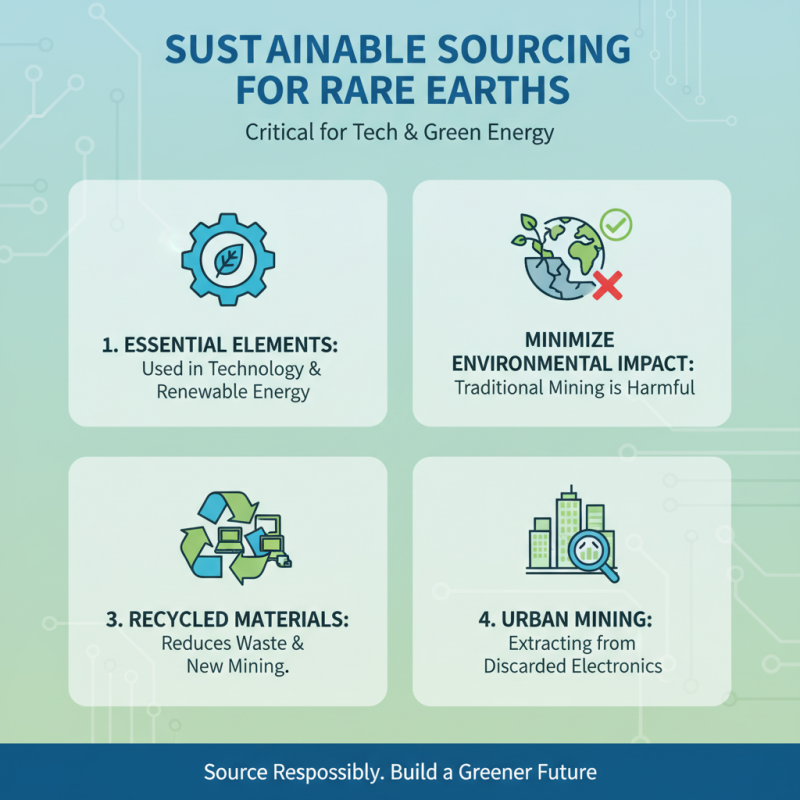
Moreover, the sustainability of sourcing practices cannot be overlooked. Ethical considerations and environmental impacts are increasingly important. It's essential to reflect on the long-term implications of sourcing decisions. Striving for transparency in the supply chain will build credibility and trust with customers. Overall, the journey to secure rare earth materials is complex but necessary for success in a tech-driven world.

Identifying Key Rare Earth Materials for Industry Applications
Identifying key rare earth materials is crucial for various industries, including electronics, renewable energy, and defense. These materials include neodymium, dysprosium, and yttrium. Each plays a specific role in enhancing the performance and efficiency of products.
Neodymium is often found in high-performance magnets. These magnets are essential for electric vehicle motors and wind turbines. Dysprosium, on the other hand, strengthens magnets at high temperatures, ensuring reliability in extreme conditions. Yttrium is critical for phosphors in LED lighting and display technologies. Sourcing these materials involves considering both availability and sustainability.
However, navigating the rare earth supply chain can be challenging. Supply risks may arise from geopolitical tensions and market fluctuations. Companies must reflect on their sourcing strategies. Establishing strong relationships with suppliers can provide stability. Diversifying sources is another vital approach to mitigate risks. This process requires ongoing assessment and adjustment, as uncertainties are inherent in the rare earth market.
Demand for Key Rare Earth Materials in Various Industries
Understanding the Global Supply Chain of Rare Earth Elements
The global supply chain of rare earth elements (REEs) is complex and often opaque. According to a 2021 report from the U.S. Geological Survey, China supplies around 60% of the world's rare earth materials. This reliance creates vulnerabilities, especially for industries dependent on these essential components. Disruptions in supply can occur due to geopolitical tensions or policy changes. Understanding these dynamics is critical for businesses looking to secure sustainable sources.
The extraction and refinement of REEs are resource-intensive. Mining operations often take years to set up. Environmental concerns also complicate the process, as regulations tighten around mining activities. Many companies are exploring alternative materials or recycling old electronics to mitigate risks. For instance, the European Union is investing in projects aimed at creating a local supply chain for REEs, with a goal to reduce dependency on imports significantly. However, these initiatives face challenges, such as high costs and technological limitations.
Building a resilient supply chain requires proactive strategies. Companies should conduct thorough audits of their supply sources and understand the geopolitical landscape. Diversifying suppliers can help cushion the impact of potential disruptions. Industry experts suggest forming alliances and partnerships to improve access to these critical materials. Despite these efforts, there remains an ongoing need to innovate and adapt to changing conditions in the REE market.
Evaluating Suppliers: Qualities to Look for in Rare Earth Material Vendors
Finding reliable suppliers for rare earth materials can be challenging. A good vendor should have a solid track record in the industry. Experience matters; an established supplier understands market fluctuations well. They should also provide transparency about sourcing methods. Ask for documentation regarding their supply chain and mining practices.
When evaluating potential suppliers, consider their certifications and compliance with environmental standards. This demonstrates their commitment to responsible sourcing. Communication is essential, too. A dependable vendor will respond quickly to inquiries and provide detailed information. It shows their dedication to customer service.
Tips: Always request samples to evaluate material quality before placing larger orders. Test the samples under your specific conditions to ensure they meet your needs. Regular audits of suppliers can help identify any inconsistencies. A trustworthy relationship is built on transparency and reliability.
How to Source Rare Earth Materials for Your Business Needs? - Evaluating Suppliers: Qualities to Look for in Rare Earth Material Vendors
| Supplier Type |
Location |
Material Types Offered |
Certifications |
Delivery Lead Time |
Minimum Order Quantity |
Customer Service Rating |
| Manufacturer |
China |
Neodymium, Dysprosium |
ISO 9001 |
2-4 weeks |
500 kg |
4.5/5 |
| Wholesaler |
USA |
Lanthanum, Cerium |
ISO 14001 |
1-3 weeks |
250 kg |
4.7/5 |
| Distributor |
Europe |
Yttrium, Gadolinium |
REACH Compliance |
2-6 weeks |
100 kg |
4.3/5 |
| Importer |
Australia |
Samarium, Europium |
ISO 45001 |
3-5 weeks |
300 kg |
4.6/5 |
Regulatory Considerations and Compliance in Sourcing Rare Earths
Navigating the complex world of rare earth materials sourcing requires careful consideration of regulatory frameworks.
Businesses must understand that compliance is not just a checkbox; it’s essential for sustainable operations.
Regulations vary by region, and non-compliance can lead to severe penalties.
Companies need to assess the environmental impact of their supply chains.
This includes evaluating the sourcing process and ensuring it aligns with international standards.
Incorporating sustainability practices is key.
For instance, companies should conduct regular audits of their suppliers.
They must verify that those suppliers adhere to local and global regulations.
It’s about building a reliable supply chain.
Many sectors overlooked these aspects until they faced scrutiny.
Transparency in the sourcing process is crucial.
Stakeholders increasingly demand evidence of compliance.
Reflecting on past practices can help identify gaps.
Businesses should engage with experts in environmental law and compliance.
Their insights can guide companies in making informed decisions.
Investing time in understanding regulatory requirements can prevent costly mistakes in the future.
This proactive approach fosters trust and promotes long-term success in sourcing rare earth materials.