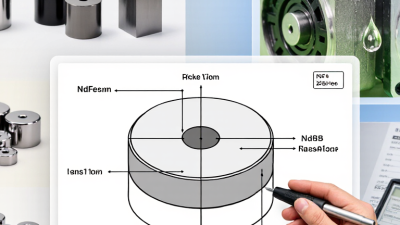
China has become a major production base for the Rare Earth Ndfeb Permanent Magnet industry. Its manufacturers serve motors, sensors, speakers, medical equipment, automation systems, and clean-energy technologies. A reliable supplier does more than press magnetic powder into blocks. It controls alloy composition, grain structure, sintering temperature, machining accuracy, and surface protection.
Professor Masato Sagawa, widely recognized as a pioneer of NdFeB magnet development, once said, “The discovery of Nd-Fe-B magnets was not a planned discovery.” That observation still matters today. Innovation often begins with careful experimentation, not perfect prediction. It also reminds buyers to examine real production evidence instead of trusting impressive claims.
A professional Chinese manufacturer should provide clear data for remanence, coercivity, maximum energy product, and temperature performance. Batch traceability matters. So does testing with calibrated equipment. A magnet may look flawless while containing internal weaknesses. Small chips near an edge can affect assembly reliability. Incorrect coating selection can also cause corrosion in humid environments.
Experienced manufacturers usually recommend grades based on working temperature, magnetic circuit design, mechanical stress, and exposure conditions. They should explain trade-offs honestly. Higher performance may increase cost. More dysprosium can improve heat resistance, but supply and price may fluctuate. Not every application needs the strongest grade.
This guide examines how China’s top Rare Earth Ndfeb Permanent Magnet manufacturers build quality, manage materials, and support customization. The industry remains highly capable, but no supplier is perfect. Careful verification is still necessary.
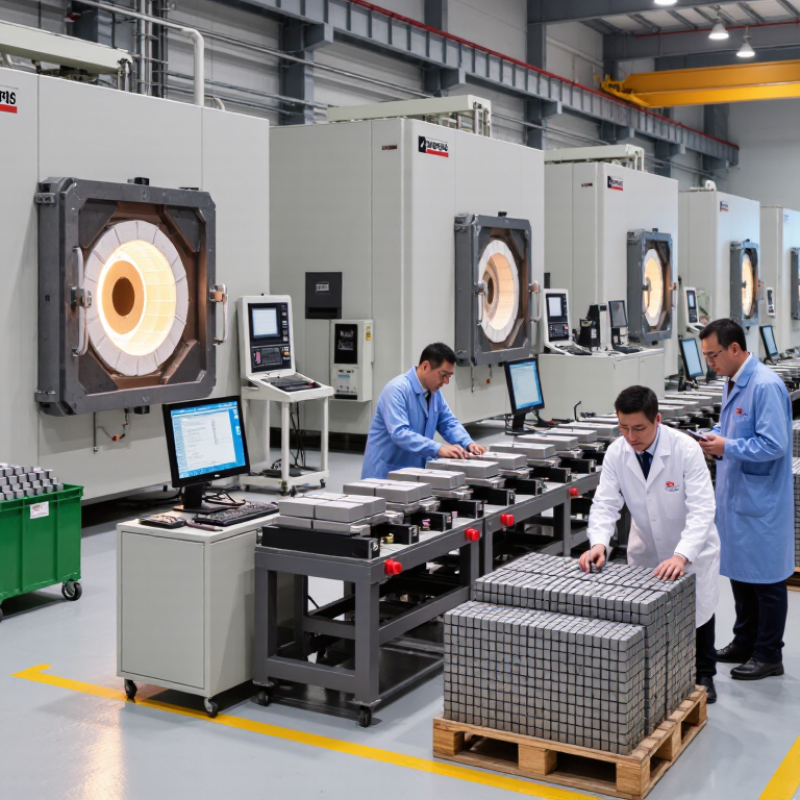
NdFeB permanent magnets combine neodymium, iron, and boron in a high-performance hard magnetic material. Typical sintered grades contain about 29–32% neodymium, 64–69% iron, and around 1% boron by mass. The remaining fraction includes elements such as dysprosium, terbium, cobalt, copper, or aluminum. Small additions matter. They adjust coercivity, corrosion resistance, and temperature stability. According to the U.S. Geological Survey, global rare-earth mine production reached approximately 350,000 tonnes of rare-earth-oxide equivalent in 2023. China produced about 240,000 tonnes. These figures underline the material’s strategic supply importance.
NdFeB offers high remanence and energy density, allowing compact motors, sensors, speakers, hard drives, wind generators, and robotic actuators. Many commercial grades provide maximum energy products near 35–55 MGOe, although published values vary by grade and test method. Curie temperatures commonly range from about 310°C to 400°C, while practical operating temperatures are much lower. Heat can reduce magnetic strength. Dysprosium or terbium may improve resistance to demagnetization, but they can increase cost and complicate sourcing. The International Energy Agency reported that China supplied about 94% of global permanent magnet production in 2023. Manufacturing still requires careful grain alignment, machining, and surface protection. NdFeB is brittle and corrosion-sensitive. A damaged coating can become a serious weakness. This detail is sometimes underestimated. Temperature, vibration, and humidity testing should match the final application, not only laboratory conditions.
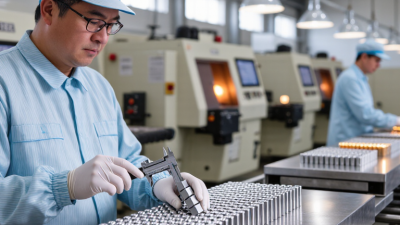
NdFeB magnets are based primarily on neodymium, iron, and boron and provide very high magnetic energy density. The grade suffix indicates increasing resistance to thermal demagnetization: N, M, H, SH, UH, EH, and AH. The values shown are typical nominal maximum working temperatures; actual performance depends on magnet geometry, coating, magnetic circuit, and operating conditions.
China’s role in rare earth NdFeB magnet manufacturing is difficult to overlook. The USGS Mineral Commodity Summaries 2025 estimated China produced about 270,000 metric tons of rare earth oxide equivalent in 2024. Global production reached roughly 390,000 metric tons. This scale supports stable access to neodymium, praseodymium, dysprosium, and terbium.
The IEA’s Global Critical Minerals Outlook 2024 reported that China controlled about 90% of refined magnet rare earth output and more than 90% of permanent magnet manufacturing. This advantage includes alloy melting, hydrogen decrepitation, powder alignment, sintering, machining, and surface protection. Production experience shows that oxygen control matters greatly. A small oxygen increase can reduce magnetic performance. Temperature uniformity also affects grain structure and coercivity. These details are easy to underestimate.
Tips: Ask for batch-level inspection records, not only a test certificate. Check Br, Hcj, HCB, density, dimensions, coating thickness, and temperature resistance. Confirm whether testing follows IEC, ASTM, or an agreed internal standard. A low price may hide higher variation. That is not always true, but it deserves investigation. Suppliers should explain rejected-batch handling and traceability clearly. Some technical claims remain difficult to compare across factories because test conditions differ. Buyer review is still necessary.
Producing high-performance NdFeB permanent magnets requires controlled handling at every stage. A leading Chinese manufacturer begins with verified neodymium, praseodymium, iron, boron, and selected alloying elements. Incoming materials are tested for composition and contamination. Traceability starts here.
The mixture is melted under a protective atmosphere, then rapidly cooled into thin alloy flakes. This strip-casting step helps create a refined microstructure. The flakes undergo hydrogen decrepitation, which makes them brittle and easier to process. Jet milling then produces fine powder with a controlled particle size. Powder control matters. Moisture exposure can reduce stability.
The powder is pressed inside a magnetic field, aligning its particles in one direction. This orientation strongly affects the final magnetic performance. Green compacts are sintered under vacuum, followed by aging treatments that improve coercivity and dimensional consistency. Machining may include slicing, grinding, and drilling with coolant control. Sharp edges need careful handling. Surface protection is applied when the operating environment requires it. Final inspection checks dimensions, magnetic properties, coating adhesion, and appearance. Small defects matter. A practical concern remains: tighter tolerances can increase material waste and processing time. Engineers must balance strength, precision, yield, and application needs rather than chase one impressive test value.
| Stage | Production Stage | Key Materials and Equipment | Typical Process Parameters | Key Quality Control Points | Primary Output | Technical Notes |
|---|---|---|---|---|---|---|
| 1 | Raw Material Preparation | Neodymium, praseodymium, iron, boron, and selected heavy rare-earth additions such as dysprosium or terbium when required. | Material composition is selected according to the required magnetic grade, temperature capability, and corrosion performance. | Chemical purity, alloying-element ratios, trace impurities, and lot traceability. | Approved raw-material batch and target alloy composition. | The final composition strongly affects remanence, coercivity, maximum energy product, and thermal stability. |
| 2 | Vacuum Induction Melting | Prepared rare-earth metals, iron, ferroboron, and optional alloying elements; vacuum induction melting furnace. | Melting is performed under vacuum or an inert atmosphere to limit oxidation and unwanted gas absorption. The alloy is heated above its liquidus temperature before casting. | Melt homogeneity, oxygen exposure, chemical composition, and absence of visible contamination. | Homogeneous molten NdFeB alloy. | Controlled atmosphere processing is important because rare-earth elements are highly reactive with oxygen. |
| 3 | Strip Casting | Rapid-cooling strip-casting wheel, inert-gas protection, and molten NdFeB alloy. | The melt is rapidly solidified into thin flakes, commonly around 0.2–0.5 mm thick, although the exact thickness depends on equipment and formulation. | Flake thickness, cooling uniformity, phase distribution, surface oxidation, and absence of coarse crystalline segregation. | Fine, uniform NdFeB alloy flakes. | Rapid solidification helps form a suitable fine-grained microstructure for subsequent hydrogen decrepitation and magnetic alignment. |
| 4 | Hydrogen Decrepitation | Hydrogenation-dehydrogenation system and strip-cast alloy flakes. | Hydrogen is absorbed by the alloy to promote embrittlement, followed by controlled dehydrogenation and cooling. | Powder particle morphology, residual hydrogen level, oxidation control, and consistency of pulverization. | Brittle, hydrogen-treated alloy suitable for milling. | This stage reduces mechanical energy requirements and supports the formation of powder with favorable particle characteristics. |
| 5 | Jet Milling | Nitrogen-protected jet mill, classifier, and hydrogen-decrepitated alloy. | The alloy is milled into fine powder, typically with an average particle size of approximately 3–5 micrometres for many sintered-magnet applications. | Particle-size distribution, oxygen content, powder flowability, and contamination from milling equipment. | Fine NdFeB magnetic powder. | Inert-gas protection is used because fine NdFeB powder can oxidize readily and may present a combustible-dust hazard. |
| 6 | Magnetic Alignment and Compaction | Magnetic-field press or die, alignment tooling, and fine NdFeB powder. | Powder particles are aligned in a strong magnetic field and compacted into a green body. Alignment may be parallel or perpendicular to the pressing direction. | Green density, dimensional accuracy, orientation direction, crack formation, and uniformity of compaction. | Oriented green compact with the required preliminary shape. | Magnetic alignment is essential for achieving anisotropic properties and high remanence in the finished magnet. |
| 7 | Vacuum Sintering | Vacuum sintering furnace, green compacts, and controlled inert-gas or vacuum atmosphere. | The compact is heated below the alloy melting range to densify the material. Industrial sintering cycles commonly use temperatures around 1,000–1,100 °C, depending on composition and design. | Density, shrinkage, dimensional change, grain growth, porosity, and magnetic-property uniformity. | Dense, sintered NdFeB magnet blanks. | Excessive temperature or holding time can cause grain growth and reduce coercivity, while insufficient sintering can leave harmful porosity. |
| 8 | Heat Treatment | Vacuum or inert-atmosphere heat-treatment furnace and sintered magnet blanks. | One or more aging treatments are applied at controlled temperatures below the sintering temperature to optimize the grain-boundary phase and magnetic performance. | Coercivity, remanence, maximum energy product, irreversible flux loss, and thermal demagnetization behavior. | Heat-treated NdFeB magnets with stabilized magnetic properties. | Aging conditions are formulation-specific and are adjusted to balance magnetic strength, coercivity, and operating-temperature performance. |
| 9 | Machining and Finishing | Diamond grinding, slicing, drilling, chamfering, ultrasonic cleaning, and dimensional inspection equipment. | Machining is performed to meet the required length, width, thickness, hole geometry, flatness, and tolerance. | Dimensional tolerance, surface roughness, edge integrity, cracks, chips, and cleaning quality. | Finished magnet components prepared for surface treatment. | NdFeB magnets are hard and brittle; diamond tools and controlled coolant systems are commonly used to reduce chipping and thermal damage. |
| 10 | Surface Treatment | Nickel-based, epoxy, zinc, or other application-specific coating systems; cleaning and plating equipment. | Coating selection and thickness depend on humidity, salt exposure, temperature, mechanical contact, and electrical insulation requirements. | Coating thickness, adhesion, porosity, appearance, corrosion resistance, and dimensional impact. | Corrosion-protected NdFeB magnet. | Common finishes include nickel-based multilayer coatings, zinc, epoxy, and specialized treatments. Bare NdFeB generally has limited corrosion resistance. |
| 11 | Magnetization | Pulsed magnetizer, magnetizing fixture, and finished coated or uncoated magnet. | A short, high-intensity magnetic pulse is applied in the specified magnetization direction and pole configuration. | Magnetization direction, surface field, pole orientation, magnetic flux, and consistency between pieces. | Fully magnetized NdFeB permanent magnet. | Magnetization may be axial, diametral, multipolar, or customized to the magnetic circuit and assembly design. |
| 12 | Final Inspection and Packing | Gaussmeter or hysteresisgraph, coordinate-measuring equipment, coating inspection tools, and protective packaging. | Inspection requirements are defined by the drawing, magnetic grade, application temperature, and customer specifications. | Dimensions, magnetic properties, coating integrity, appearance, polarity, batch identification, and packaging protection. | Qualified NdFeB permanent magnets ready for shipment or assembly. | Magnets are commonly separated with protective materials because they can attract ferromagnetic objects and damage nearby electronic or mechanical components. |
Reliable NdFeB magnet production begins with controlled materials and repeatable inspection. A China-based manufacturer should verify alloy composition, powder quality, pressing direction, and sintering temperature. Small process changes can affect magnetic performance. They can also change the magnet’s surface condition.
Key specifications include remanence, coercivity, maximum energy product, and operating temperature. These values must be tested under defined conditions, not copied from a general catalog. Dimensional tolerances matter too. A ring magnet with a slightly uneven inner diameter may create assembly problems. Testing should follow relevant international standards and agreed customer requirements. Magnetic curves, coating thickness, appearance, and batch records should remain traceable.
Corrosion protection is another practical concern. Nickel-copper-nickel, epoxy, and other coatings suit different environments. Salt spray testing can reveal weaknesses, but it does not perfectly predict every field condition. That limitation deserves attention. A magnet may pass factory inspection and still fail after heat, vibration, or repeated handling. Suppliers should use calibrated equipment, documented sampling plans, and independent verification when risk is high. In my experience, communication about temperature limits is often less precise than the test data. It should be checked again.
Choosing a reliable Chinese NdFeB magnet manufacturer requires more than comparing price lists. Start with the application, working temperature, magnetic grade, shape, coating, and dimensional tolerance. Ask whether the factory has experience producing similar magnets, not only standard discs or blocks.
An experienced supplier should explain performance limits in clear engineering language. Vague answers are warning signs. That matters. Review production equipment, inspection procedures, and batch traceability. Request sample reports showing flux density, pull force, coating thickness, and size measurements. A capable manufacturer should provide consistent data, not attractive numbers without test conditions.
Communication also reveals manufacturing discipline. During sampling, check response speed, drawing accuracy, packaging details, and corrective action. A polished website is not proof. In practical sourcing work, small changes in chamfer size or plating can affect assembly results.
I once underestimated the value of a written tolerance sheet, and the first samples required rework. That mistake was avoidable. Ask for pre-production confirmation, retained samples, and a clear inspection plan before approving volume production. Factory audits or independent testing can add confidence, especially when magnets will face heat, vibration, or repeated handling. Expect occasional questions from a serious supplier; careful clarification is better than fast approval.