How to Choose the Best Rare Earth Magnets for Your Needs?
Choosing the right Rare Earth Magnets can feel overwhelming. These powerful magnets have unique properties and various applications. Understanding your specific needs is crucial.
Rare Earth Magnets, such as neodymium and samarium-cobalt, offer significant strength but require careful selection. Consider dimensions, shape, and purpose. Are you using them for hobby projects, industrial applications, or scientific research? Each scenario demands different specifications.
Do not overlook safety concerns. Powerful magnets can cause injuries if mishandled. It’s essential to evaluate both performance and safety. Think about the environment where they’ll be used. Proper knowledge enables informed decisions, leading to the best outcomes.
Factors to Consider When Choosing Rare Earth Magnets
Choosing the right rare earth magnets involves understanding several critical factors. One of the most important considerations is the type of magnet material. Neodymium magnets dominate the market due to their high strength and small size. According to industry reports, neodymium magnets can be up to 10 times stronger than traditional magnets. Corrosion resistance is also vital, especially for indoor and outdoor applications.
Magnet grade is another essential aspect. Magnets are categorized into grades based on their strength. Higher-grade magnets, such as N52, provide superior performance. However, selecting a stronger magnet may not always meet your needs since it can be challenging to handle. Ensure that the magnet's strength aligns with your specific application requirements.
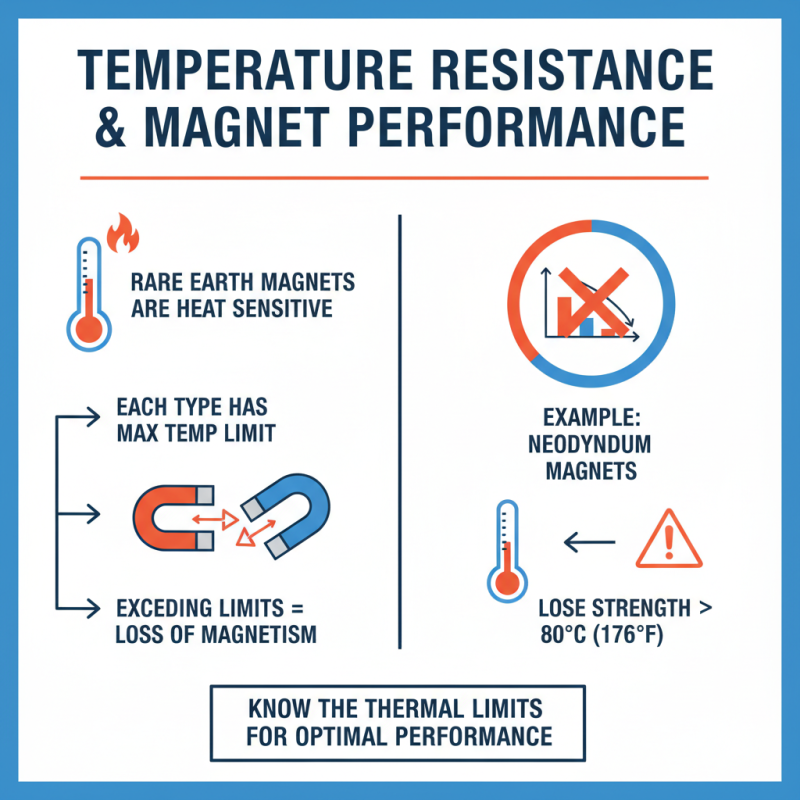
**Tips**: Always consider the size of the magnets. A small size does not necessarily mean weak performance. Check the specifications before purchasing. Conducting trials with different grades may help you find the perfect fit for your projects. Finally, keep in mind that the magnet's performance can decline in high-temperature environments.
Types of Rare Earth Magnets: Neodymium vs. Samarium-Cobalt
When choosing rare earth magnets, understanding the differences between neodymium and samarium-cobalt is crucial. Neodymium magnets are the most widely used type. They offer exceptional strength and are often more affordable. These magnets can be found in various applications, from consumer electronics to industrial machinery. However, they have a drawback: they can lose strength at high temperatures. This makes them less ideal for certain environments.
In contrast, samarium-cobalt magnets are more resistant to heat and corrosion. They maintain their magnetic strength even in extreme conditions. This makes them suitable for aerospace and military applications. However, samarium-cobalt magnets tend to be more expensive and less available than neodymium ones. Choosing the right type depends on specific needs. Are heat and corrosion resistance vital for your project? If so, samarium-cobalt may be the way to go. For most other applications, neodymium magnets can be a reliable and strong choice. Reflecting on these factors can help make a more informed decision.
Magnet Strength Ratings: Understanding N35 to N52 Grading Scale
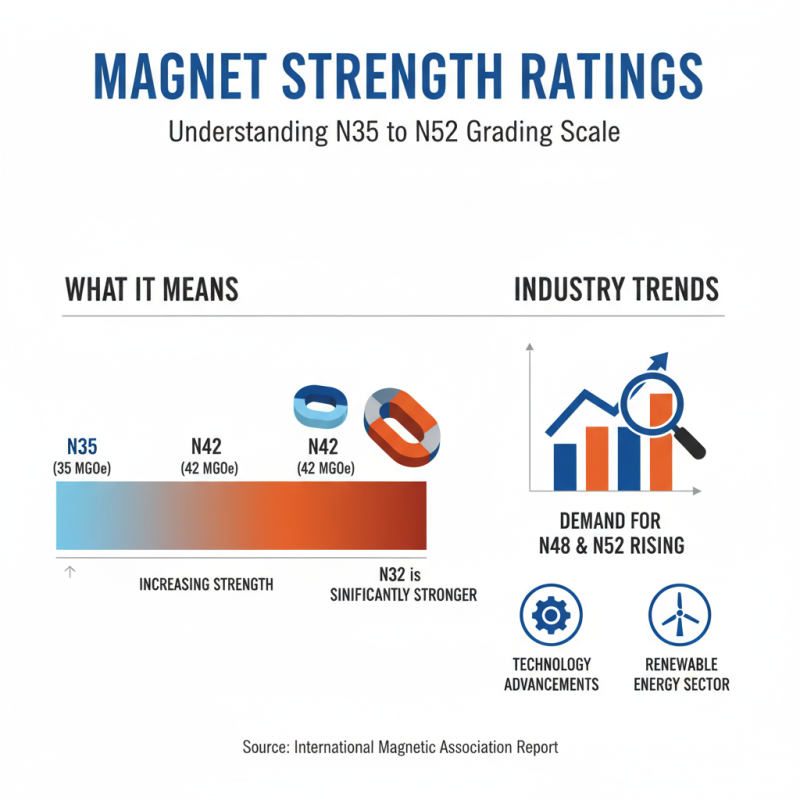
When choosing rare earth magnets, understanding their strength ratings is crucial. The grading scale ranges from N35 to N52, indicating the magnetic strength of the magnets. N35 magnets have a minimum energy product of 35 MGOe (Mega Gauss Oersted), while N52 magnets reach up to 52 MGOe, making them significantly stronger. According to a recent industry report by the International Magnetic Association, the demand for high-grade magnets like N48 and N52 is rising, mainly due to advancements in technology and renewable energy sectors.
When selecting a magnet, consider the application. Applications in electric motors or generators often require N50 or higher grades because they produce more torque and efficiency. However, if your project involves less demanding conditions, N35 or N40 may suffice, thus saving costs. Remember, using a stronger magnet generally increases the overall performance but might lead to difficulties in handling.
Tips: Always account for the operational environment. High temperatures can demagnetize rare earth magnets. Use N35 to N42 grades for environments above 80°C, while higher grades are better for cooler conditions. Lastly, check the magnet's coating. A good coating protects the magnet from corrosion, ensuring durability over time.
Applications of Rare Earth Magnets in Various Industries
Rare earth magnets play a crucial role across various industries. These powerful magnets are utilized in sectors like automotive, electronics, and renewable energy. In the automotive industry, for example, rare earth magnets are essential for electric motors and sensors. A report from the Global Industry Analysts predicts that the global electric vehicle market will reach 27 million units by 2030, further driving the demand for these magnets.
Electronics also heavily rely on rare earth magnets. Products such as smartphones, computers, and speakers incorporate these magnets for better performance and efficiency. According to a market research firm, the global consumer electronics market is expected to grow by $100 billion from 2021 to 2025. This growth reflects an increasing need for compact and lightweight designs, where rare earth magnets excel.
While the advantages are clear, there are challenges. Sourcing rare earth materials can be complex and environmentally sensitive. Industry experts stress the need for sustainable practices in magnet production. Balancing the demand for these powerful magnets with ecological concerns is crucial. This complexity invites further reflection on how industries can innovate responsibly while meeting their magnetic needs.
Applications of Rare Earth Magnets in Various Industries