What is Rare Earth Ndfeb Permanent Magnet and its Applications?
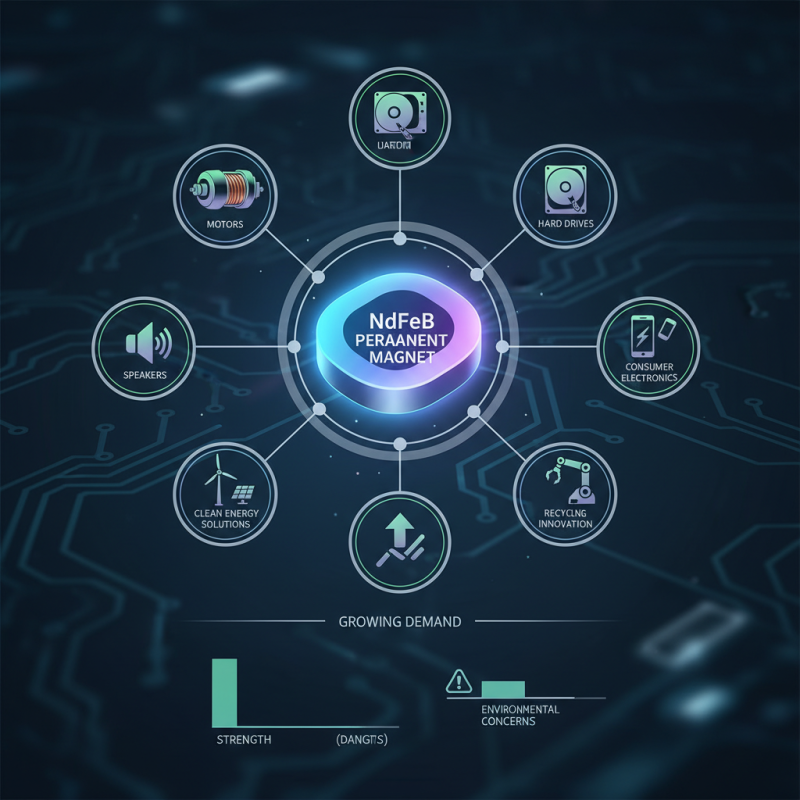
Rare Earth Ndfeb Permanent Magnets are vital in modern technology. These magnets are made from neodymium, iron, and boron. Their unique properties make them stronger than regular magnets. As a result, they are used in many applications. You can find them in motors, hard drives, and speakers.
Their strength allows for smaller and lighter designs. This is crucial in consumer electronics, where space is limited. However, the production of Rare Earth Ndfeb Permanent Magnets poses challenges. The mining process can be environmentally harmful. This factor raises concerns among manufacturers and consumers alike.
Companies are exploring alternatives. Yet, none match the performance of Ndfeb magnets. The need for innovation in recycling methods also exists. However, the demand for Rare Earth Ndfeb Permanent Magnets continues to grow. They will play a key role in future technologies and clean energy solutions.
What are Rare Earth NdFeB Permanent Magnets?
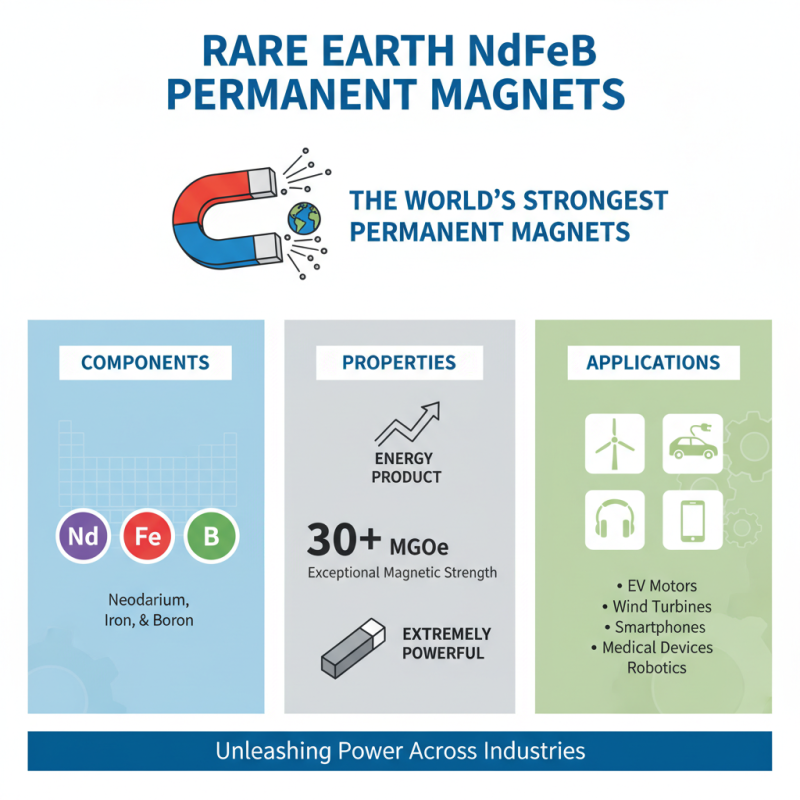
Rare Earth NdFeB permanent magnets, or neodymium-iron-boron magnets, are some of the strongest permanent magnets available today. Composed of neodymium, iron, and boron, these magnets exhibit exceptional magnetic properties. Their energy product can reach values over 30 MGOe, making them ideal for various applications.
These magnets are extensively used in electric motors and generators. According to a 2022 market report, the global demand for NdFeB magnets in the automotive industry is projected to grow by 20% annually. This surge is driven by the rise of electric vehicles, where compact, lightweight motors are necessary for efficiency. These magnets also find applications in wind turbines, where their high performance translates to better energy conversion.
However, the supply chain for rare earth materials can be challenging. Mining and refining these materials has environmental impacts and ethical concerns. Furthermore, dependency on specific regions for rare earth production presents risks. As technology advances, exploring alternative materials or more sustainable practices is crucial for the industry. There is a need for innovation in recycling NdFeB magnets to mitigate waste and enhance resource efficiency.
Properties of NdFeB Magnets and Their Unique Characteristics
Neodymium Iron Boron (NdFeB) magnets are renowned for their exceptional properties. These magnets are among the strongest permanent magnets available today. Their magnetic strength can reach up to 1.48 teslas. This power surpasses that of traditional ferrite and alnico magnets significantly.
NdFeB magnets exhibit remarkable resistance to demagnetization. However, they are also more brittle than other types of magnets. Therefore, careful handling is essential. Their unique characteristics enable a variety of applications. These magnets are often used in motors, generators, and magnetic resonance imaging (MRI). Reports indicate that the global demand for NdFeB magnets is projected to reach 200,000 tons by 2025. This growth highlights their importance in green technologies, such as electric vehicles and renewable energy systems.
The production of NdFeB magnets involves rare earth elements. This reliance raises concerns about supply chain stability. Recycling processes are still developing. There is room for improvement in reducing waste and enhancing efficiency. Overall, while NdFeB magnets are powerful and versatile, the industry must address these challenges to ensure sustainability and longevity in their applications.
Manufacturing Process of NdFeB Permanent Magnets
The manufacturing process of NdFeB permanent magnets is intricate yet fascinating. NdFeB, short for neodymium iron boron, is one of the strongest types of permanent magnets available. The process begins with high-purity raw materials. Neodymium, iron, and boron powders are carefully weighed. Precision in this step is critical. Any deviation can significantly affect the magnet's performance.
Next, the mixture is subjected to a process called pressing. This involves applying heat and pressure to form a compact. After pressing, the compact is sintered at a high temperature. Sintering helps in achieving the desired magnetic properties. However, controlling the sintering environment is a complex task. Variations in temperature or time can lead to inconsistent quality or strength.
Once sintered, the magnets undergo a surface treatment. This helps prevent corrosion and improves longevity. Yet, not all surface treatments guarantee perfect results. Some coatings might wear off over time. After treatment, the magnets are cut into desired shapes. This step requires precision and care. Each magnet must fit specific applications. Misalignment in this step can result in inefficiencies.
The final step involves magnetization, which enhances their magnetic properties before they are ready for various applications.
Common Applications of NdFeB Permanent Magnets in Industry
NdFeB (Neodymium-Iron-Boron) permanent magnets are increasingly prevalent in various industries. These magnets boast unparalleled power-to-weight ratios, making them vital in applications where space and weight are restricted. Reports indicate that the global NdFeB magnet market was valued at around $16.5 billion in 2023 and is projected to grow at a compound annual growth rate (CAGR) of 9.7% by 2030. With properties such as high magnetic strength, these magnets have become essential in sectors like automotive, electronics, and renewable energy.
In the automotive industry, NdFeB magnets are critical components in electric motors and generators. Estimates show that they improve motor efficiency by up to 30%. This increase is significant, especially in electric vehicles (EVs), where every percentage point can enhance driving range. Furthermore, in the electronics sector, these magnets are used in hard drives, speakers, and headphones, enabling smaller and lighter designs without sacrificing performance. However, reliance on rare earth materials poses challenges, including supply chain vulnerabilities and environmental concerns surrounding mining practices.
Renewable energy applications are also notable. Wind turbines use NdFeB magnets in their generators, optimizing energy harnessing. Some reports indicate that wind turbines with NdFeB magnets can generate up to 20% more energy than those with conventional magnets. Despite their advantages, the industry grapples with recycling and sustainability issues. The lifespan of NdFeB magnets can lead to significant waste if not managed properly. As demand continues to rise, addressing these concerns is critical for a greener future.
Future Trends and Challenges in NdFeB Magnet Technology
NdFeB magnets, known for their exceptional magnetic strength, are pivotal in many modern technologies. As we look ahead, understanding the future trends in NdFeB magnet technology becomes essential. New development in material science is pushing boundaries. Researchers are focusing on improving magnet performance while reducing costs. This is crucial for industries relying on these magnets, like automotive and renewable energy.
However, challenges in sourcing raw materials persist. NdFeB magnets require rare earth elements, which have unstable supply chains. Countries are grappling with resource management and environmental sustainability. Maintaining a balance between demand and eco-friendliness is tricky. Emerging technologies might help, but the path is unclear.
Tip: Keep an eye on recycling technologies for rare earth elements. This could mitigate shortages.
Companies must adapt to changes. Next-generation magnetic technologies, such as improved alloys, are in the spotlight. Yet, the market needs to embrace these innovations. The transition may be slow, and not without hurdles. Strategies to overcome these challenges must focus on collaboration across industries. This could lead to breakthroughs in NdFeB magnet applications.
Tip: Collaboration can spark innovation. Partnerships will be key in overcoming supply chain issues.