2025 Top Trends in Rare Earth Elements Recycling: What You Need to Know
As the demand for sustainable practices intensifies in various sectors, the importance of Rare Earth Elements Recycling is poised to take center stage in the coming years. In 2025, the landscape of this industry is expected to evolve significantly, driven by technological advancements and the urgent need to minimize environmental impact. According to Dr. Emily Johnson, a renowned expert in the field of sustainable materials, "Recycling rare earth elements is not just a necessity for the industry; it's imperative for the future of our planet."
This statement underscores the critical nature of Rare Earth Elements Recycling as we strive to create a circular economy that conserves valuable resources and reduces waste. As industries increasingly rely on these elements for the manufacture of high-tech devices, clean energy technologies, and advanced materials, the need to develop efficient recycling methods becomes more pressing. The trends shaping this industry are not merely technological; they encompass economic, policy, and social dimensions that will redefine how we view waste and resource management.
In this context, understanding the top trends in Rare Earth Elements Recycling for 2025 is essential for stakeholders across various sectors. From innovations in extraction techniques to evolving regulatory frameworks, it is crucial to remain informed about the changes that will impact how we utilize and recycle these vital materials.

Overview of Rare Earth Elements and Their Importance
Rare Earth Elements (REEs) are a group of seventeen chemically similar metals that are vital for various high-tech applications. These elements, including neodymium, dysprosium, and lanthanum, are crucial in manufacturing everything from smartphone batteries to wind turbines and electric vehicles. Their unique properties, such as high magnetic strength and excellent catalytic capabilities, enable advancements in technology and energy efficiency. The demand for REEs has surged due to the global transition toward renewable energy sources and electrification, making their sustainable sourcing increasingly essential.
Despite their importance, REEs are often sourced under challenging conditions, leading to environmental concerns and geopolitical tensions. The extraction and processing of these elements can result in significant ecological damage, including soil and water contamination. As a response to these issues, recycling of rare earth elements has emerged as a promising solution to mitigate dependency on mining and enhance resource sustainability. Developing advanced recycling technologies will not only help to reclaim REEs from end-of-life products but also significantly reduce the environmental footprint associated with their extraction. The convergence of technology and recycling practices can pave the way for a more sustainable future, ensuring that the benefits of these critical materials can be harnessed responsibly.
2025 Top Trends in Rare Earth Elements Recycling: What You Need to Know
| Trend |
Description |
Impact on Industry |
Expected Growth Rate |
| Automated Recycling Technologies |
Implementation of AI and robotics to enhance efficiency in sorting and processing rare earth elements. |
Increased processing speed and recovery rates of rare earth elements. |
15% |
| Circular Economy Initiatives |
Focus on reusing and recycling materials to minimize waste in rare earth supply chains. |
Reduces dependency on mining; promotes sustainability. |
20% |
| Government Regulations |
Introduction of stricter regulations on rare earth mining and recycling to protect the environment. |
Increased compliance costs; opportunities for recycling firms. |
10% |
| Innovative Recycling Methods |
Development of new chemical and physical methods for extracting rare earth elements from waste. |
Enhanced extraction efficiencies and lower costs. |
12% |
| Collaboration Across Sectors |
Partnerships between government, industry, and research institutions to advance recycling technologies. |
Accelerated innovation and resource sharing. |
18% |
Current Recycling Techniques for Rare Earth Elements
Recycling rare earth elements (REEs) has become a crucial operation in the context of sustainable practices and evolving technologies. The current techniques primarily focus on two methods: hydrometallurgical and pyrometallurgical processes. Hydrometallurgy involves dissolving REEs from scrap materials using aqueous solutions, followed by selective precipitation and extraction to acquire high-purity materials. This method is highly effective for recovering REEs from electronic waste, batteries, and phosphors. On the other hand, pyrometallurgy employs high-temperature processes to separate and recover metals. This technique is often utilized for harder materials and can achieve high recovery rates, although it requires significant energy input.
Tips: When considering recycling, it's essential for businesses to assess the purity and material composition of their waste. Efficient sorting of waste streams can enhance the recyclability of rare earth elements, maximizing recovery rates. Additionally, collaborating with specialized recycling facilities trained in handling these materials can ensure compliance with safety regulations and environmental standards.
Emerging technologies like bioleaching and advanced separation methods are demonstrating immense potential to further enhance REE recycling. Bioleaching leverages microorganisms to extract metals from ores and waste materials, offering an eco-friendly alternative. Furthermore, advancements in separation technologies, such as solvent extraction and ion exchange, are refining the efficiency of REE recovery from complex waste, paving the way for higher yields and lower ecological footprints. As these techniques evolve, they play an integral role in creating a more circular economy where rare earth elements are continually reused and repurposed.
Innovative Technologies Emerging in Rare Earth Recycling
The recycling of rare earth elements (REEs) is gaining significant traction owing to the increasing demand for sustainable practices and the need to mitigate the risks associated with supply chain disruptions. Innovative technologies are emerging in the field of rare earth recycling, aiming to enhance efficiency, purity, and yield of the extracted materials. One such advancement is the development of advanced separation processes that utilize solvent extraction, biotechnological methods, and hydrometallurgical techniques. These innovations not only improve recovery rates but also reduce environmental impacts through more sustainable methods of processing.
Another significant trend is the integration of artificial intelligence and automation in sorting and processing systems. By employing machine learning algorithms, recycling facilities can optimize their operations, allowing for more accurate separation of REEs from complex waste streams. This technological shift not only accelerates the recycling processes but also ensures a higher quality of recycled materials, promoting a circular economy. As these advanced technologies take center stage, they will play a crucial role in establishing a more sustainable and resilient rare earth supply chain, capable of meeting the rising global demand for green technologies and electronic devices.
2025 Top Trends in Rare Earth Elements Recycling
This chart displays the projected growth in recycling efforts for various rare earth elements by the year 2025. The data highlights the increasing importance of recycling in the context of sustainability and resource management.
Environmental and Economic Benefits of Recycling Rare Earths
Recycling rare earth elements (REEs) is increasingly recognized for its substantial environmental and economic benefits. As global demand for tech products rises, so does the imperative to manage these resources sustainably. Recycling REEs can significantly reduce the environmental impact associated with mining. The extraction process often results in extensive habitat disruption, water usage, and toxic waste generation. By recovering these elements from electronic waste and other sources, we alleviate the pressure on natural reserves and minimize pollution.
In addition to environmental gains, recycling rare earths offers favorable economic advantages. The process can lower the costs associated with raw material procurement, especially as traditional mining becomes more expensive due to dwindling reserves. Moreover, creating a closed-loop economy for rare earths can foster new job opportunities in recycling facilities and related sectors. This shift not only promotes sustainable practices but can also lead to a more resilient economy by reducing reliance on imported materials.
Tips:
Consider adopting electronic devices that are easier to recycle or repair. Educating yourself and others about local recycling programs for electronics can drive demand for responsible disposal methods. Moreover, supporting policies and innovations that enhance REE recycling technologies can contribute to a greener, more sustainable future.
Future Challenges and Opportunities in Rare Earth Element Recycling
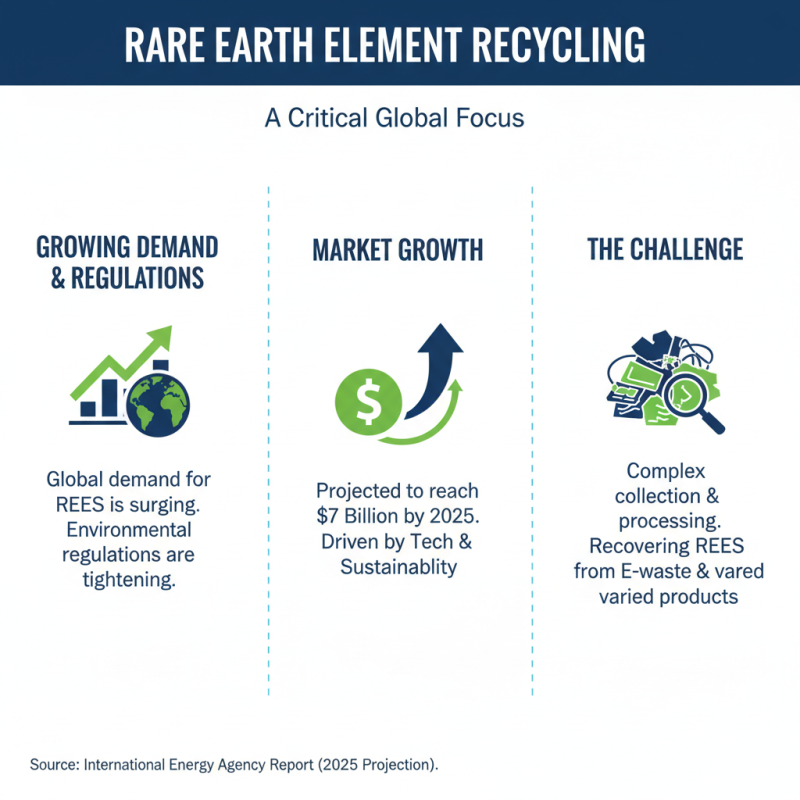
The recycling of rare earth elements (REEs) is becoming increasingly critical as global demand surges and environmental regulations tighten. According to a report by the International Energy Agency, the global market for REE recycling is projected to reach $7 billion by 2025, driven by advancements in technology and a growing focus on sustainable practices. The challenge lies in the effective collection, processing, and recovery of these materials from electronic waste and other sources, where they are often embedded in complex and varied products.
Opportunities for innovation in REE recycling are vast. Improved extraction methods, such as hydrometallurgical techniques, can enhance the efficiency of recovery from waste streams. The European Commission's Raw Materials Strategy highlights a significant potential to recycle up to 50% of rare earth elements from end-of-life products by 2030, which would alleviate supply constraints and reduce the environmental impact of mining. Companies and institutions focused on developing circular economy strategies are well-positioned to lead in this transformative sector.
Tips for individuals and industries looking to engage in REE recycling include maintaining awareness of recycling programs for electronic devices and actively participating in product take-back initiatives. Additionally, investing in research and development for innovative recycling technologies can pave the way for future growth in this essential field, highlighting the importance of collaborative efforts between businesses, policymakers, and consumers.