10 Best Rare Earth Materials You Need to Know About?
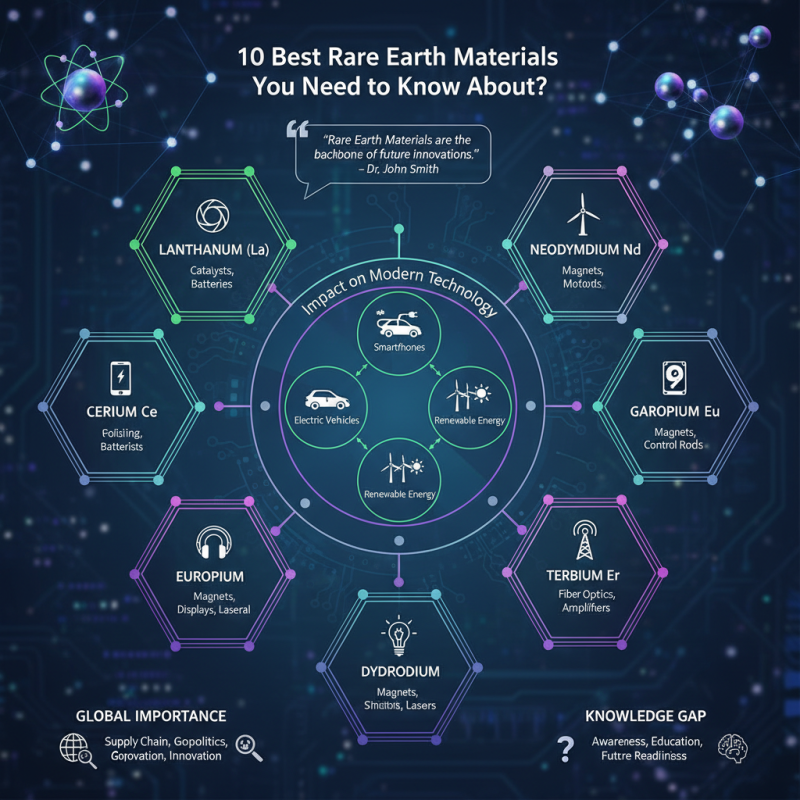
In the realm of modern technology, the significance of Rare Earth Materials cannot be overstated. As Dr. John Smith, a leading expert in the field, once remarked, “Rare Earth Materials are the backbone of future innovations.” These elements play a crucial role in the production of smartphones, electric vehicles, and renewable energy solutions. Their unique properties make them indispensable in various industries.
Despite their importance, awareness about these materials remains limited. Many people are unaware of how these tiny elements impact daily life. Rare Earth Materials include lanthanum, cerium, and neodymium, each with distinct applications. For instance, neodymium magnets are essential for motors and wind turbines. This highlights a paradox: while demand grows, knowledge about these resources lags behind.
Reflecting on this gap reveals an opportunity for education and awareness. The rarity of these materials can lead to geopolitical tensions and supply chain issues. It begs the question: how prepared are we for a future reliant on these materials? As we delve into the ten best Rare Earth Materials, understanding their value can inspire further exploration and innovation.
What Are Rare Earth Materials and Their Importance in Technology
Rare earth materials are essential in modern technology. These elements include lanthanides, yttrium, and scandium. They are key in creating strong magnets, phosphors, and catalysts. Without these materials, many electronic devices would not function as efficiently. The growing demand for electric vehicles and renewable energy technologies increases their significance.
Their importance raises concerns about supply and sustainability. Most rare earth materials are sourced from a few locations. This creates vulnerabilities in the supply chain. Furthermore, mining and processing these materials can be environmentally challenging. The extraction process often leads to pollution. Communities near mining sites face numerous impacts, both socially and environmentally.
Innovative solutions are necessary to ensure a sustainable future with rare earth materials. Recycling existing products is one approach. Reducing dependency on mined resources can lessen environmental harm. Investing in research may lead to alternatives. Exploring these aspects could lead to a more responsible use of rare earth materials. Balancing technology needs with environmental care is crucial for a sustainable path forward.
10 Best Rare Earth Materials You Need to Know About
| Material |
Symbol |
Atomic Number |
Uses |
Importance |
| Neodymium |
Nd |
60 |
Magnets, lasers, and glass additives |
Essential for strong permanent magnets used in electronics |
| Dysprosium |
Dy |
66 |
Permanent magnets and nuclear reactors |
Improves heat resistance in magnets |
| Terbium |
Tb |
65 |
Phosphors and magnetostrictive materials |
Used in energy-efficient lighting |
| Europium |
Eu |
63 |
Fluorescent lamps and TV displays |
Key component in red and blue phosphors |
| Lanthanum |
La |
57 |
Camera and telescope lenses |
Improves optical quality |
| Cerium |
Ce |
58 |
Catalysts in automobiles and glass polishing |
Enhances catalytic converters |
| Gadolinium |
Gd |
64 |
MRI contrast agents and electronics |
Critical for medical imaging |
| Samarium |
Sm |
62 |
Magnets and nuclear reactors |
Used in high-performance magnets |
| Ytterbium |
Yb |
70 |
Fiber optics and lasers |
Enhances optical applications |
| Lutetium |
Lu |
71 |
Scintillation counters and phosphors |
Used in advanced radiation detection |
Overview of the 10 Best Rare Earth Materials
Rare earth materials play a crucial role in many modern technologies. These elements are vital for batteries, magnets, and electronic devices. For instance, neodymium is essential for powerful magnets used in wind turbines and electric vehicles. According to a report by the U.S. Geological Survey, global production of rare earth elements reached approximately 240,000 metric tons in 2021. The chart shows a steady increase over the past decade, indicating growing demand.
Another important material is lanthanum, primarily used in catalysts for petroleum refining. The demand for cleaner energy sources boosts the need for these catalysts. Additionally, europium, known for its role in LED technology, is in high demand. However, supply chains can be fragile, leading to potential shortages. The geopolitical landscape can disrupt the flow of these materials, raising concerns for manufacturers.
Understanding these materials is essential for industries aiming for sustainability. Ongoing research strives to improve extraction techniques and recycling methods. As technology advances, it’s critical to consider innovations while addressing environmental impacts. The balance between use and conservation remains a challenge. Ultimately, the future of rare earth materials depends on responsible practices and forward-thinking solutions.
10 Best Rare Earth Materials You Need to Know About
Applications of Rare Earth Materials in Various Industries
Rare earth materials play a crucial role in modern industries. They are vital for making strong permanent magnets. These magnets are essential in wind turbines and electric vehicles. Without them, the efficiency of these technologies would drop significantly. Their unique properties also enhance the performance of various electronic devices. Smartphones, tablets, and computers benefit greatly from these materials.
In the defense sector, rare earth elements are used in advanced weapons systems and communication devices. They improve the performance and reliability of military technology. However, the mining of rare earth elements raises environmental concerns. Pollution and habitat destruction are significant issues. Companies need to address these challenges more effectively.
The renewable energy sector increasingly relies on rare earth materials. Solar panels and batteries often contain these elements. Still, sustainable practices must be a priority. This complex relationship poses a challenge for industries. Innovations in recycling and alternative materials are being explored. The future of rare earth materials hinges on balancing their benefits and environmental impact.
Environmental and Economic Impacts of Rare Earth Material Mining
The mining of rare earth materials has significant environmental and economic impacts. These materials are vital for modern technology, yet their extraction poses risks. For instance, a 2021 report noted that rare earth mining could result in soil degradation. This leads to reduced agricultural productivity in surrounding areas. Over two billion tons of waste are generated annually from rare earth mining activities.
Water pollution is another concern. Mining operations often contaminate water sources, affecting local communities. A study indicated that nearby ecosystems suffer from toxic leaks. Contaminated waters can impact drinking supplies. Despite the economic benefits of rare earth materials, their extraction is problematic.
Tips: Consider supporting recycling initiatives for rare earth materials. Awareness of sustainable practices is crucial. Understanding the life cycle of these materials can help minimize impact.
The economic benefits are clear. A market report projected that the global rare earth market will reach $4 billion by 2026. Jobs are created, but environmental costs must be considered. The balance between economic gain and ecological health is delicate. Time for reflection is needed on our consumption patterns and resource extraction methods.
Future Trends in Rare Earth Materials and Their Supply Chain
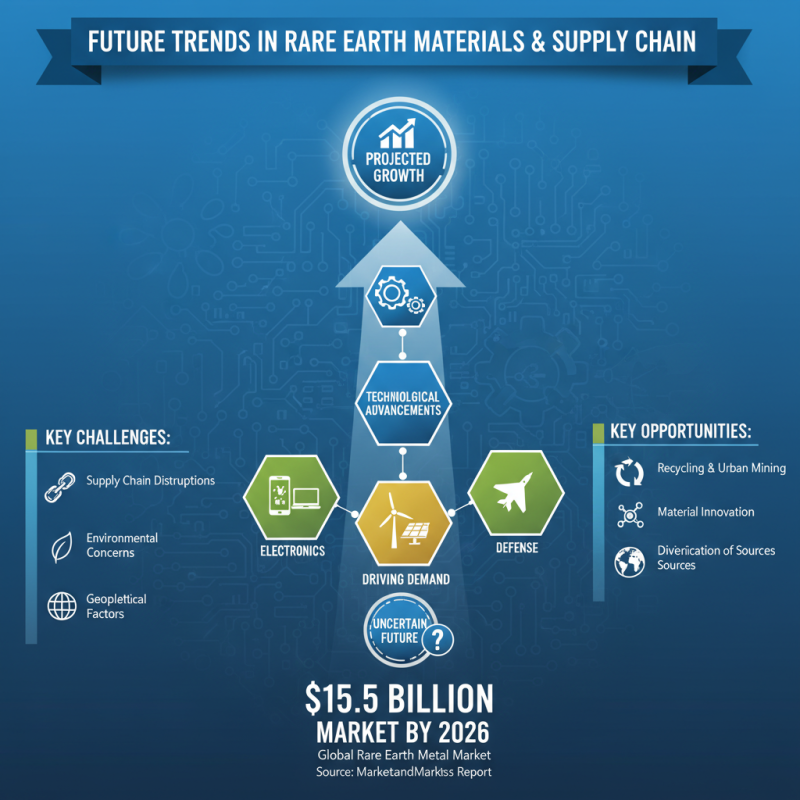
The future of rare earth materials is increasingly uncertain. The global market is projected to grow, driven by technological advancements. According to a recent report by MarketsandMarkets, the rare earth metal market is expected to reach $15.5 billion by 2026. This growth is supported by rising demand in sectors like electronics, renewable energy, and defense.
However, there are significant challenges. Supply chains are vulnerable to geopolitical tensions. The reliance on a few countries for the extraction and processing of these materials poses risks. Environmental concerns also complicate mining processes. For instance, the extraction of neodymium can lead to toxic waste production, which raises sustainability questions.
Investors are focusing on recycling and alternative sources. The Circular Economy approach may offer solutions. A report from McKinsey emphasizes that recycling could meet up to 20% of future rare earth demand by 2035. This perspective encourages us to rethink our consumption patterns and resource management strategies. The future holds promise, but it is fraught with complexities that require careful consideration.